
Sourcing & Suppliers
How to Find a Reliable Supplier in China: The Complete 2026 Guide for Bangladesh Importers
Jul
Ask any experienced importer in Bangladesh what the hardest part of buying from China is, and almost none of them will say shipping. They will say finding a supplier you can actually trust. The product on 1688 or Alibaba is easy to find; knowing whether the company behind it is a real factory, a middleman, or a well-photographed risk is the part that separates a profitable import from an expensive lesson.
This guide walks through exactly how to find and vet a reliable supplier in China from Bangladesh — where to look, how to tell a factory from a trader, the checks to run before you pay, and the red flags that should stop a deal. It is written from the reality of doing this on the ground in China, not from a template.
Why finding the right supplier is the hardest part of importing
When you buy locally, you can visit the shop, see the goods, and hold back payment if something is wrong. Importing from China removes all three protections at once. You are paying, often in advance, to a company you have never met, 4,000 km away, in a language you may not speak, and by the time the goods arrive in Chattogram your money is already gone. If the supplier was the wrong choice, there is very little you can do.
That is why supplier selection is not a step you rush to get to the “real” work of shipping. It is the real work. Get it right and the rest of the import is routine. Get it wrong and no freight forwarder, C&F agent or amount of follow-up can save the shipment.
Where to actually find Chinese suppliers
There are more places to find suppliers than most Bangladeshi buyers realise, and each has a different risk profile.
- Alibaba — the default for international buyers. English, MOQ-based, Trade Assurance available. The catch: a large share of listings are trading companies, and a “Gold Supplier” badge is a paid membership, not a quality guarantee.
- 1688 — Alibaba’s Chinese-language domestic platform, where the factories themselves sell to Chinese buyers at real domestic prices, often well below Alibaba. The barrier: it is entirely in Chinese, needs a Chinese payment method, and most sellers will not ship abroad. This is where a China sourcing agent earns their fee — they buy on 1688 for you.
- Made-in-China & Global Sources — useful cross-references, stronger on industrial goods and machinery.
- Trade fairs — the Canton Fair (Guangzhou) and specialised expos let you meet manufacturers face to face. Powerful, but only practical if you or your agent are in China.
- Referrals and a sourcing agent — the lowest-risk route. A supplier another importer has used and paid successfully, or one an agent has already verified, skips most of the guesswork.
For machinery and industrial equipment in particular — packaging machines, food processing lines, industrial machinery — the factory-direct 1688 route usually beats Alibaba on both price and after-sales support, precisely because it is harder to reach.
Factory vs trading company: the single most important distinction
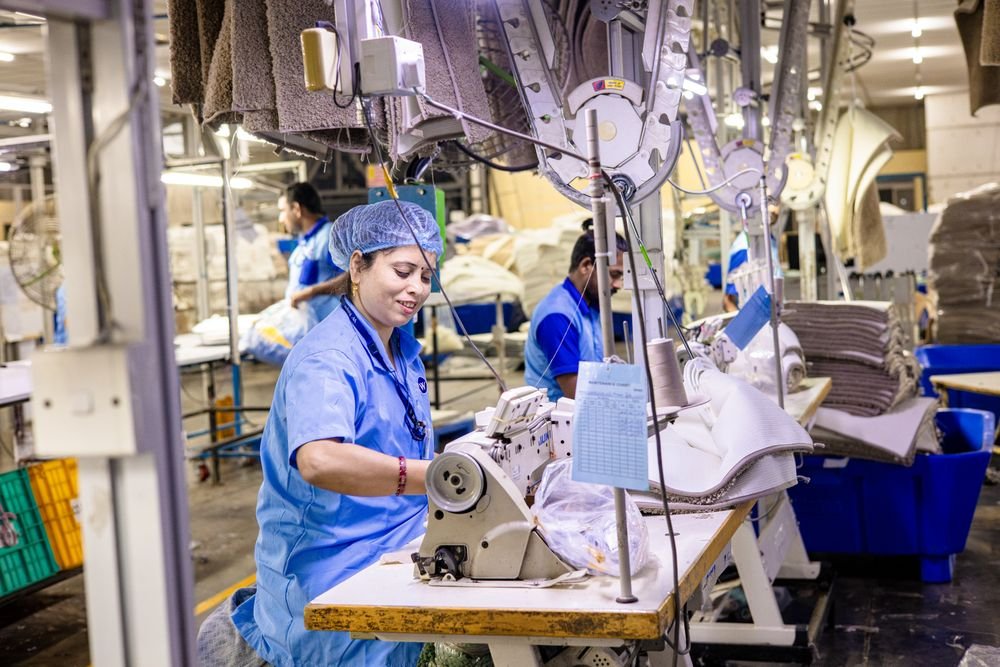
This is the check that saves the most money, and the one most first-time importers skip. A factory makes the product. A trading company buys it from a factory and resells it to you with a margin on top — and, more importantly, without full control over quality, lead time, or fixing problems when they occur.
Trading companies are not always bad; a good one can consolidate several products and handle export paperwork. But you should always know which one you are dealing with, because it changes your price and your risk. Ways to tell:
- Business scope on the licence. A manufacturer’s licence lists production; a trader’s lists wholesale/trade. This is the definitive check.
- Product range. A company offering wildly unrelated products (machinery and textiles and electronics) is almost always a trader.
- Technical depth. Ask a detailed spec question. A factory answers precisely; a trader relays it and comes back vague or slow.
- Address & VAT invoice. A real factory can issue a VAT invoice in its own name and its address matches a production site.
Step-by-step: how to vet a supplier before you pay
- Check the business licence. Ask for it, confirm the registered name, capital, legal representative and scope. This alone filters out the fakes.
- Confirm factory vs trader using the checks above, so you know exactly who you are paying.
- Send a proper RFQ. A vague enquiry gets a vague quote. State the exact specification, quantity, target price, packaging and delivery terms. Serious suppliers respond to serious buyers.
- Order a sample. Always. A sample tells you about quality and about the supplier — how they communicate, how fast they move, whether the sample matches the listing.
- Verify capacity and references. Can they realistically produce your quantity in your timeline? Have they made this exact product before, and can they show it?
- Inspect before shipment. For any meaningful order, a pre-shipment inspection before you release the balance is the cheapest insurance in importing.
Steps 1, 2 and 5 are exactly what a professional factory verification covers — on the ground, before your deposit leaves Bangladesh.
How to negotiate price and MOQ with a Chinese factory
Once you have a shortlist of real factories, price and minimum order quantity (MOQ) are where a good buyer — or a good agent — earns their margin back. A few things that actually move the number in China:
- Quote a like-for-like specification. The fastest way to a lower price is to make three factories bid on the exact same spec sheet, so you are comparing price, not guesswork. Vague enquiries get padded quotes.
- Understand where the MOQ comes from. A factory’s MOQ is usually driven by raw-material or setup cost, not stubbornness. If your quantity is below MOQ, ask whether a small surcharge, a standard colour, or combining with an existing production run can bridge it — often it can.
- Negotiate terms, not just unit price. Payment terms, packaging, spare parts (for machinery), and free replacement of defects are all worth real money and are often easier to win than a lower unit price.
- Order consolidation. If you are buying several products, sourcing them through one channel that consolidates suppliers gives you leverage a single small order never has.
Negotiating in Chinese, in the supplier’s own market, is a large part of why importers use a sourcing agent — the price a Bangladeshi buyer is quoted in English and the price a local team negotiates in Chinese are frequently not the same price.
Paying your supplier safely
How you pay is as important as who you pay. The standard structure for a first order is a deposit (commonly around 30%) with the balance due before shipment — ideally after a pre-shipment inspection confirms the goods. That timing keeps your leverage until the last moment. Non-negotiable rules:
- Pay the company, never a person. Payment goes to the supplier’s registered business account. A request to pay a personal account or a third party is a serious red flag.
- Never pay 100% up front to a supplier you have not verified and worked with before.
- Match the payment method to your risk. Bank T/T is standard for factory payments; Alibaba Trade Assurance adds a layer for platform orders. For Bangladeshi importers, paying an import partner in BDT who then settles with the factory removes the LC and forex barrier entirely.
Red flags a Chinese supplier is risky
- Price far below everyone else. If one quote is dramatically cheaper, either the specification is not the same or the goods are not what you think.
- Pressure to pay fast, to a personal account. Payment should go to the company’s registered account, never a personal one.
- No sample, or excuses about samples. A supplier unwilling to sell you a sample is a supplier to walk away from.
- Vague or evasive on the business licence. Real companies share it without drama.
- Only mobile/WhatsApp, no verifiable company footprint. Legitimate manufacturers have a traceable business identity.
Common mistakes Bangladeshi importers make
- Judging cost by the factory price alone. Add freight, duty, VAT and bank charges and the true landed cost is often 30–60% higher. Always price the landed BDT cost before committing — our import guide shows how.
- Paying 100% in advance to an unverified supplier. Structure payment so you keep leverage until the goods are checked.
- Skipping the sample to “save time.” The time saved is nothing next to a bad bulk order.
- Assuming the Alibaba badge means verified. It means they paid for membership. Verify separately.
- Trying to do everything remotely. Some checks simply require someone in China.
How a sourcing agent shortcuts the process
Everything above is doable yourself — it just takes Chinese-market access, time, and a tolerance for risk on the first few orders. A sourcing agent with a team in China compresses it: they reach 1688 factories you cannot, read the licence and the room in person, negotiate in Chinese, run the sample and the inspection, and consolidate multiple suppliers into one shipment to Bangladesh. Because DE International is based in Shenzhen, the on-site part — the part you cannot do from Dhaka — is routine for us, not a special trip. And if you do not hold a trade licence, we can import on your behalf on a door-to-door basis, with you paying in BDT.
Frequently asked questions
How do I find a manufacturer in China from Bangladesh?
Start on Alibaba and Made-in-China for English listings, but the real factory-direct prices are on 1688, which is Chinese-language and needs a China payment method. A sourcing agent based in China can search 1688, verify the factory and buy on your behalf.
How do I know if a Chinese supplier is a factory or a trading company?
Check the business licence scope (production vs trade), look at how focused their product range is, and test their technical depth with a specific question. A factory answers precisely; a trader relays and comes back vague. On-site verification confirms it for certain.
Is 1688 better than Alibaba for finding suppliers?
1688 usually has lower, factory-direct prices because it is China’s domestic platform, but it is entirely in Chinese and most sellers will not deal with foreign buyers directly. Alibaba is easier for international buyers but carries more trading-company middlemen.
How can I avoid being scammed by a Chinese supplier?
Verify the business licence, never pay to a personal account, always order a sample, and run a pre-shipment inspection before releasing the balance. For larger orders, an on-the-ground factory verification before you pay is the strongest protection.
Do I need to visit China to find a good supplier?
No — but someone should verify the supplier in person for a serious order. Using an agent with a team in China gives you that on-the-ground check without the trip.
