
Import & Export Guides
Warehouse Labor and Staffing: What It Actually Takes to Run a Small Import Warehouse in Bangladesh

Aug
Most warehouse planning conversations start and end with square footage — how many pallet positions, how much floor area, what racking layout. Staffing is usually treated as an afterthought, something to figure out once the building exists. For a small import business running its own warehouse in Bangladesh for the first time, that ordering is backwards: the right staffing model changes what kind of warehouse actually makes sense, and getting it wrong is one of the more expensive mistakes an importer can make, because labour cost is recurring in a way that a racking mistake is not.
The Roles a Small Import Warehouse Actually Needs
Even a modest warehouse handling import consolidation and outbound fulfilment needs more distinct functions than the term “warehouse staff” suggests. Receiving and put-away is one function — checking incoming stock against packing lists and getting it into the right storage location. Picking and packing for outbound orders is a separate function with a different rhythm, often driven by daily order volume rather than shipment schedules. Inventory accuracy — cycle counts, reconciling system records against physical stock — is a function that gets skipped entirely in many small operations, which is exactly how stock discrepancies build up unnoticed for months. And someone needs to own security, safety compliance, and basic equipment maintenance, even if that is a part-time responsibility layered onto another role rather than a dedicated hire.
Why Understaffing Costs More Than It Saves
The instinct to run lean on warehouse headcount is understandable given how directly labour cost hits the bottom line, but understaffing tends to show up as hidden cost rather than an obvious one. When receiving is rushed because the same one or two people are also expected to pick and pack, put-away errors increase — stock gets shelved in the wrong location, which means it effectively disappears from the picking process until someone stumbles on it during a stock count. When nobody has dedicated time for cycle counting, inventory records drift from physical reality, and that drift eventually surfaces as a customer order that cannot actually be fulfilled despite the system showing stock on hand. None of these costs appear on a staffing budget line, but they are real, and they compound the longer understaffing continues.
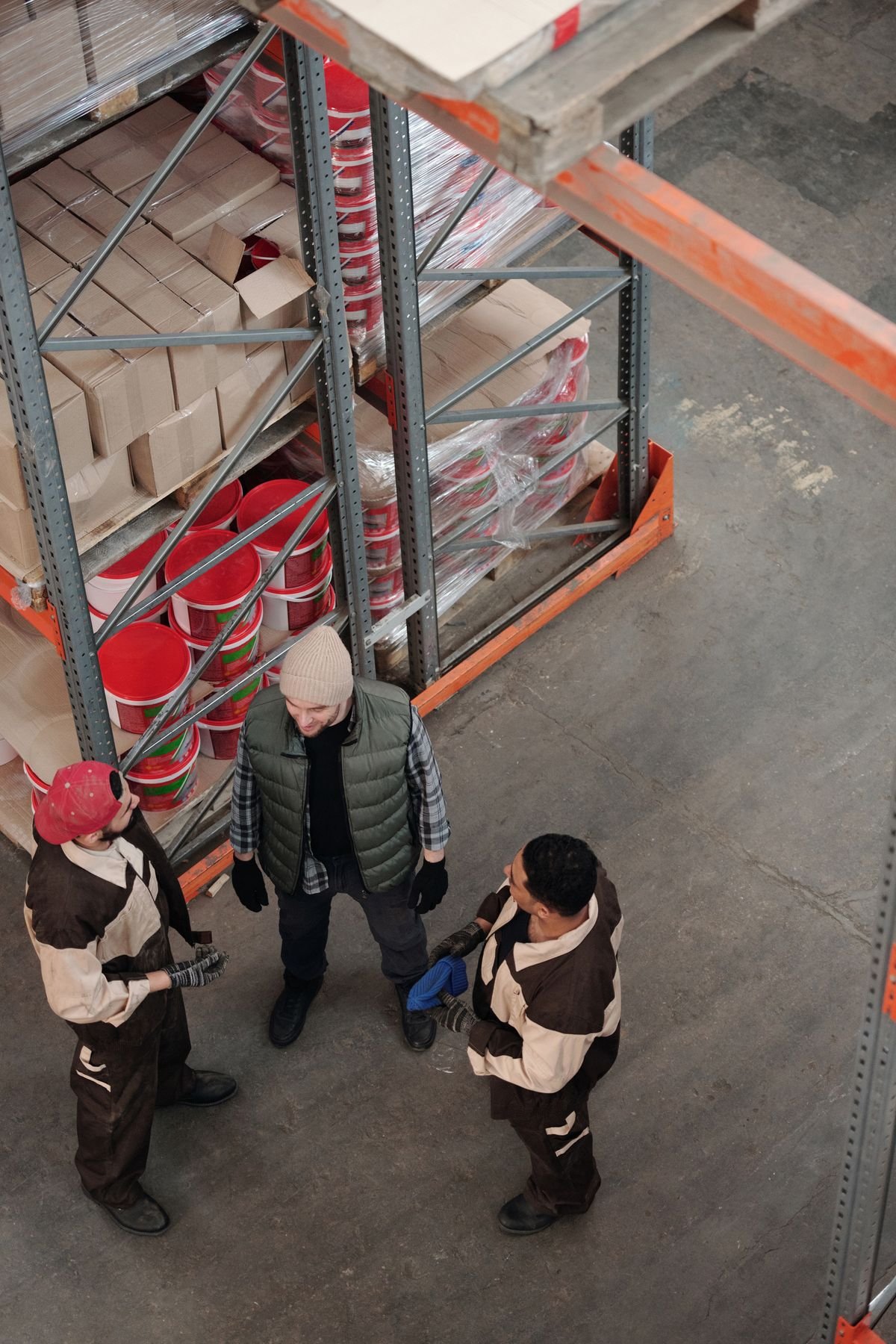
Seasonal Staffing: Planning for Eid and Ramadan Volume Spikes
Import volume and warehouse throughput in Bangladesh are rarely flat across the year — the run-up to Eid and Ramadan in particular tends to concentrate a disproportionate share of annual receiving and outbound volume into a compressed window, covered in more detail in our seasonal warehousing guide. Staffing a warehouse for average monthly volume, without a plan for temporary or seasonal labour during these peaks, is a common way operations get overwhelmed at exactly the time of year when fulfilment speed matters most to customers. The alternative — maintaining a relationship with a temporary staffing source or cross-training staff from other parts of the business in advance — takes planning months ahead of the actual peak, not during it.
Training and Turnover: The Cost That Is Easy to Underestimate
Warehouse work looks straightforward from the outside, but a new staff member who does not yet know the specific layout, the specific labelling conventions, or the specific handling requirements for fragile or high-value stock makes mistakes at a materially higher rate than an experienced one. High turnover in a small warehouse means a disproportionate share of the workforce is perpetually in that early, mistake-prone period, which shows up as more picking errors, more damaged stock, and slower throughput even if headcount on paper looks adequate. Basic retention practices — clear role definitions, fair and predictable pay, and a functional safety environment — are a staffing cost-control measure as much as an HR consideration, because replacing and retraining staff is genuinely expensive even when the direct hiring cost looks small.
Basic Safety Training: A Staffing Investment With a Direct Cost Payoff
Warehouse injuries — a dropped pallet, a forklift incident, an improperly stacked rack that collapses — are not just a human cost, they are a direct operational cost through lost work time, damaged stock, and potential liability. Basic safety training covering proper lifting technique, safe forklift operation for anyone who will use one, and clear rules around racking weight limits and stacking height is inexpensive relative to the cost of even one serious incident, but it is one of the first things skipped when a small warehouse operation is focused purely on getting product moving. Fire safety is a related and often overlooked piece of this, particularly relevant given how many imported goods (packaging materials, textiles, certain electronics) are combustible — see our warehouse fire safety guide for what a functioning safety setup actually requires beyond just staffing.
In-House Staff vs Outsourced Warehouse Labour
Some importers hire and manage warehouse staff directly; others use a 3PL or outsourced warehouse operator specifically to avoid the staffing management burden, covered in our 3PL vs in-house warehouse comparison. The staffing question and the 3PL question are closely linked — if you do not currently have anyone with warehouse management experience on your team, and you are not planning to hire that expertise, outsourcing to a 3PL is often a more realistic path than trying to build and manage a staffing structure from scratch while also running the rest of the business.
Security and Accountability: A Staffing Question, Not Just a Physical One
Warehouse security is often framed purely in terms of locks, cameras, and gates, but staffing structure is just as much a part of loss prevention. Clear accountability for who is responsible for what stock, at what stage, makes it far easier to trace where a discrepancy actually happened when one shows up during a stock count. A warehouse where responsibilities are loosely shared among whoever happens to be available that day makes it nearly impossible to identify whether a shortfall is a counting error, a picking error, or something more serious. See our warehouse security guide for the physical side of this; the staffing structure is the half of the picture that is easy to overlook.
Common Staffing Mistakes Small Importers Make
- Treating “warehouse staff” as one interchangeable role instead of distinct receiving, picking, and inventory-count functions.
- Running lean year-round with no seasonal staffing plan for Eid and Ramadan volume spikes.
- Underinvesting in basic training and retention, absorbing the hidden cost of constant staff turnover instead.
- Never assigning clear accountability for specific stock or zones, making loss and discrepancy tracing nearly impossible.
- Defaulting to in-house staffing without seriously comparing the real cost and management burden against a 3PL alternative.
Building a Warehouse Operation That Actually Works
Staffing is not a detail to solve after the warehouse is built — it shapes whether the space you build actually functions the way you planned. If you are setting up or restructuring a warehouse operation for your import business and want to think through the staffing model before committing to a layout, talk to DE International. See also our guides on warehouse management system basics and simple inventory management tips, or browse our warehouse services.
