
Import & Export Guides
Cold Chain Last-Mile Delivery: Getting Frozen and Chilled Goods the Final Kilometer in Dhaka Traffic
Aug
A cold chain can be executed perfectly from a Chinese factory through sea freight, port clearance, and a temperature-controlled warehouse in Dhaka — and still fail in its final two or three kilometres, stuck in traffic on the way to a restaurant, grocery shop, or pharmacy. Last-mile delivery is consistently the weakest link in cold chain logistics everywhere in the world, and Dhaka’s traffic conditions make it a sharper problem here than in most cities.
Why the Last Mile Is Structurally the Hardest Part of a Cold Chain
Every earlier stage of a cold chain — a reefer container at sea, a cold storage warehouse — involves a large, well-insulated, purpose-built space holding a stable temperature for an extended period. Last-mile delivery is the opposite: a smaller vehicle, shorter insulation buffer, frequent door-opening as the vehicle stops at multiple delivery points, and much less control over how long the journey actually takes. The thermal buffer that protected the product for weeks at sea can be undone in a single delayed afternoon delivery run if the last-mile leg is not planned with the same seriousness as the rest of the chain.
How Dhaka Traffic Specifically Breaks Cold Chain Assumptions
Delivery route planning for perishable or temperature-sensitive goods usually assumes a reasonably predictable transit time between stops. Dhaka traffic does not reliably offer that — a route that takes twenty minutes on one day can take over an hour on another because of congestion, road closures, or time-of-day patterns, and that variability is far less forgiving for a chilled or frozen delivery than for general cargo. A delivery schedule built around best-case transit times, without buffer for Dhaka’s actual traffic variability, is one of the most common reasons product arrives at the final stop warmer than it should be, even when everything upstream in the cold chain was handled correctly.
Vehicle Choice: Why a Full Reefer Truck Is Not Always the Right Last-Mile Tool
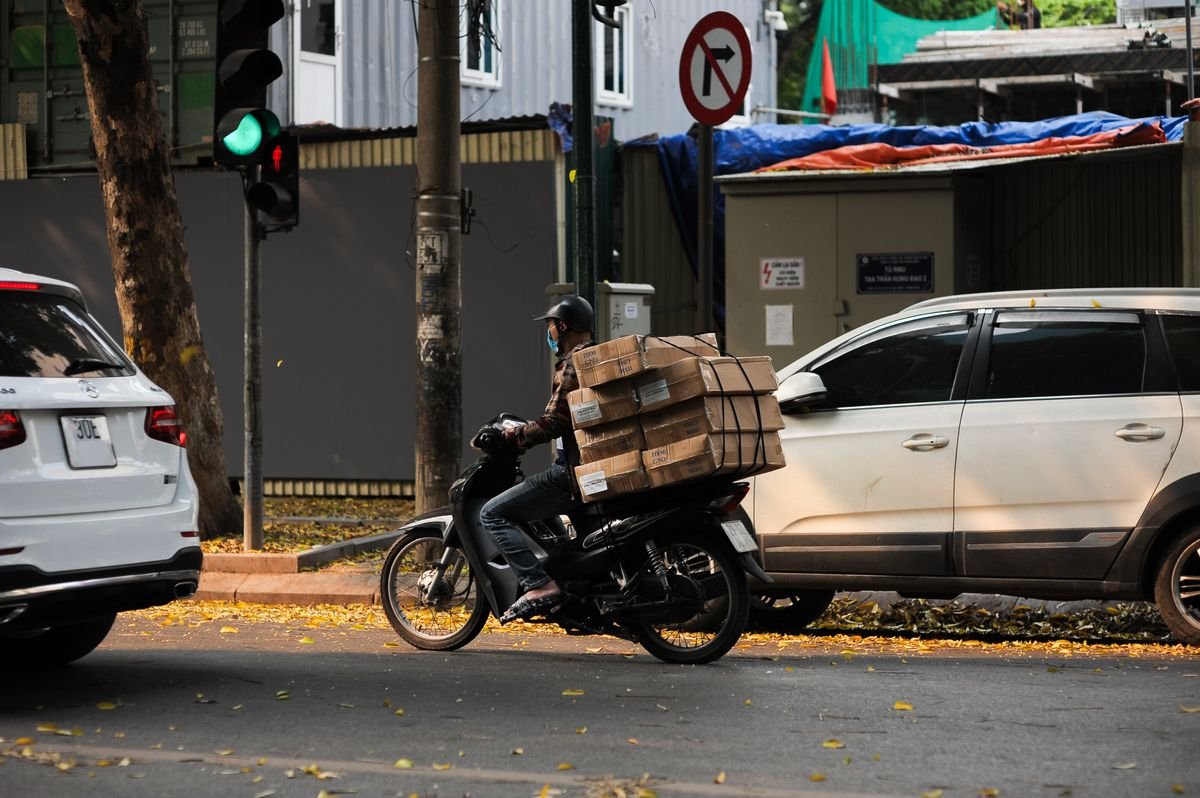
A full-size refrigerated truck, effective for the trunk haul between a warehouse and a distribution point, is often the wrong tool for last-mile delivery through dense city streets — it is slower to navigate narrow lanes, harder to park near small retail points, and its cooling system is sized for a much larger cargo volume than a typical last-mile drop actually carries. Smaller insulated vehicles, or in some cases insulated delivery boxes on motorbikes for genuinely short, fast hops, can outperform a full reefer truck on the last mile specifically because they move through city traffic faster, even though they offer a shorter thermal buffer per trip. The right choice depends on delivery distance, stop count, and product sensitivity — there is no single correct vehicle type for every last-mile cold chain leg.
Driver Training as an Overlooked Cold Chain Variable
The person driving the last-mile delivery vehicle makes real-time decisions that affect temperature outcomes — how long the door stays open at each stop, whether the vehicle is left running or switched off during a longer stop, and how routes are actually navigated when the planned route is blocked by traffic. A driver who understands why these choices matter for the cargo, not just how to drive the route, tends to make noticeably better decisions under pressure than one who has only been told to “deliver it quickly.” Basic training on cold chain handling for delivery drivers — not just general driving safety — is a low-cost intervention that is easy to skip when a delivery operation is focused purely on route efficiency, but it directly affects whether product survives the least controllable leg of the chain in acceptable condition.
Door-Opening Frequency: An Underrated Source of Temperature Loss
Every time a delivery vehicle’s door opens at a stop, warm ambient air displaces cold air inside, and the cooling system has to work to recover that lost temperature before the next stop. A multi-drop last-mile route with many small deliveries opens the door far more often than a single large delivery, which means route sequencing — grouping and ordering stops to minimise total door-open time and total elapsed route duration — is a genuine temperature-control decision, not just a delivery efficiency one. Insulated curtains or strip doors that limit how much of the cargo area is exposed during a stop are a low-cost mitigation that many last-mile operations skip.
Monitoring the Last Mile, Not Just the Warehouse
Cold chain temperature monitoring is often set up carefully for warehouse storage and reefer container transit, and then simply stops once the vehicle leaves for last-mile delivery, on the assumption that the trip is short enough not to matter. Given how variable Dhaka traffic actually is, that assumption is often wrong. Portable temperature loggers or simple IoT sensors, covered in our cold chain monitoring guide, extended to the last-mile leg specifically, are what actually tell you whether a delivery that took ninety minutes instead of the planned thirty caused a real temperature excursion or not — without that data, you are guessing.
Building Realistic Buffer Time Into Delivery Commitments
A significant part of the last-mile cold chain problem in Dhaka is not the traffic itself but the delivery window promised to the customer against it. A commitment to deliver “within the hour” made without accounting for realistic traffic variability sets up a choice between missing the promised window or rushing a route in a way that skips proper vehicle pre-cooling or route sequencing. Building a delivery commitment around a realistic worst-case transit time, rather than a best-case one, protects both the product and the customer relationship — a slightly longer stated delivery window that is reliably met protects quality far better than an aggressive window that depends on traffic cooperating. This is as much a customer communication decision as a logistics one, and it is worth setting delivery-window expectations deliberately rather than defaulting to whatever sounds most competitive against other providers.
Packaging as a Last-Mile Safety Net
Because the last mile is the least controllable part of the chain, packaging choices — insulated boxes, gel packs, or dry ice depending on the product, covered in our packaging comparison guide — matter more here than at any earlier stage. A product with an appropriately sized thermal buffer built into its final packaging can absorb an unexpectedly long delivery route without damage; one packed with minimal margin because “the warehouse to customer distance is short” has no room to absorb Dhaka’s actual traffic variability.
Common Last-Mile Mistakes in Bangladesh
- Planning delivery schedules around best-case transit times instead of Dhaka’s realistic traffic variability.
- Defaulting to a full-size reefer truck for last-mile delivery when a smaller, faster-moving vehicle would protect temperature better.
- Stopping temperature monitoring once cargo leaves the warehouse, losing visibility on the leg most likely to cause a real excursion.
- Sequencing multi-drop routes for delivery convenience only, without considering the cumulative effect of frequent door-opening.
- Packing final-mile product with minimal thermal buffer, leaving no margin for a delivery that runs longer than planned.
Closing the Gap in Your Cold Chain
The last mile deserves the same planning seriousness as the sea freight and warehouse stages of a cold chain, precisely because it is the least predictable leg and the one with the smallest thermal buffer. If you are building or troubleshooting a cold chain distribution system in Dhaka or another Bangladeshi city, talk to DE International about the full chain, not just the import stage. See also our guides on refrigerated transport and cold chain logistics for agriculture, or browse our shop.
