
Import & Export Guides
Can Sealing Machine Price in Bangladesh: Choosing a Seamer for Tin, Aluminium and PET Cans
Oct
A can sealing machine in Bangladesh is usually imported from China, and the right one depends on three things: what the can is made of (tinplate, aluminium, PET plastic or paper composite), the diameter of the lid, and how many cans you close per shift. DE International sources manual, semi-automatic and automatic can sealing machines from factories in China and delivers them door-to-door to Dhaka, Chattogram or your factory; the price depends on the model, the number of seaming heads and the change parts you need, so ask us for a current quote built around your can.

What does a can sealing machine actually do
A metal can is closed with a double seam: the curled edge of the lid (the cover hook) and the flange of the can body (the body hook) are rolled together into five interlocked layers of metal, with a thin ring of sealing compound inside the lid filling the tiny gaps. A bad seam leaks, rusts or swells.
Every double seamer, from a hand-cranked table model to a fast rotary machine, does the same job with the same parts:
- Chuck — a steel plug that fits exactly inside the lid and holds it from above. It must match your lid diameter and countersink depth.
- Base plate (lifter) — pushes the can up against the chuck with a set pressure.
- First operation roll — curls the lid edge under the can flange so the hooks interlock.
- Second operation roll — flattens and tightens that curl into a hard, compact seam.
Because the chuck and rolls are sized to one can diameter, a machine bought for one can size will not close a different size until you buy and fit a new set of change parts. This is the most common surprise for first-time buyers.
Which type of can sealing machine suits a Bangladeshi business
The choice is mostly about output and labour, not about quality — a correctly set manual seamer can make a perfectly good seam. Here is how the main types compare:
| Type | How it works | Typical users in Bangladesh | Watch out for |
|---|---|---|---|
| Manual (hand-crank) seamer | Operator places the can, cranks or levers the rolls in by hand | Home bakers, small ghee and honey sellers, trial batches, R&D | Seam quality depends on operator skill; slow |
| Semi-automatic tabletop seamer | Operator places the can and lid; a motor spins the can and the rolls close it | Tea and coffee packers, dry fruit, cookies in tins, small snack brands | Single-phase vs three-phase motor; check change-part cost before ordering |
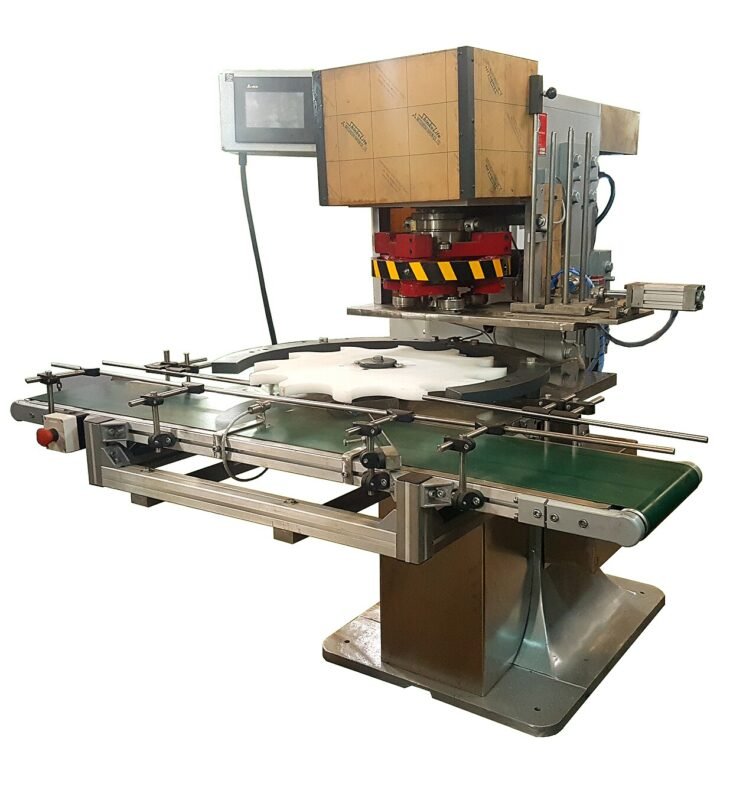
| Automatic seamer with conveyor | Cans feed on a conveyor, lids drop from a stack, seaming is automatic | Powdered milk, spices, ghee, oil and beverage factories with steady volume | Needs a matching filling line before and a coder after it |
| Vacuum or nitrogen-flushing seamer | Removes air or replaces it with nitrogen before seaming | Milk powder, infant food, nuts, coffee — anything that goes rancid with oxygen | Ask how residual oxygen is checked; vacuum chamber seals wear |
If you already run a filling line, match the seamer to its speed; a fast seamer behind a slow filler just sits idle.
Tinplate, aluminium, PET or paper: the can decides the machine
Tell the supplier exactly what can you use, because each material behaves differently under the rolls:
- Tinplate three-piece cans (body, bottom and lid) — the classic tin for ghee, condensed milk, biscuits and mustard oil. Strong flange, forgiving to seam.
- Aluminium two-piece beverage cans — thin walls and a thin neck. They need gentler roll profiles and accurate lifter pressure, or the body crushes. These are normally run on dedicated beverage seamers.
- PET plastic cans with aluminium easy-open ends — popular for cold coffee, bubble tea and dry snacks. The roll profile and pressure are different from tinplate, so a seamer set for tins will often crack a PET flange. PET cans also cannot go through high-temperature retort sterilisation like tinplate can.
- Paper composite cans (like crisp tubes) with a metal end — used for chips, nuts and powders. The paper body needs a different chuck and lower pressure.
Can sizes are often written as a three-digit code such as 211 or 300 (inches plus sixteenths of an inch). Better than measuring, courier a few sample cans and lids to the factory so the supplier sets the machine on your real can.
How to check a can seam before you trust the machine
A seam can look neat and still leak. Canners do a seam teardown: cut the seam, peel it apart and measure it with a seam micrometer. Ask the supplier for a teardown video on your can, and repeat it after installation:
- Look at the outside: no sharp edge (a “cut-over”), no wrinkles, no droop below the seam, no false seam where the hooks missed each other.
- Measure seam thickness and seam width with a seam micrometer at three or four points around the can.
- Measure the countersink depth from the top of the seam down to the lid panel.
- Strip the seam and measure the body hook and cover hook, and check the overlap between them and the tightness (wrinkle rating) of the cover hook.
- Compare your readings with the specification the can and lid maker publishes for that size — the machine maker sets the machine, but the can maker sets the target numbers.
- For vacuum or nitrogen cans, also check that the lid panel is pulled in (vacuum) or measure residual oxygen if you have a meter.
Record these numbers every shift and at every can-size change; worn rolls show up here before customers notice.
Power, space and spare parts in Bangladesh
Most small seamers from China can be ordered for Bangladesh’s 220–230V single-phase supply, while automatic lines usually expect three-phase 380–415V. Confirm this on the proforma invoice, not in a chat. Voltage swings during load-shedding and generator changeover in Gazipur, Narayanganj or Savar are common, so fit at least a phase-failure and over-voltage relay.
The parts that wear are the seaming rolls, the chuck and the lifter springs and bearings. Order one spare set of rolls and a chuck for each can size with the machine itself; shipping two small parts by air later costs far more per kilogram than adding them to the original sea or air consignment. If a breakdown does happen, see our guide on air-freighting emergency spare parts from China.
What decides the price of a can sealing machine
We do not publish a single price because the honest answer changes with each specification. These are the factors that move the quote:
| Cost factor | Why it changes the price |
|---|---|
| Level of automation | Manual, semi-automatic and automatic machines are different machines, not one machine with options |
| Number of seaming heads | More heads means more cans per minute and a heavier, costlier machine |
| Can material and size range | Each extra can diameter needs its own chuck and roll set |
| Vacuum or nitrogen flushing | Adds a chamber, a pump or gas system, and seals that need replacing |
| Contact parts in stainless steel | Food-grade stainless around the can and lid costs more than painted steel |
| Conveyor, lid feeder and coder integration | A complete line costs more than a standalone seamer |
| Shipping, duty and VAT to Bangladesh | Depends on weight, volume, route and the HS code customs accepts |
Can closing machines are generally classified under HS heading 8422 (machinery for filling, closing and sealing bottles, cans and other containers). The exact subheading and the duty and VAT rate should be confirmed with a C&F agent before you open the LC; our sister cargo team at decl.bd can clear it for you, and our HS code guide explains why the code matters.
Common mistakes when buying a can sealer from China
- Buying before sending a can. The machine arrives, the chuck does not fit, and new change parts take weeks. Always send samples first.
- Assuming one machine does tins and PET. It can, sometimes, with different rolls and settings — but confirm it in writing and see a test video on both.
- Forgetting labelling and coding. BSTI and food safety rules expect batch and expiry information on many packaged foods; plan a date coding machine and label printing at the same time.
- Paying 100% upfront to an unverified seller. Read how to verify a Chinese supplier before paying and arrange a pre-shipment inspection.
FAQ
Where can I buy a can sealing machine in Bangladesh?
Some machinery shops in Dhaka keep a few small seamers, but most models, sizes and change parts are imported from China. DE International sources the machine to your can size, inspects it before shipping and delivers it to your door. WhatsApp +880 1750-859967.
What is the price of a can sealing machine in Bangladesh?
It depends on manual vs automatic, the number of heads, the can size range, vacuum or nitrogen options, and freight and duty. Send us your can, lid and daily output and we will give you a current quote.
How do I know if my cans are sealed properly?
Do a seam teardown: measure seam thickness, width, countersink, body hook, cover hook and overlap, and compare them with the can maker’s specification.
Next step: send your can and lid details, product and expected cans per day to DE International through our contact page or WhatsApp +880 1750-859967. See our services, the China sourcing and buying agent service, or browse machines in our shop.
