
Import & Export Guides
Juice Dispenser Machine Price in Bangladesh: Choosing One for a Restaurant or Event Business
Oct
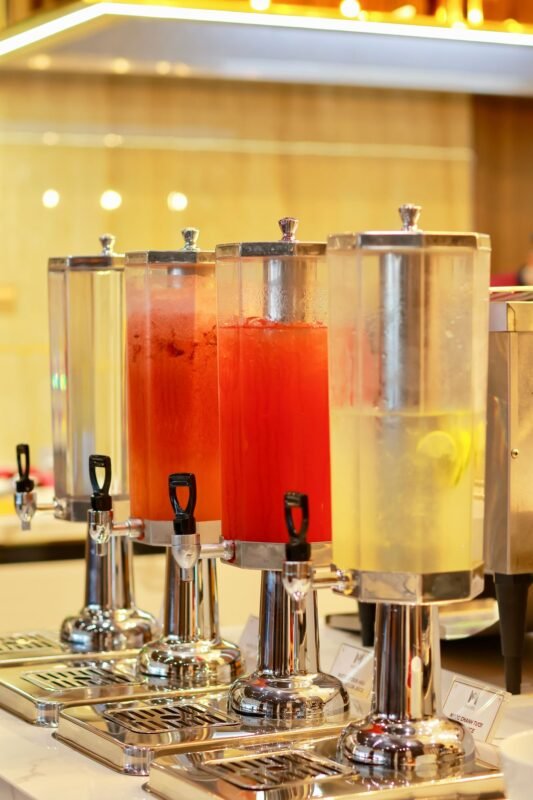
For a restaurant, juice bar or event business in Bangladesh, the choice is between a refrigerated bowl juice dispenser (a compressor cools and stirs juice in one to three clear tanks) and a non-refrigerated buffet dispenser (glass, acrylic or steel jars with a tap and an ice tube). Refrigerated dispensers suit shops selling juice all day; buffet dispensers suit weddings, iftar parties and hotel breakfasts where juice is served for a few hours. The juice dispenser machine price in Bangladesh depends on that type, the number and size of tanks, the cooling and stirring system and build quality. DE International sources both kinds from factories in China and delivers them door-to-door — ask us for a quote for the tank count and use you have in mind.
Which type of juice dispenser suits your business?
| Type | How it keeps juice cold | Best for |
|---|---|---|
| Refrigerated bowl dispenser | Built-in compressor cools a steel evaporator inside each bowl; a paddle or spray pump keeps juice moving | Juice shops, fast food outlets, canteens serving all day |
| Non-refrigerated buffet dispenser | An ice-filled tube in the centre of the jar, or ice added to the juice | Weddings, catering, iftar events, hotel breakfast buffets |
| Concentrate (post-mix) dispenser | Mixes syrup or concentrate with chilled water at the tap | Chains with a fixed recipe and high volume |
| Slush / granita machine | Freezes juice partly into ice crystals while stirring | Summer drinks, shops near schools and markets |
Most small buyers in Dhaka and Chattogram end up with either a two- or three-bowl refrigerated unit for a shop, or a set of glass or stainless buffet jars for a catering business. Concentrate dispensers only make sense if you have a steady supply of a specific concentrate and enough volume to justify it.
How a refrigerated bowl dispenser works
Inside each clear bowl sits a stainless steel cooling column connected to a small refrigeration system under the counter body. The compressor pushes refrigerant through the column, which chills the juice around it. To stop the juice from separating and to spread the cold evenly, the machine moves the liquid in one of two ways:
- Paddle stirring — a magnet-driven paddle rotates slowly in the bowl. Simple and quiet, good for clear juices and lemonade.
- Spray or jet circulation — a small pump lifts juice and sprays it down the inside of the bowl. It looks attractive on a counter and keeps pulpy juices like mango or orange moving, but it has more parts to clean.
A thermostat switches the compressor on and off to hold the set temperature. Many units also let you switch off cooling and use only the stirrer, which helps with drinks that should not be ice cold.
Bangladesh-specific things to check before buying
- Voltage fluctuation. Compressors are sensitive to low and unstable voltage. Most dispensers run on 220V 50Hz, but in many areas a voltage stabiliser protects the compressor from damage during load-shedding and supply swings.
- Heat and dust. The condenser grille on the side or back needs airflow. In a hot, dusty shopfront it clogs quickly, the compressor runs longer, and cooling drops. Leave space around the machine and brush the grille regularly.
- Acidic and sugary drinks. Lemon, tamarind (tetul), borhani, and lassi-style drinks are acidic or contain dairy. Food-contact parts should be food-grade stainless steel and food-grade plastic; cheap metals corrode and taint flavour.
- Ramadan peak. Demand for juice dispensers rises sharply before Ramadan for iftar sales and events. Order well before the season so the shipment is not caught in the rush.
- Refrigerant type. Ask which refrigerant the unit uses, so a local technician can service it with the right gas and tools.
Bowl material, size and tap design
Bowls are usually made of clear food-grade plastic such as polycarbonate or a similar material. Ask the supplier to state the material in writing, check it is food-grade, and check the bowl can be washed with warm water without clouding or cracking. Common sizes differ by model, so think in terms of how many glasses you sell between refills rather than chasing the biggest bowl: a large bowl full of juice that sits for hours is worse for quality than a smaller one refilled often.
The tap is the part that wears and leaks first. A tap that comes apart easily for cleaning, with spare gaskets and springs in the box, saves a lot of trouble. Drip trays should be deep enough not to overflow during a busy evening.
Cleaning routine that keeps juice safe
Fresh juice with sugar is an ideal place for bacteria and yeast to grow. A dispenser that is only rinsed at night will start to smell and ferment. A simple daily routine:
- Empty the bowl at closing time; never top up old juice with new juice.
- Remove the lid, bowl, paddle or spray tube, and tap; wash in warm water with a food-safe detergent.
- Take apart the tap and clean the gasket seat, where residue collects.
- Sanitise parts with a food-safe sanitiser, rinse as directed, and let them air-dry.
- Wipe the cooling column and the drip tray; once a week, brush the condenser grille.
If you are choosing between models, ask the supplier to show the disassembly in a video. A dispenser that takes too long to clean will not be cleaned properly.
What decides the juice dispenser price?
| Factor | Effect |
|---|---|
| Refrigerated vs buffet type | Compressor, thermostat and stirring add cost |
| Number and size of bowls | Single, double or triple tank |
| Paddle or spray circulation | Spray adds a pump and more parts |
| Body material | Plastic panels vs stainless steel body |
| Brand of compressor and build quality | Affects lifespan and noise |
| Spare parts included | Taps, gaskets and paddles |
| Freight, duty and VAT | Depends on size, weight and classification |
Prices change with the model and the season, so ask us for a current quote with the number of tanks and the type you need. We can also quote a mixed order, for example two refrigerated units for a shop and a set of buffet jars for events, consolidated into one shipment.
Buying for a catering or event business
Caterers for weddings, biye receptions, corporate iftars and conferences buy differently from shops. The dispensers travel in vans, get loaded and unloaded several times a week and are washed in a hurry between events. For this kind of work, look for jars and stands that come apart and stack for transport, thick glass or tough food-grade plastic that survives handling, stainless steel taps rather than thin plastic ones, and a padded carton or case for each unit. Matching sets also matter: a row of identical dispensers looks far better on a buffet table than a mix of styles bought at different times, so order enough in one shipment.
Common mistakes
- Buying a buffet jar for all-day sales. Ice melts and dilutes the juice; a refrigerated unit is better for a shop.
- No stabiliser. A burned compressor in the first summer is the usual result in areas with unstable power.
- Pushing it against a wall. Poor airflow makes cooling weak and shortens compressor life.
- Skipping spare taps. A leaking tap during an event is a serious problem; keep spares.
Running a drink stall or juice shop? See our guides on the sugarcane juice machine and the cup sealing machine for takeaway drinks. For shipping several machines together, our cargo team at decl.bd can quote the freight.
FAQ
What is the juice dispenser machine price in Bangladesh?
It depends on whether it is refrigerated or buffet type, the number and size of bowls, the circulation system and build quality. DE International gives a current quote for your choice.
Which juice dispenser is best for a restaurant?
A two- or three-bowl refrigerated dispenser suits restaurants serving juice all day; paddle stirring is easier to clean than spray models.
Which dispenser is good for weddings and iftar events?
Non-refrigerated glass or stainless steel buffet dispensers with an ice tube are portable and look good on a buffet table.
Do I need a voltage stabiliser for a juice dispenser?
In areas with unstable supply, a stabiliser helps protect the compressor from low voltage and power swings.
Who can import juice dispensers from China?
DE International sources and delivers juice dispensers from China to anywhere in Bangladesh. WhatsApp +880 1750-859967.
Talk to DE International: tell us what you want to make, your daily output and your power supply, and we will shortlist machines from verified Chinese factories and handle shipping and customs to your door. WhatsApp +880 1750-859967, or use our contact page. See all our services, our China sourcing & buying agent service, or browse the shop.
