
Import & Export Guides
How LCL Consolidation Actually Works: Inside a China Freight Forwarder’s CFS Warehouse
Sep
When a Bangladeshi importer books an LCL shipment, the booking confirmation makes it sound simple: cargo goes in, a container comes out the other end. What actually happens between those two points is a physical sorting operation inside a Container Freight Station (CFS) in China, where dozens of unrelated shipments from different importers, in different quantities, headed to different ports, are consolidated into a shared container. Understanding that process explains almost every LCL quirk that importers otherwise find confusing — from why a shipment can sit for days before departure, to why cargo condition at the CFS matters just as much as packaging at the factory.
What a CFS Warehouse Actually Does
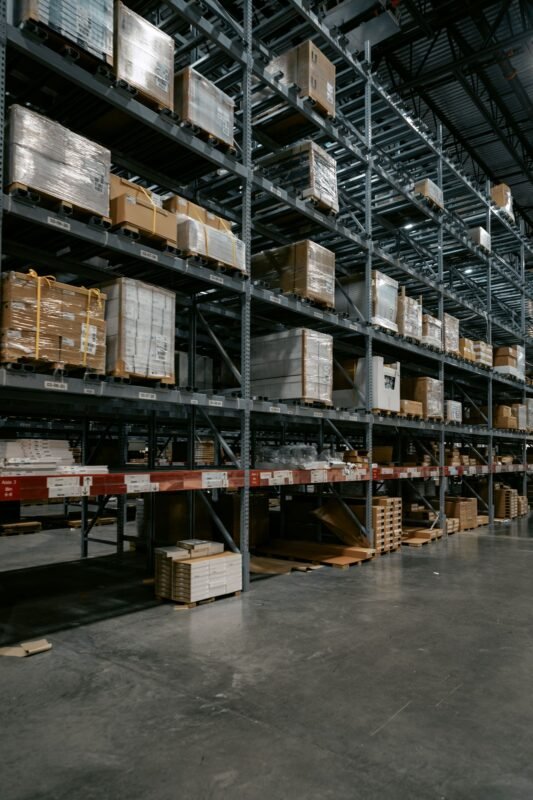
A CFS is a bonded warehouse, usually located near a major port such as Shenzhen, Guangzhou, or Ningbo, where a freight forwarder or NVOCC receives loose cargo from many different shippers. Staff there physically check each shipment against its booking, palletize or crate it for stability, and hold it until enough compatible cargo has arrived to fill a shared container bound for the same destination port. This is fundamentally different from FCL, where a single container is sealed at the factory or a single warehouse and never opened again until it reaches the destination CFS.
Why Your Cargo Waits for Other People’s Cargo
The single biggest source of LCL delay frustration is also the most basic fact about how consolidation works: a container does not leave until it is full, or until a forwarder decides to sail it with available space unfilled and accept the cost of unused capacity. Your shipment is one piece of a larger puzzle the forwarder is assembling, and if other shippers booked on the same consolidation are running late, your cargo effectively waits with them. This is why LCL transit-time quotes are usually given as a range rather than a fixed date, and why choosing a forwarder with a reliably high shipment volume on your specific trade lane matters — higher volume on a lane means containers fill and depart more predictably.
The Physical Handling Your Cargo Goes Through
Because your cargo is one of many shipments moving through the same warehouse floor, it gets handled more than a sealed FCL container would: unloaded from the truck that brought it from the factory, checked against documentation, moved into a staging area, eventually loaded into the shared container alongside cargo from other shippers, and positioned and braced so nothing shifts during the voyage. Each of these touches is a chance for mishandling, which is part of why packaging that would survive a direct FCL move sometimes is not enough for LCL — the cargo genuinely passes through more hands.
CFS vs CY: Two Different Points of Handoff
LCL cargo moves through the CFS, where mixed shipments are consolidated or deconsolidated. FCL cargo moves through the CY (container yard), where whole sealed containers are stored and loaded without being opened. Understanding which one applies to your shipment matters when you are troubleshooting a delay or trying to understand a charge on an invoice — a CFS-related handling fee is a normal and expected part of LCL shipping, not a sign that something has gone wrong.
Why Cargo Condition at Drop-Off Matters More for LCL
Because LCL cargo sits in a shared warehouse and gets consolidated alongside other shipments, poorly packed cargo does not just risk damage to itself — it can also be rejected at the CFS if staff judge it unfit to consolidate safely with other shipments, or it can be repacked at the forwarder’s discretion with a handling charge added. Cargo arriving at the CFS in factory-standard packaging built for a direct container load, without extra bracing for the additional handling, is one of the more common causes of unexpected charges or delay on LCL shipments.
Deconsolidation on the Bangladesh Side
The same process happens in reverse at the Chattogram-side CFS or ICD: the shared container is opened, and each importer’s portion is separated out and matched against their own documentation for individual customs clearance. Because deconsolidation and clearance for LCL cargo happens on a per-shipment basis rather than as one bulk container release, and because it depends on where your specific cargo sits within the deconsolidation queue, it can take longer than FCL clearance for an equivalent volume of goods — a scheduling reality that is worth building into any tight delivery timeline rather than discovering after booking.
What This Means for How You Should Book LCL
Knowing that your cargo is consolidated cargo, not solo cargo, changes what questions are worth asking a forwarder before booking: how full is the consolidation typically running on this lane, what is the CFS handling process for cargo arriving in standard export packaging, and how is deconsolidation and clearance sequenced on arrival. A forwarder who can answer these specifically, rather than only quoting a rate, is usually the one running a more predictable consolidation operation.
Reading an LCL Invoice Once You Understand the CFS Process
Many of the line items that confuse first-time LCL shippers make more sense once the CFS process is understood. Origin CFS handling charges cover the physical work of receiving, checking, and consolidating cargo described earlier. Destination CFS or deconsolidation charges cover the mirror process on arrival. THC (terminal handling charges) apply at both ends regardless of LCL or FCL. None of these are hidden fees in the sense of being arbitrary — they correspond to specific physical handling steps that FCL cargo, moving as a single sealed unit, largely avoids. Understanding which charge maps to which step makes it possible to actually query an invoice line intelligently rather than accepting or disputing it blind.
When Paying More for FCL Actually Costs Less Overall
For cargo that is time-sensitive, fragile, or valuable enough that extra handling risk matters, the calculation is not simply LCL rate versus FCL rate for a full container — it is worth comparing LCL cost plus the handling risk and consolidation wait time against booking a smaller FCL container or splitting cost with another importer on a joint FCL booking. There is a volume threshold, different for every product and value point, above which FCL stops being the more expensive option once the full picture of LCL handling risk and consolidation delay is accounted for, and it is worth running that comparison explicitly rather than defaulting to LCL purely because the shipment does not fill a container.
Choosing a Forwarder Based on Real Consolidation Volume, Not Just Rate
The single most useful question an importer can ask before booking LCL is how frequently that forwarder actually sails on the specific China-to-Bangladesh lane in question, and how full their containers typically run. A forwarder with strong, consistent volume on a given route fills containers faster and more predictably, while a forwarder with thin volume on that same route may hold cargo far longer waiting to reach a viable container fill, regardless of how competitive their quoted rate looked at booking time. Rate comparisons that ignore this operational reality often lead importers to book with whoever quoted lowest, only to discover the real cost was weeks of unplanned delay.
DE International books LCL shipments through consolidation partners chosen for reliable fill rates on the China–Bangladesh lane, alongside packaging guidance built for the extra handling LCL cargo goes through. See our services, browse the shop, work with our China sourcing and buying agent service, or contact us to discuss your next shipment. Related reading: LCL vs FCL Shipping Explained, CY vs CFS in Sea Freight, and Terminal Handling Charges in Sea Freight.
