
Import & Export Guides
Mini Cold Storage Condenser Unit Placement: Indoor vs Outdoor Installation
Aug
Buyers planning a mini cold storage unit spend a lot of time comparing compressor types, panel thickness, and door specifications, and comparatively little time thinking about where the condensing unit itself will actually sit. This is a mistake, because condenser placement affects heat rejection efficiency, running cost, maintenance access, and equipment lifespan just as directly as the compressor selection does — and unlike the compressor, the placement decision is something the buyer, not the equipment, controls.
What the condenser is actually doing
In a refrigeration system, the condenser’s job is to reject the heat absorbed inside the cold room out into the surrounding air. This means the condenser needs a steady supply of ambient air that is cooler than the refrigerant gas passing through its coils, and it needs that air to actually move through the unit rather than recirculating the same warmed air repeatedly. Every placement decision ultimately comes back to this single requirement: does the location give the condenser access to enough fresh, moving air to reject heat efficiently, or does it trap the unit in its own exhaust.
Outdoor placement: the default for a reason
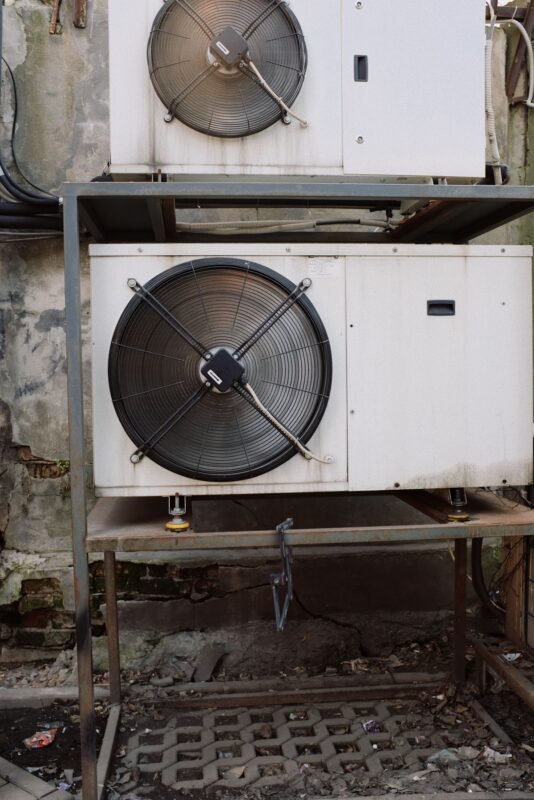
Mounting the condensing unit outdoors, typically on an external wall bracket or a ground-level pad beside the cold room, is the standard approach for most mini cold storage installations in Bangladesh, and for good reason. Outdoor air movement is generally unrestricted, heat rejected by the unit disperses into open air rather than building up in an enclosed space, and the unit is physically separated from the cold room’s insulated envelope, reducing the risk of condensation or heat transfer issues at the wall penetration point. The trade-off is direct exposure to Bangladesh’s climate — monsoon rain, high humidity, dust, and in some locations salt air — all of which accelerate wear on an unprotected outdoor unit.
Indoor placement: when it makes sense and what it requires
Indoor condenser placement, inside a dedicated plant room or ventilated enclosure, is less common but becomes the better option in a few specific situations: where outdoor space is genuinely unavailable, where security concerns make an exposed outdoor unit a theft or vandalism risk, or where local dust and air quality conditions would clog an exposed condenser coil faster than an indoor filtered environment would. The catch is that an indoor condenser absolutely requires proper ducted ventilation to bring in fresh air and expel the rejected heat — a condenser placed indoors without adequate airflow will simply recirculate its own heat, causing the system to work harder, run less efficiently, and in a poorly ventilated worst case, struggle to maintain the cold room’s target temperature at all.
A worked comparison: two identical cold rooms, two different outcomes
Picture two businesses installing an identical mini cold storage unit. The first mounts the condenser outdoors on a shaded wall with clear airflow on all sides. The second, wanting to protect the unit from weather, places it inside a small enclosed utility room with no ventilation ducting, assuming the room’s own door being left open occasionally is enough airflow. Within a relatively short period, the second business notices the compressor running almost continuously and the cold room struggling to hold its set temperature during the hottest part of the day — because the condenser is simply reheating the same trapped air it already rejected minutes earlier, forcing the whole system to work far harder than its rated capacity should require. The fix is not a bigger compressor; it is proper ventilation for the space the condenser was placed in.
Protecting an outdoor unit without sacrificing airflow
The right way to protect an outdoor condenser from Bangladesh’s weather is a rain hood or louvered enclosure specifically designed to shed water while leaving air intake and discharge paths unobstructed — not a sealed box or a placement tucked into a tight, poorly ventilated alcove that solves the weather problem while creating the same recirculation problem an indoor placement would. If dust is the primary concern, more frequent coil cleaning is generally a better answer than restricting airflow, since a clean but exposed coil outperforms a protected but starved one.
Common condenser placement mistakes
- Placing the unit in a tight, enclosed space to protect it from weather without providing dedicated ventilation, causing heat recirculation and reduced cooling efficiency.
- Mounting the condenser where its exhaust air blows directly back into its own intake, a subtle version of the same recirculation problem that can happen even outdoors if the unit is boxed in by walls on multiple sides.
- Choosing a location for convenience or aesthetics without considering long-term maintenance access — coils need periodic cleaning, and a hard-to-reach unit tends to get cleaned less often than it should be.
- Underestimating exposure to monsoon flooding at ground level, when a raised mounting position would have avoided water damage to the unit’s electrical components.
Getting the placement decision right before installation
Condenser placement is a decision best made alongside your cold storage supplier during the site survey, not improvised on installation day. Every site has different constraints — available wall space, prevailing wind direction, security considerations, dust levels — and the right answer depends on your actual location, not a generic rule. Ask us for a site assessment before your unit is installed so the placement decision is made deliberately rather than by default.
Noise and neighbor considerations
An outdoor condensing unit is not silent, and in a dense commercial area or near residential space, fan and compressor noise from a poorly placed unit can become a genuine neighbor relations issue, not just a technical one. Positioning the unit away from shared walls with neighboring businesses or residences, and considering the direction noise will travel, is a small planning step at installation time that avoids a much harder conversation after the unit is already running and someone next door has started complaining.
Seasonal performance and Bangladesh's climate
Ambient temperature directly affects how hard a condenser has to work, since it is rejecting heat into whatever air surrounds it. During Bangladesh’s hottest months, an outdoor condenser in direct, unshaded sun works harder to reject the same amount of heat than it would in cooler weather or in a shaded position, simply because the temperature difference it is working against is smaller. A well-placed unit accounts for this by using shade — a roof overhang or a purpose-built sunshade that does not block airflow — to reduce this seasonal performance penalty, rather than leaving the unit to fight the hottest part of the year at a structural disadvantage.
Related reading
For the compressor choice itself, see compressor types for mini cold storage explained. Panel selection affects the same heat load the condenser has to manage — read PUF vs PIR panels for mini cold storage. For power reliability affecting your condenser’s uptime, see backup power for mini cold storage during load-shedding, and for the running cost implications of placement decisions, see mini cold storage electricity cost: what actually drives it.
DE International sources and installs mini cold storage systems with proper site assessment as part of our import and logistics services. Browse cold storage equipment in our shop, or work with our China sourcing and buying agent service for a custom specification. Contact us for a site assessment before you install.
