
Import & Export Guides
Warehouse Segregation: Storing Chemicals, Food and General Cargo Safely Apart
Sep
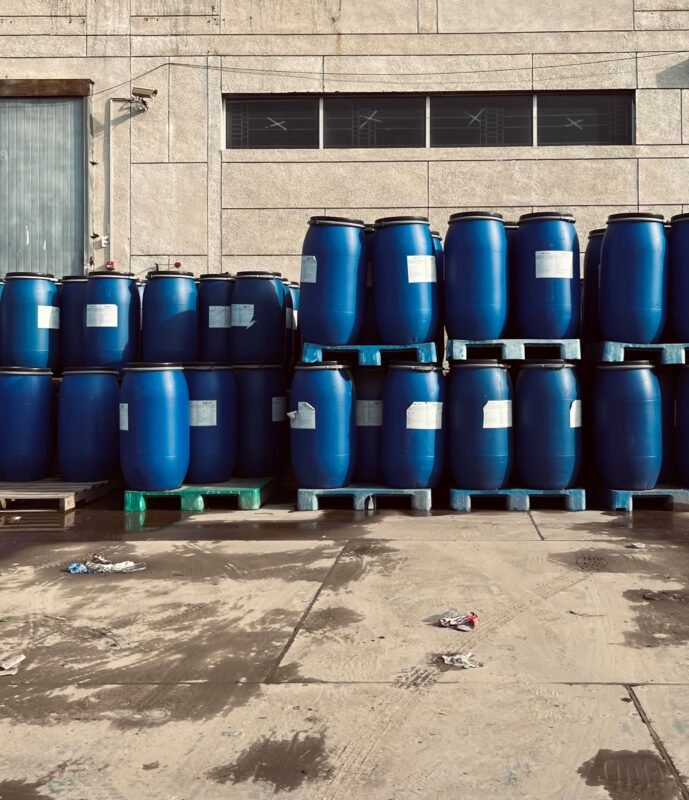
A surprising number of small and mid-sized Bangladeshi warehouses store chemicals, food products and general merchandise in the same space with far less separation than any of the three categories actually requires, usually because the warehouse was not purpose-built for mixed inventory and segregation was never designed in from the start. This is not just a safety compliance checkbox — improper segregation causes real, specific failure modes: chemical odour or vapour contaminating food products, chemical spills damaging general merchandise, and in the worst cases, genuinely dangerous chemical interactions between incompatible substances stored too close together.
Odour and Vapour Contamination Is the Most Common Failure, Not Spills
The most frequent real-world segregation failure is not a dramatic chemical spill but the slow, invisible migration of odour and volatile vapours from chemical products into nearby food or packaging materials, particularly in warm, poorly ventilated storage where volatile compounds evaporate more readily. Food products, and even packaging materials like cardboard and certain plastics, can absorb odours from strong-smelling chemicals stored nearby over time, resulting in product that is not contaminated in a way that shows up on visual inspection but that fails on smell or taste once a customer opens the package. This kind of contamination is very hard to reverse once it has happened, which is why prevention through physical separation and adequate airflow between zones matters more than trying to detect and correct it after the fact.
Incompatible Chemical Storage Is a Genuine Safety Risk, Not Just a Compliance Item
Certain categories of chemicals are genuinely dangerous when stored in close proximity to each other — oxidizers stored near flammable materials, acids stored near bases where a container failure could bring them into contact, or reactive substances that can generate heat, gas or fire risk if they mix. This is standard hazardous materials storage practice internationally, generally organised around compatibility classes that group chemicals by their reactive behaviour, and a warehouse storing multiple chemical types without reference to these compatibility classes is taking on a risk that has nothing to do with customs or commercial considerations and everything to do with basic workplace and fire safety. Any warehouse handling more than a single, well-understood chemical product should have someone with genuine chemical safety knowledge review the storage plan, rather than relying on general warehouse experience alone.
Physical Separation Methods That Actually Work at Small Scale
Full separate buildings are the gold standard but are not realistic for many smaller Bangladeshi warehouse operations, and the more achievable middle ground includes dedicated, physically walled-off sections within a larger building (not just a painted floor line or a gap between racking, which does nothing to stop vapour migration or contain a spill), independent ventilation for chemical storage zones where feasible, and secondary containment (bunding or spill trays) under any chemical storage area so a container failure does not spread across the floor into adjacent zones. Where a fully separate walled section is not currently possible, even a dedicated, well-ventilated corner with its own containment and clear physical distance from food and general merchandise is a meaningful improvement over no segregation at all.
Staff Training Matters as Much as the Physical Layout
A well-designed segregation layout can still fail if warehouse staff are not trained on why the zones exist and default to convenience when things get busy — placing an overflow pallet of chemical product in the nearest open space regardless of what is stored there, or taking a shortcut through a chemical storage zone while carrying food products. Staff need to understand the reason behind the physical separation, not just follow a rule they do not understand, because rules that seem arbitrary are the ones most likely to be quietly ignored under time pressure, while staff who understand that a specific chemical can contaminate food by smell alone are far more likely to respect the separation even when it is inconvenient.
Documentation and Labelling Support Both Safety and Commercial Accountability
Clear labelling of storage zones, safety data sheets kept accessible for any chemical products stored on site, and a documented storage plan showing what is stored where and why, serve a dual purpose: they support genuine workplace safety, and they also protect the business commercially if a contamination or damage claim ever arises, since a documented, deliberate segregation plan is a much stronger position in a dispute with a customer or insurer than an informal arrangement nobody wrote down. This documentation does not need to be elaborate for a smaller warehouse, but it should exist in some clear, referenceable form rather than living only in the memory of whoever has worked there longest.
- Odour and vapour migration into food and packaging is the most common contamination failure, not dramatic spills.
- Group chemicals by compatibility class, not just by product type, to avoid dangerous storage combinations.
- A painted floor line is not segregation — use actual walls, independent ventilation and secondary containment where chemicals are involved.
- Train staff on the reasons behind segregation rules, not just the rules themselves, so they hold under time pressure.
- Document the storage plan and keep safety data sheets accessible — this protects both safety and your commercial position in a dispute.
Pest Control Adds Another Layer to the Segregation Question
Food storage zones require pest control measures that would be inappropriate or even dangerous near certain chemical storage — some pesticide and rodenticide products used in food warehouse pest management are themselves chemicals that need to be kept away from other stored chemicals they could react with, creating a layered segregation problem rather than a simple two-way split between food and chemicals. A warehouse pest control plan should be reviewed alongside the chemical storage plan, not treated as a separate, unrelated exercise, since the products used to protect one zone can themselves become a segregation hazard if stored or applied without reference to what else is nearby.
Fire Compartmentalisation Interacts With Storage Layout Too
Warehouse fire safety planning, covered in more general terms elsewhere on this site, intersects directly with chemical segregation because fire-rated walls between storage zones serve double duty — containing a fire that starts in one zone from spreading to another, while also providing the physical separation that stops odour migration and accidental cross-contamination between chemical and food storage. A warehouse designing segregation primarily around contamination prevention should loop in fire safety planning at the same time, since a wall built only to stop odour migration may not meet fire-rated construction standards, while a fire-rated wall built without considering ventilation on each side may not adequately address the contamination question either — the two problems are related enough that solving them separately often means solving neither one properly.
None of these measures require a full warehouse redesign to start — even confirming which pest control products are currently in use near chemical storage, and checking that against basic chemical compatibility guidance, is a same-week fix that closes a real gap most warehouses have never actually reviewed.
DE International helps Bangladeshi importers and distributors plan warehouse layouts and source racking, ventilation and containment equipment appropriate to mixed-inventory storage. If you are setting up or reorganising a warehouse handling multiple product categories, see our sourcing and logistics services. For related reading, see our guides on warehouse fire safety and insurance compliance and warehousing fragile or sensitive goods. Reach us through our contact page or browse the shop.
