
Import & Export Guides
Concrete Mixer Machine Price in Bangladesh: Which Mixer Suits a Contractor or Block Factory
Oct
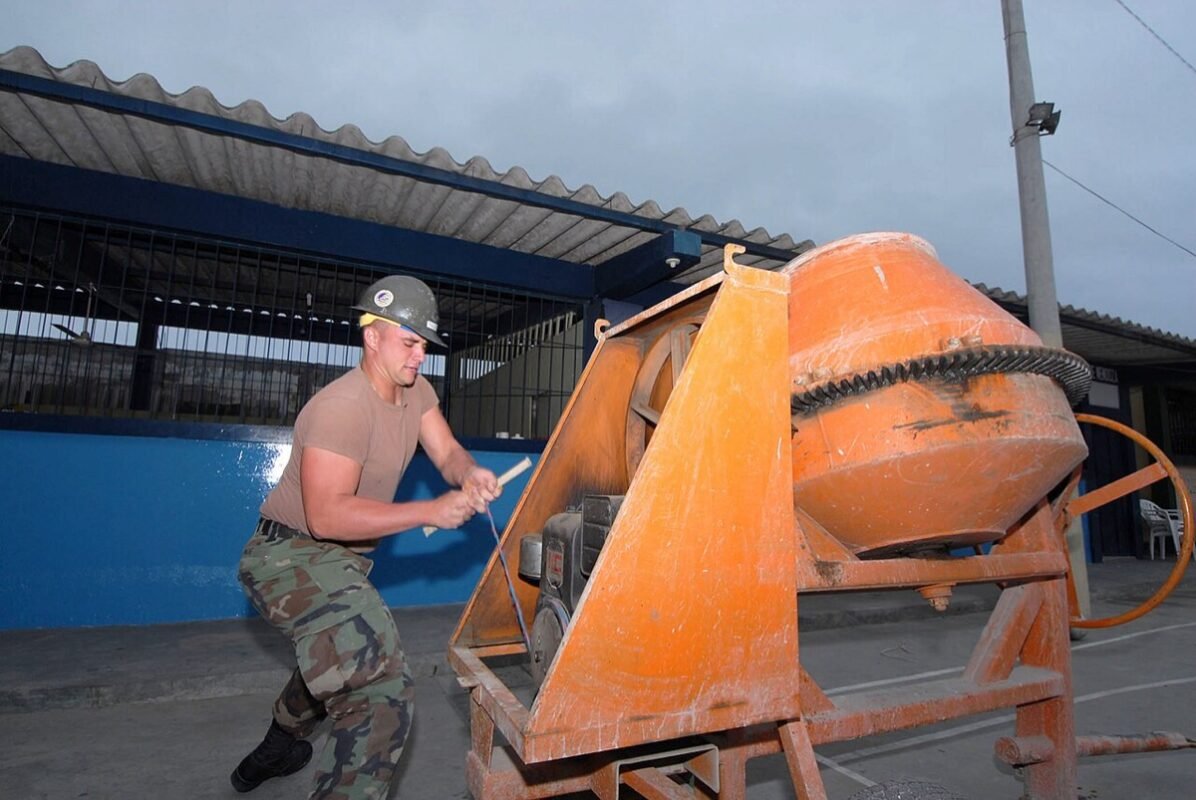
A concrete mixer machine price in Bangladesh depends mainly on the mixer type (tilting drum, reversing drum, pan or self-loading), the drum size, whether it runs on diesel or electricity, and how heavy the frame and gearing are. A building contractor usually needs a portable tilting or reversing drum mixer that can be towed between sites, while a block or paver factory is better served by a pan mixer that gives an even, low-water mix every batch. DE International sources concrete mixers from Chinese manufacturers and delivers them door-to-door in Bangladesh, so you can compare types before you commit; ask us for a current quote for the model and power option you need.
This guide explains what changes the price, which type suits which job, what to inspect on a Chinese mixer before paying, and how the import works from a factory in China to a site in Dhaka, Chattogram or a district town.
What decides the price of a concrete mixer in Bangladesh
Two mixers that look alike in a photo can be priced very differently. The difference usually sits in parts you cannot see in a catalogue picture: the thickness of the drum steel, whether the drum is driven by a cast gear ring or a cheaper sheet ring, the engine or motor brand, and the quality of the wheels and towing hitch. The table below shows the components that move the final landed cost.
| Cost component | What changes it |
|---|---|
| Machine (ex-factory) | Mixer type, drum volume, steel thickness, gear ring quality, engine or motor |
| Power unit | Diesel engine, petrol engine or electric motor; single-phase or three-phase |
| Accessories | Hydraulic or manual tipping, skip hopper, water tank and meter, towing kit |
| Freight | Weight and volume of the crated machine; sea LCL, full container or air for spares |
| Customs duty and taxes | HS code of the machine, its declared value, current tariff schedule |
| Inland delivery | Distance from Chattogram or Dhaka to your site, crane or forklift for unloading |
Because each line depends on your exact model and route, we do not publish a fixed price. Send us the job you want the mixer for and we will build a quote around it.
Tilting drum, reversing drum, pan or self-loading: which type fits which job
The type of mixer matters more than the brand. Each design mixes concrete in a different way, and choosing the wrong one costs you either in cement or in labour.
| Type | How it mixes and discharges | Best suited for |
|---|---|---|
| Tilting drum | Drum rotates on an angle; tipped forward with a handwheel or lever to pour | Small building sites, roof casting, house construction |
| Reversing drum | Drum turns one way to mix and the opposite way to discharge through a chute | Medium sites that want faster, cleaner discharge into wheelbarrows or pumps |
| Pan (planetary or turbo) mixer | Stationary pan with rotating blades; discharged through a bottom gate | Block, brick, paver and precast factories that need stiff, low-water concrete |
| Self-loading mixer | Truck-like vehicle with a loading shovel, weigh system and rotating drum | Large contractors and remote sites without a batching plant |
A practical rule many Bangladeshi contractors learn the hard way: a drum mixer is good at wet, workable concrete for slabs and columns, but it struggles with the dry, zero-slump mix that a block machine needs. The dry mix balls up and sticks to the drum wall. If you are setting up a block or paver unit, read our guide on block making machines and plan a pan mixer as part of that line.
Diesel or electric: choosing power for Bangladeshi sites
On a new building site in Bangladesh, a reliable three-phase connection is often not available until late in the project, which is why diesel mixers remain common. Diesel gives independence from the grid but adds fuel, oil changes and engine servicing. An electric mixer is quieter, cheaper to run and simpler to maintain, but only works where the site has a stable supply of the right voltage.
- Choose diesel when the mixer moves between many sites, or when power cuts would stop a slab pour halfway.
- Choose electric for a fixed location such as a block factory or a contractor yard with a proper three-phase line.
- Check the voltage plate. Chinese factories build for many markets; confirm the motor is wound for the Bangladesh supply before the order is confirmed, not after it arrives.
- Ask about engine spares. A diesel engine model with filters and injectors available in Bangladesh saves weeks of downtime later.
What to inspect on a Chinese concrete mixer before you pay
Most problems with imported mixers appear in the first months of use, when cement abrasion and vibration expose weak points. These are the details we ask factories to photograph or video, and that a pre-shipment check should confirm:
- Drum and blade steel. Thin drum steel wears through where the blades throw aggregate against it. Ask for the stated thickness and look at the weld seams.
- Gear ring and pinion. A cast gear ring lasts longer than a pressed one; ask which is fitted and whether a guard covers it from cement splash.
- Bearings and seals. Cement slurry that gets into the main bearings is the most common cause of a seized drum.
- Frame and towing. Check axle, tyres, towing eye and stand legs if the mixer will be pulled on rough district roads.
- Tipping mechanism. Handwheel gears and locking pins must hold the drum firmly while mixing.
- Manual and spare parts list. Ask for an English manual and a list of wear parts so you can order spares with the machine.
Our guide to pre-shipment inspection explains how a check at the factory works, and how to verify a Chinese supplier before paying covers the payment side.
Importing a concrete mixer from China to Bangladesh, step by step
A concrete mixer is a straightforward machinery import, but the order of steps matters because the documents are prepared at the start.
- 1. Define the job. Type of work, typical batch size, power available and how often the mixer moves.
- 2. Compare two or three factories. Same specification, same accessories, so the quotes are comparable.
- 3. Confirm the specification in writing. Drum volume, engine or motor model, voltage, accessories, crating and spare parts.
- 4. Pay the deposit and track production. Ask for photos at painting and final assembly.
- 5. Inspect before balance payment. Run the drum, test tipping, check welds and the nameplate.
- 6. Ship and clear. The commercial invoice, packing list and bill of lading must match the machine exactly, including the HS code used for declaration.
- 7. Deliver and unload. Plan a forklift, crane or ramp at your site; a crated mixer is heavy and awkward to move by hand.
If you are new to machinery imports, our Bangla guide চায়না থেকে মেশিন আমদানির নিয়ম walks through the licences and paperwork.
Common mistakes when buying a concrete mixer
- Buying by drum size alone. The usable mixing volume is smaller than the total drum volume; overfilling gives a poor, uneven mix.
- Using a drum mixer for block concrete. The dry mix sticks and the blocks come out weak and inconsistent.
- No water control. Without a water tank or meter, workers add water by eye, and too much water weakens the concrete.
- Ignoring cleaning. Concrete left in the drum overnight hardens and adds weight that strains the gear ring and bearings.
- No spares on hand. A broken pinion or tyre can stop a slab pour; order a basic spares kit with the machine.
FAQ
What is the price of a concrete mixer machine in Bangladesh?
It depends on the type, drum size, power unit and accessories, plus freight and duty. DE International gives a current quote for the exact model you need instead of a fixed list price.
Which concrete mixer is best for a block factory?
A pan mixer is usually the better choice because it handles the dry, low-water mix that block and paver machines need.
Is a diesel or electric concrete mixer better in Bangladesh?
Diesel suits mobile work and sites without grid power; electric suits a fixed yard or factory with a stable three-phase supply.
Can I import a concrete mixer from China myself?
Yes, with a trade licence and import registration, or through an agent. DE International sources the mixer, checks it and delivers it door-to-door. WhatsApp +880 1750-859967.
Get a quote from DE International
DE International sources machinery and products from Chinese factories, checks them before shipping and delivers door-to-door to Dhaka, Chattogram and anywhere in Bangladesh. Tell us whether the mixer is for building sites or a block factory, and the power you have, and we will quote suitable models. See our services, our China sourcing and buying agent service and the shop, or contact us — WhatsApp +880 1750-859967. For shipping cost questions, our cargo team at decl.bd can quote air or sea freight.
