
Import & Export Guides
Bakery Mixer Machine Price in Bangladesh: Which Dough or Planetary Mixer Does a Bakery Need
Oct
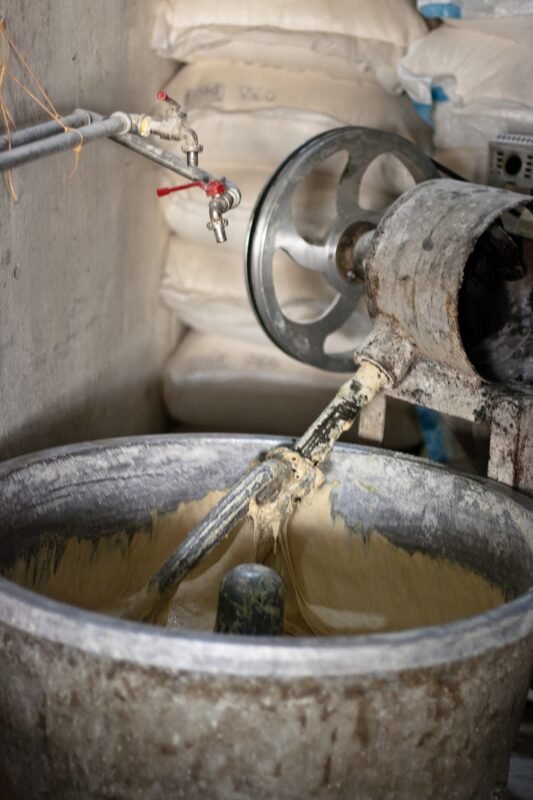
A bakery in Bangladesh usually needs a spiral mixer for bread, bun and other yeast doughs, and a planetary mixer for cake batter, cream and icing; a large bread or toast line may add a horizontal mixer. The bakery mixer machine price in Bangladesh depends on the mixer type, bowl size, single-phase or three-phase motor, gearbox or belt drive and the grade of stainless steel. DE International sources bakery mixers from Chinese factories, checks them before shipping and delivers door-to-door — tell us your daily dough volume and what you bake, and ask us for a current quote built around that.
Which mixer types does a bakery actually use
Each design moves the dough differently, and that movement decides what it is good at.
| Mixer type | How it works | Best for | Weak at |
|---|---|---|---|
| Spiral mixer | A spiral-shaped hook turns on a fixed axis while the bowl itself rotates; dough is stretched and folded rather than beaten | Bread, bun, pizza base, sweet roll, paratha-style and other yeast doughs | Cake batter, whipped cream, meringue |
| Planetary mixer | One tool spins on its own axis while also travelling around the bowl, reaching every part of a fixed bowl; comes with hook, flat beater and wire whisk | Cake batter, sponge, buttercream, icing, cookie dough, small batches of soft dough | Large volumes of stiff bread dough |
| Horizontal mixer | Mixing arms turn inside a horizontal trough that tilts to discharge | High-volume sandwich bread and toast production lines | Small shops; it is oversized and needs a line around it |
For most neighbourhood bakeries and live bakery shops in Dhaka and Chattogram, the realistic pair is one spiral mixer for yeast dough plus one planetary mixer for the cake and cream side. Our Bangla guide to live bakery machines shows where both fit in a full shop layout.
Why a spiral mixer suits bread dough
Bread quality depends on gluten development: the flour proteins have to be stretched into an elastic network that traps the gas produced by yeast. A spiral hook does this efficiently because the rotating bowl keeps feeding fresh dough to the hook, so each part of the batch is worked evenly without being torn.
Most spiral mixers have two speeds. The low speed brings flour and water together without throwing flour out of the bowl; the high speed develops the gluten.
There is also a heat issue that matters more in Bangladesh than in cooler countries. Friction from mixing warms the dough, and dough that comes out too warm ferments too fast, becomes sticky and gives uneven loaves. Bakers control it with cold or chilled water in the recipe, by not over-mixing, and by choosing a mixer that develops the dough in a reasonable time instead of one that is underpowered for the batch and has to run longer.
Why a planetary mixer suits cakes and cream
Cake batter and cream need air beaten into them, not gluten stretched. The planetary action, where the tool orbits the whole bowl, gives even aeration and avoids unmixed pockets at the sides and bottom. The three standard attachments do three different jobs:
- Wire whisk — whipping cream, egg whites and sponge batters.
- Flat beater (paddle) — creaming butter and sugar, mixing cake batter, cookie dough and icing.
- Dough hook — small amounts of soft dough. It works, but a planetary mixer forced to knead large batches of stiff bread dough every day wears its gears faster.
Planetary mixers usually have three or more speeds and a bowl that lifts up to the tool by a lever or wheel. Many cake shops buy a spare bowl so one batch can be prepared while another mixes.
How bowl capacity is really measured
This is where many first-time buyers get confused. Chinese listings describe size in three different ways, and they are not the same thing:
- Bowl volume in litres — the physical size of the bowl. It says nothing direct about how much dough it can knead.
- Flour capacity in kg — how much dry flour one batch can take.
- Dough capacity in kg — flour plus water, yeast, sugar, fat and salt, so it is always larger than the flour figure.
A mixer listed by dough weight can look bigger on paper than one listed by flour weight, even if it is actually smaller. The type of dough also changes the real capacity: a stiff, low-water dough loads the motor and gearbox far more than a soft, wet dough, so a mixer cannot always handle its full rated batch of stiff dough. When you ask for a quote, give the supplier your actual recipe type and the flour weight per batch, and ask them to confirm the machine in those terms.
Size the mixer from your daily production divided by the batches you can realistically mix per shift. Two medium mixers can serve a growing bakery better than one large one: if one breaks down, production continues.
What to check before you order from China
- Power supply. Small mixers often run on single-phase 220–230V; larger spiral mixers commonly need three-phase 380–400V. Both match Bangladesh at 50Hz, but confirm which one your premises actually has before choosing the model. Ask for the motor rating and the starting current, especially if you run on a generator.
- Drive system. Belts are cheaper to replace locally; gears can last longer but are harder to repair. Ask which your model uses.
- Food-contact material. Bowl, hook, whisk and beater should be food-grade stainless steel (often SUS304). Painted or plated parts that touch dough can flake.
- Safety guard. A bowl guard with an interlock that stops the motor when lifted protects your staff.
- Spare parts. Order a spare belt, bearings, the switch or contactor and an extra whisk with the machine, plus an English manual and wiring diagram.
Before paying, check the supplier properly — our guide on how to verify a Chinese supplier before paying covers the basics — and have the machine run under load before it is crated. A pre-shipment inspection should include a test with real dough, not just switching the motor on.
Common mistakes bakery owners make
- Using a planetary mixer for all bread production. It works at first, then the gearbox wears out early because it was never designed for daily heavy kneading.
- Buying by bowl litres alone. The bakery discovers the mixer cannot knead the batch it expected, and has to mix twice, doubling labour time.
- Ignoring the power supply. A three-phase mixer arrives at a shop with only single-phase power, and the owner pays for rewiring or a converter that was never in the budget.
- No spare parts on hand. A broken belt or switch stops production for weeks while parts are shipped. If that happens, air freight is the fastest route for a small part — see our note on air freight for emergency spare parts.
Importing a bakery mixer into Bangladesh
Bakery machinery generally falls under HS heading 8438 (machinery for the industrial preparation of food), with sub-heading 8438.10 covering bakery machinery; household-type mixers are classified differently. The exact code, and therefore the duty, depends on the specific machine, so confirm the classification with your C&F agent before shipping. A single mixer usually travels crated by sea in a shared (LCL) container. Our guide to customs clearance for machinery imports explains the documents: commercial invoice, packing list, bill of lading and any catalogue that helps customs confirm the machine type.
If you are setting up a complete bakery, it is usually cheaper to ship the mixer together with the oven, proofer and other machines in one consolidated shipment. Our guide to equipping a bakery or pizza shop covers ovens, and our post on yeast and sodium bicarbonate for bakeries covers the ingredient side.
FAQ
What is the difference between a spiral mixer and a planetary mixer for a bakery?
A spiral mixer has a rotating bowl and a fixed spiral hook, built for kneading bread and other yeast doughs. A planetary mixer moves one tool around a fixed bowl and comes with a whisk and beater, built for cake batter, cream and icing.
Which bakery mixer is best for a small bakery in Bangladesh?
Most small bakeries start with one spiral mixer for bread and buns and one planetary mixer for cakes and cream. The right size depends on your daily dough volume and the number of batches per shift.
What is the bakery mixer machine price in Bangladesh?
It depends on mixer type, bowl and dough capacity, single or three-phase motor, drive system, steel grade, freight and duty. Ask DE International for a current quote for your bakery.
Does a bakery mixer need three-phase electricity?
Small mixers often run on single-phase power, while larger spiral mixers commonly need three-phase. Check your supply before choosing a model.
Can DE International import a bakery mixer for me?
Yes. DE International sources bakery mixers from Chinese factories, tests them before shipping and delivers door-to-door anywhere in Bangladesh. WhatsApp +880 1750-859967.
Get a quote from DE International
DE International sources machinery and products from Chinese factories, checks them before shipping and delivers door-to-door to Dhaka, Chattogram and anywhere in Bangladesh. Tell us what you bake, your daily dough volume and the power supply at your shop, and we will suggest suitable mixers and quote them. See our services, our China sourcing and buying agent service and the shop, or contact us — WhatsApp +880 1750-859967. For shipping cost questions, our cargo team at decl.bd can quote air or sea freight.
