
Food Ingredients, Import & Export Guides
Yeast and Sodium Bicarbonate for Bakeries: Buying from China for Bangladesh
Oct
Bangladeshi bakeries usually buy instant dry yeast for bread, buns and pizza, choosing a high-sugar (osmotolerant) yeast for sweet buns and a low-sugar yeast for lean bread, and food-grade sodium bicarbonate (baking soda) for biscuits, cakes and quick breads. Both can be imported from China with a COA and Halal certificate, but yeast is a living ingredient and needs careful shipping and storage. DE International delivers small quantities door-to-door, and our sister company Shenzhen Phoenix Rising Technology handles LC orders and factory checks in China.
Yeast and baking soda do different jobs
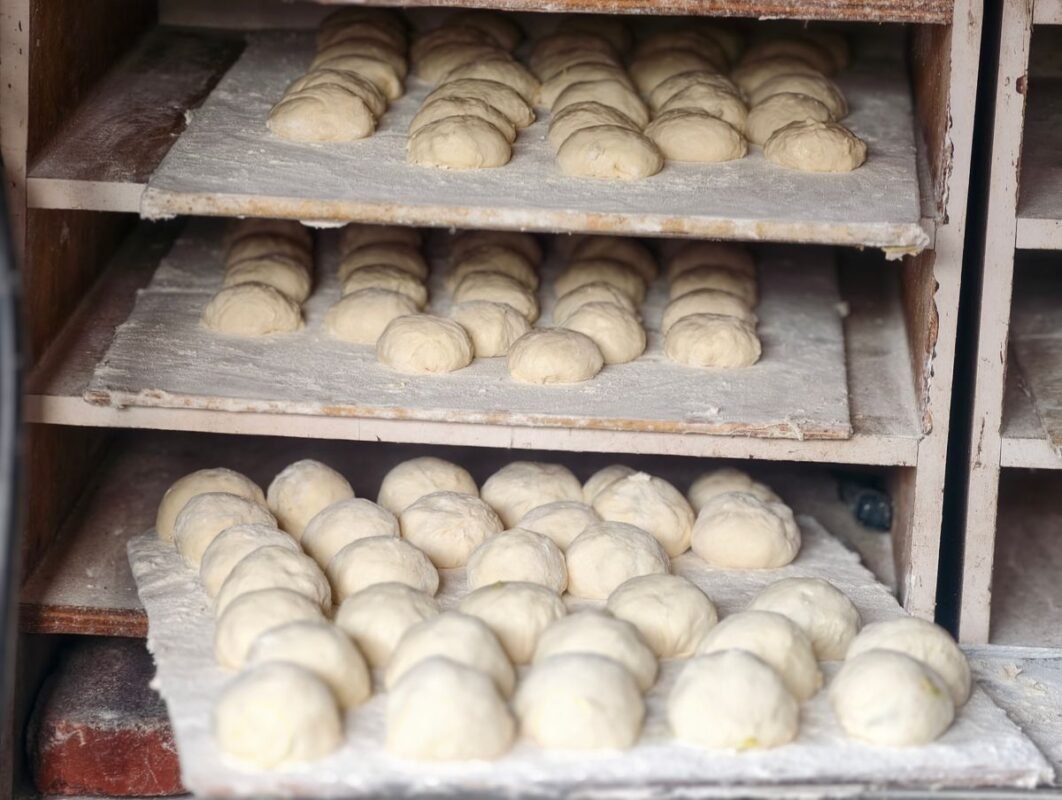
Both make dough or batter rise, but by different mechanisms. Yeast is a living micro-organism that ferments sugars in dough and releases carbon dioxide slowly, over the proofing time. It also creates flavour, which is why bread tastes of bread and not just of flour. Sodium bicarbonate is a chemical: it releases carbon dioxide when it meets an acid and heat. It works fast, gives no fermented flavour, and suits products with a short process such as biscuits, cakes and some breads.
This difference shapes what a bakery buys. A bun and bread line needs yeast. A biscuit factory needs bicarbonate and often ammonium bicarbonate. A cake bakery uses baking powder, which is bicarbonate already mixed with an acid. Many mid-size Bangladeshi bakeries make all three kinds of product and need all of these.
Types of yeast and which one to buy
| Yeast type | Form | Best for | Storage |
|---|---|---|---|
| Instant dry yeast, low-sugar | Fine dry granules, vacuum-packed | Lean bread, pizza, rolls with little sugar | Cool, dry; reseal or use quickly after opening |
| Instant dry yeast, high-sugar (osmotolerant) | Same form | Sweet buns, bun-ruti, Danish, sweet breads | Same as above |
| Active dry yeast | Larger granules, needs rehydration in warm water | Small bakeries used to the older method | Cool, dry |
| Fresh compressed yeast | Moist block | Bakeries with refrigeration close to the supplier | Must stay refrigerated; short shelf life; hard to import |
Why does sugar level matter? In dough with a lot of sugar, the sugar pulls water out of yeast cells by osmosis and slows fermentation. High-sugar yeast strains are selected to tolerate this. Using ordinary yeast in a sweet bun recipe gives slow, uneven proofing; using high-sugar yeast in lean bread can be less effective than the right low-sugar strain. If you make both, buy both.
Shipping and storing yeast in a hot climate
Instant dry yeast is vacuum-packed so it can travel without refrigeration, but heat still shortens its life. A container sitting at Chattogram port in summer gets very hot inside, and yeast that spends weeks in that heat may arrive with reduced activity. Practical steps:
- Ask for the production date and the shelf life the manufacturer guarantees, and order quantities you will use well within it.
- Check that vacuum packs are hard and intact on arrival. A soft, puffy pack has lost its vacuum.
- Store cartons in the coolest, driest place you have, off the floor and away from ovens. A small cold room helps; see cold storage for bakeries.
- Once a pack is opened, close it tightly and use it quickly.
- Run a simple proof test on each new lot: same dough, same time, compare the rise with your previous lot.
Sodium bicarbonate: grade, particle size and COA
Sodium bicarbonate is sold in food grade, feed grade and industrial grade. Only food grade belongs in a bakery. The chemical name is the same, so the grade, specification and COA are what separate them. On a food-grade COA, look for:
- Assay (purity) as stated in the specification.
- Heavy metals, including lead and arsenic, within food-grade limits.
- Loss on drying (moisture), because damp bicarbonate cakes and reacts early.
- Particle size, which affects how evenly it disperses in dough and when it reacts.
- Food standard reference, such as compliance with a recognised food additive specification for E500(ii).
In biscuits, bicarbonate is often used together with ammonium bicarbonate for an open, crisp texture. Too much bicarbonate leaves a soapy taste and a yellow tint, which is why recipe balance with acids matters. Our biscuit machine guide covers the production side.
Baking powder deserves a note of its own. It is sodium bicarbonate pre-mixed with one or more food acids and a dry filler such as starch. Single-acting powders release most of their gas when wet; double-acting powders release some gas in the mixing bowl and more in the oven, which gives cake batters more tolerance if they wait before baking. Large bakeries often buy bicarbonate and acids separately and blend to their own recipe, while smaller ones buy ready baking powder. Either way, ask for the COA of each component, not just the finished blend.
How to test samples before ordering
- Request samples with the specification sheet, COA and Halal certificate of the same product you will order.
- For yeast, bake your standard recipe with the sample and your current yeast side by side: same flour, water temperature, proofing time and oven.
- Compare proofing height, oven spring, crumb and taste. Repeat for sweet and lean recipes if you make both.
- For bicarbonate, bake a standard biscuit or cake batch and check spread, colour and any soapy aftertaste.
- Once approved, order a pilot quantity and compare the lot COA with the sample.
Common mistakes bakeries make with yeast and baking soda
- Adding yeast straight into hot water or onto salt. Very hot water kills yeast and direct contact with salt or sugar in concentrated form slows it. Mix as the manufacturer instructs.
- Using one yeast for everything. Sweet buns proof slowly with low-sugar yeast; buy the right type for each product.
- Buying large stocks to save on price. Yeast loses activity over time, especially in a warm store. Order in amounts you can use well inside the shelf life.
- Buying bicarbonate without a COA. Industrial grade looks the same as food grade; only the COA tells you the difference.
- Storing soda near the steam of the oven. Moisture makes it cake and react early, and leavening becomes uneven.
- Increasing soda to fix a flat biscuit. Too much gives a soapy taste and yellow colour. Check the acid balance and the recipe instead.
Documents, Halal and buying routes
Our partner factories are FSSC 22000, ISO 22000, HACCP or ISO 9001 certified, and offer Halal (including MUI) and Kosher products. Samples and COA come before ordering, and each lot ships with its COA. For the import paperwork into Bangladesh, including BSTI and BFSA questions, read importing food additives from China.
For small and trial quantities, DE International buys in China, consolidates yeast, bicarbonate and other ingredients such as flavours and colours into one shipment, and delivers door-to-door, so a bakery does not have to open an LC for a few cartons. For larger repeat orders by LC, Shenzhen Phoenix Rising Technology manages the supplier, factory checks and export documents. See our China sourcing agent page and the food ingredients range. For ovens and mixers, see bakery equipment from China.
FAQ
Which yeast is best for a bakery in Bangladesh?
Instant dry yeast: a high-sugar type for sweet buns and a low-sugar type for lean bread and pizza.
Can I import yeast from China in a hot climate?
Yes, vacuum-packed instant dry yeast travels without refrigeration, but order within shelf life and store it cool on arrival.
What is the difference between food-grade and industrial sodium bicarbonate?
The chemical is the same, but food grade meets food purity and heavy-metal limits, shown on the COA. Only food grade belongs in food.
Can I buy small quantities of yeast and baking soda from China?
Yes. DE International consolidates small quantities with other ingredients and delivers door-to-door.
Who supplies bakery yeast and sodium bicarbonate with Halal certificate?
Shenzhen Phoenix Rising Technology and DE International supply both with COA and Halal certificates. WhatsApp +880 1750-859967.
See all our import services, browse the shop, read about our China sourcing and buying agent service, or contact us. WhatsApp: +880 1750-859967.
