
Import & Export Guides
Biscuit Machine Price in Bangladesh: How to Start a Biscuit Factory with Machines from China
Oct
Biscuit machine price in Bangladesh depends on the type of biscuit you want to make (hard biscuits such as Marie, soft cookies, or crackers), the width of the production line, and whether the oven is electric, gas or diesel fired. A biscuit factory needs a dough mixer, a forming machine (rotary moulder or sheeter with rotary cutter), a tunnel or rotary oven, a cooling conveyor and a packing machine. DE International sources biscuit and bakery lines from manufacturers in China and handles shipping and customs to your factory in Bangladesh — tell us your biscuit type and target output and ask us for a current quote.
This guide walks through the line machine by machine so you understand what you are buying and why two quotations for “a biscuit line” can look so different.
Which type of biscuit decides which machines you need?
Biscuit doughs behave very differently, and the forming machine is chosen around the dough. This is the first decision, before you look at any price.
| Biscuit type | Dough character | Forming method | Examples sold in Bangladesh |
|---|---|---|---|
| Hard / semi-sweet | Developed, elastic gluten | Sheeting and gauge rolls, then rotary cutter | Marie-style, tea biscuits, some glucose biscuits |
| Soft / short dough | Crumbly, high fat and sugar, little gluten | Rotary moulder presses dough into engraved moulds | Butter cookies, shortbread-type, many glucose biscuits |
| Crackers | Fermented or laminated dough | Laminating and sheeting, rotary cutter | Salted crackers, cream crackers |
| Wire-cut / deposited cookies | Soft dough, may contain nuts or chips | Wire-cut or depositor | Chocolate-chip cookies, drop cookies |
Many Chinese manufacturers sell “multi-functional” lines that combine a rotary moulder and a sheeter-cutter so a factory can make both hard and soft biscuits. That flexibility is useful, but it makes the line longer and more expensive; buy it only if you really plan to sell both types.
The machines in a biscuit production line
- Dough mixer: horizontal mixers are standard for biscuit dough. Hard dough needs longer, more intense mixing to develop gluten; soft dough should be mixed only enough to combine, or biscuits turn tough.
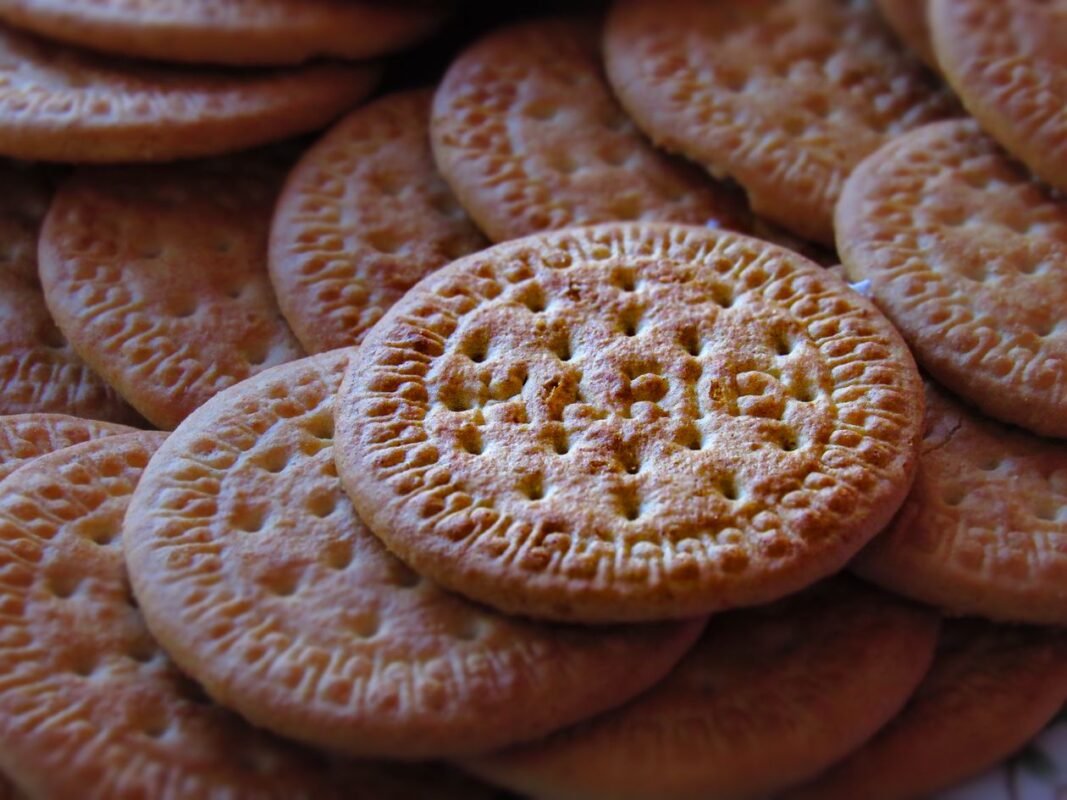
- Forming machine: a rotary moulder for soft dough, or a sheeter with gauge rolls and rotary cutter for hard dough and crackers. The cutter or mould roll carries the biscuit shape, logo and docking holes — the small holes you see on Marie biscuits that let steam escape so the biscuit bakes flat.
- Tunnel oven: a long conveyor oven with several heating zones. The length and belt width set your capacity. Mesh belts suit many biscuits; steel bands are used for some products.
- Oil sprayer and sugar or salt sprinkler (optional): for crackers and decorated biscuits.
- Cooling conveyor: biscuits leave the oven soft and must cool before stacking and packing, otherwise they crack or sweat inside the pack.
- Stacking and packing: biscuits are stacked on edge and packed in flow-wrap (pillow) packs or family packs by a horizontal flow-wrapping machine.
Gas, electric or diesel oven: what is right in Bangladesh?
The oven is usually the most expensive single machine and also decides your running cost. In Bangladesh the choice is shaped by what is available at your site:
- Natural gas: economical where a reliable industrial gas connection is available, but new industrial gas connections are not always easy to get. Confirm your connection before choosing a gas oven.
- LPG: flexible and widely available, with fuel bought in cylinders or bulk tanks; running cost depends on LPG prices.
- Electric: clean, precise temperature control and simple installation, but needs a large, stable three-phase supply. Load-shedding and voltage drops can spoil whole batches unless you have backup power.
- Diesel or indirect-fired: used where gas is not available; burner quality and flue design matter.
Tell the manufacturer your fuel, your voltage (Bangladesh uses 50Hz; industrial supply is normally 380-415V three phase) and your site layout. The burner or heating elements must be specified for your fuel from the beginning.
What decides the price of a biscuit line?
| Factor | Why it changes the price |
|---|---|
| Belt width | Wider belts produce more biscuits per hour but every machine in the line grows with them |
| Oven length and zones | A longer oven with more independently controlled zones costs more and takes more floor space |
| Forming options | A combined moulder plus sheeter-cutter costs more than one forming method |
| Moulds and cutters | Each biscuit shape or logo needs its own engraved roll or cutter |
| Automation | Automatic dough feeding, stacking and flow-wrap packing reduce labour but add cost |
| Material and controls | Food-contact stainless steel, PLC and touch-screen control, branded electrical parts |
Because of these variables, we do not quote a single figure. Ask for itemised quotations so you can see the price of each machine, each mould roll and each spare part, rather than one lump sum.
Space, utilities and permissions to plan before ordering
A tunnel-oven line is long. Measure your building before you order, and leave room for flour storage, a mixing area, a cooling run and a packing hall. You also need an exhaust for oven fumes and good ventilation, because a bakery hall becomes very hot in Bangladeshi summers.
A food factory needs a trade licence, BSTI certification for the biscuits you sell (biscuits are among the products that need BSTI marking), and registration with the relevant food safety authority. Confirm the current requirements with BSTI and your local authorities before you invest. For the import side, read how to import machines from China and BSTI certification.
Mistakes that cost biscuit factories money
- Buying a line for the wrong dough. A rotary moulder cannot make a laminated cracker; a sheeter is a poor choice for very short dough.
- No trial with local flour. Bangladeshi flour and imported flour can behave differently. Send your recipe to the manufacturer and ask for a test bake.
- Underestimating the cooling conveyor. If biscuits are packed warm, condensation forms inside the pack and shelf life suffers.
- Forgetting spare mould rolls. Mould rolls and cutters wear and can be damaged; a spare set prevents long stoppages.
- No installation engineer. A tunnel line must be levelled and aligned on site. Agree in the contract whether the factory sends an engineer or supports remote installation.
Starting small: bakery equipment before a full line
Not every biscuit business starts with a tunnel oven. A small bakery can begin with a mixer, a small rotary moulder and a rotary rack oven or deck oven, packing by hand. This keeps the investment lower while you build a market. Our guide to bakery equipment from China covers smaller setups, and for ingredients such as baking soda and flavours see Phoenix Rising food ingredients.
FAQ
What is the biscuit machine price in Bangladesh?
It depends on biscuit type, line width, oven fuel and automation. DE International gets itemised quotes from Chinese manufacturers for your exact plan — contact us on WhatsApp +880 1750-859967.
What machines do I need to start a biscuit factory?
A dough mixer, a forming machine (rotary moulder or sheeter-cutter), an oven, a cooling conveyor and a packing machine, plus flour handling and storage.
Can I make Marie and cookies on one line?
Yes, with a combined line that has both a sheeter-cutter and a rotary moulder, but it is larger and costs more than a single-type line.
Is a gas or electric oven better?
It depends on your site. Gas is economical when a reliable connection exists; electric needs a strong, stable three-phase supply and backup power.
Do biscuits need BSTI certification in Bangladesh?
Biscuits are on the list of products that require BSTI certification. Check the current list and process with BSTI before production.
Starting a biscuit factory? DE International sources biscuit and bakery machines from China, inspects them before shipping and delivers door-to-door. Explore our services and the China sourcing and buying agent service, browse the shop, or contact us on WhatsApp +880 1750-859967.
