
Import & Export Guides
Areca Leaf Plate Making Machine Price in Bangladesh: How It Works and Is It a Good Business?
Nov
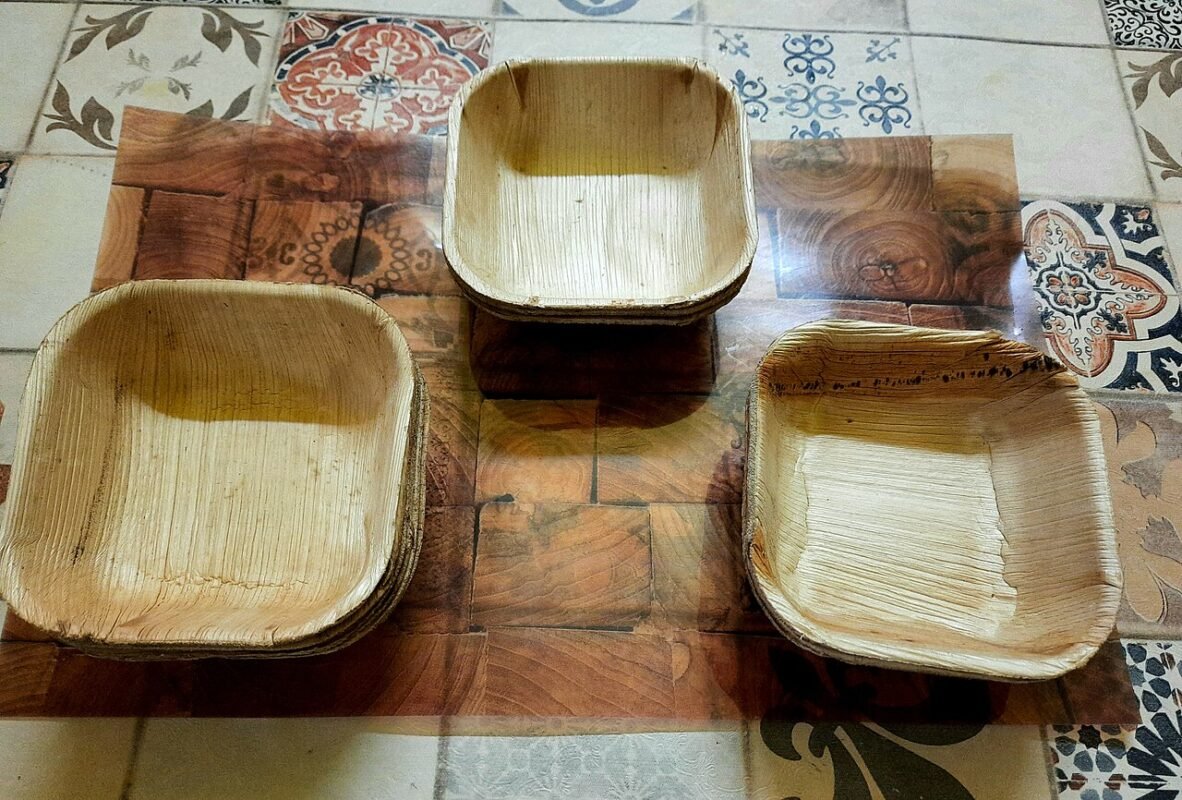
An areca leaf plate making machine is a heated press: it takes the dried, fallen sheath of the areca (supari) palm and, with hot metal dies, presses it into a plate or bowl in one stroke. It can be a viable small business in Bangladesh where you have a steady local supply of sheaths and buyers who want plastic-free disposable plates — caterers, sweet shops, restaurants, event decorators and exporters. The areca leaf plate making machine price in Bangladesh depends on whether you choose a manual, hydraulic or automatic press, how many dies it carries, the plate shapes you need and the freight and duty to bring it in. DE International sources these presses and their dies from factories in China and delivers them door-to-door to Dhaka or Chattogram; tell us your plate sizes and daily target and we will quote a machine built around them.
How does an areca leaf plate machine actually work?
The raw material is not the green leaf but the sheath (khol) at the base of each frond. When a frond dies, the broad, papery sheath falls to the ground on its own — no tree is cut and nothing is stripped. The sheath is tough and naturally water-resistant, so a pressed plate holds curry or hot rice without going soggy.
Inside the machine there are two matched dies: a bottom die shaped like the plate and a top die that closes onto it. Electric heating elements keep both dies hot, controlled by a temperature controller on the panel. A softened sheath is laid on the bottom die, the press closes, and heat plus pressure set the fibres permanently into the new shape. A sharp edge on the die trims the outline at the same time.
Two things decide plate quality more than the machine brand. First, moisture: a sheath that is too dry cracks in the die, while one that is too wet steams, blisters and can grow mould later in the carton. Second, dwell time and temperature: too short and the plate springs back out of shape; too long and the surface scorches brown. Every new batch of sheaths needs a few trial pressings to find the right setting.
What does the full production process look like?
The press is only one step, and the bottleneck is often elsewhere. A realistic flow:
- Collection. Fallen sheaths are gathered from gardens and homesteads, usually bought by the piece or by the bundle from local collectors.
- Sorting. Torn, insect-damaged or mouldy sheaths are rejected. Size matters too: a small sheath cannot make a large round plate.
- Washing. Sheaths are scrubbed in clean water to remove soil and fungus spots. This step decides whether the plate is genuinely fit for food.
- Drying and conditioning. Sheaths are dried in shade or sun, then lightly re-moistened just before pressing so they bend without cracking.
- Pressing. The hot press shapes and trims each plate.
- Finishing. Edges are brushed, plates are inspected and any with cracks or burns are removed.
- Sterilising and packing. Many export buyers expect a UV or heat treatment step before plates are shrink-wrapped and boxed. Local buyers usually care more about clean, dry, mould-free stock.
Most of this is manual work, so staff for washing and drying matter as much as the number of presses. Budget a covered drying area and a dry store — in the monsoon, damp storage is the biggest cause of spoiled stock.
Which types of areca leaf plate machine can you import from China?
| Machine type | Best suited to | What to know |
|---|---|---|
| Manual single-die press | Trial runs, home-based units, learning the process | Operator pulls a lever for every plate; cheapest to buy, but output and consistency depend on the person |
| Hydraulic single-die | Small workshops with regular orders | Hydraulic pressure is more even, so fewer cracked or half-formed plates; needs basic oil maintenance |
| Hydraulic double-die | Units supplying caterers or wholesalers | Two die stations work side by side, so one operator can load one while the other presses |
| Automatic or semi-automatic multi-die | Export-focused or larger units | Higher output, but only pays off if your sheath supply and drying capacity can keep up |
Dies are interchangeable on most models. Common shapes are round plates, square plates, rectangular trays, compartment plates and deep bowls, each in several sizes. Every extra shape is a separate die set with its own cost, so start with the two or three shapes your buyers actually order rather than a full catalogue. Ask whether replacement heating elements and thermocouples can be shipped later — they wear out first.
Is an areca leaf plate business viable in Bangladesh?
It can be, but the answer depends on three local factors rather than on the machine.
- Raw material within reach. Supari palms are common in the coastal and southern districts and in many homestead gardens across the country. A unit placed close to a reliable source of sheaths avoids paying to transport a bulky, light material over long distances. Before buying, check how many usable sheaths local collectors can deliver each month, and when supply falls.
- Buyers who value plastic-free. Government action against single-use plastic, especially in coastal and tourist areas, plus customer preference in upmarket restaurants, cafes and wedding catering, has created interest in natural disposables. Areca plates look premium beside foam or plastic, so they also sell into sweet shops and event decoration.
- Export as a second market. Areca leaf tableware is traded internationally, but export buyers usually ask for food-contact test reports, consistent sizing and proper sterilisation. Grow into export once local quality is consistent.
The weak points are seasonality and price: presses sit idle when sheath supply drops unless dried stock is stored safely, and areca plates sell best where buyers value the natural look, not as the cheapest plate on the shelf.
Areca leaf plates or paper plates: which machine should you buy?
Many buyers who ask about areca machines are also comparing a paper plate making machine. The two look similar — both are heated die presses — but the businesses behind them are different.
| Point | Areca leaf plate machine | Paper plate machine |
|---|---|---|
| Raw material | Fallen areca sheaths, collected locally | Paper board, bought in reels or sheets |
| Material supply | Seasonal and uneven; quality varies sheath to sheath | Steady and uniform from paper traders |
| Labour | More manual work in washing, drying and sorting | Mostly cutting and pressing |
| Product look | Natural, rustic, every plate slightly different | Uniform, can be printed or laminated |
| Best market | Premium catering, eco-conscious buyers, export | High-volume everyday use, street food, events |
If you have access to sheaths and want a product that stands out, choose areca; for predictable supply and high volume, paper is simpler.
What should you check before ordering from China?
- Voltage and phase. Confirm whether the heaters and hydraulic motor run on single-phase 220V or need three-phase power, and whether your workshop connection can carry it. Changing a motor after arrival is slow and expensive.
- Die sizes in millimetres. Give the exact diameter or length, width and depth of each plate you want. Ask the factory to press sample plates on those dies and send photos or video before shipment.
- Spare parts. Ask for spare heating elements, a temperature controller and seals to travel with the machine.
- Training. Ask for a video showing how to set temperature and dwell time for different sheath thicknesses.
- Packing. A fumigated wooden crate, with dies oiled against rust on the voyage to Chattogram.
Before you pay, it also helps to have someone visit or video-call the factory to confirm the exact model, not a catalogue photo. Our guide on verifying a Chinese supplier before paying explains what to look for. And remember that the machine price in China is only part of the landed cost: crating, sea freight, port handling, customs duty and inland transport all add up. Our door-to-door machinery shipping service quotes the full delivered cost in one figure.
FAQ
What is the areca leaf plate making machine price in Bangladesh?
It depends on the machine type (manual, hydraulic, double-die or automatic), the number and shapes of dies, the power system, and freight and duty to Bangladesh. Ask us for a current quote for your plate sizes and daily target rather than relying on old price lists.
Can I start an areca leaf plate business from home?
A manual or small hydraulic press can run in a home workshop if you have a suitable power connection, space to wash and dry sheaths, and a dry store. Check your local electricity connection and trade licence requirements first.
Are areca leaf plates safe for hot food?
Properly washed, dried and pressed plates are widely used for hot and oily food; safety depends on clean washing, full drying and mould-free storage.
Who can import an areca leaf plate machine from China to Bangladesh for me?
DE International sources areca leaf plate machines and dies from Chinese factories, checks them before shipment and delivers them door-to-door to your workshop. Message us on WhatsApp +880 1750-859967 with your plate sizes, or see our China to Bangladesh import guide for how shipping works.
Ready to plan your machine purchase? See our services, browse the shop, read how our China sourcing and buying agent service works, or contact DE International — WhatsApp +880 1750-859967.
