
Import & Export Guides
Door-to-Door Shipping for Printing and Packaging Machinery from China
Sep
Printing and packaging machinery is one of the more demanding things to bring in from China door to door. The machines are heavy, often long, frequently over standard container height once crated, and full of precision components that do not forgive a rough sea passage or a badly chosen crane. A press or a laminator that arrives with a bent frame or water-damaged electronics is not a warranty claim you win easily from 4,000 kilometres away. This guide covers what actually matters when you ship one.
It sits alongside our guides to door-to-door shipping for machinery and heavy equipment and importing a machine from China versus buying locally.
What counts as printing and packaging machinery
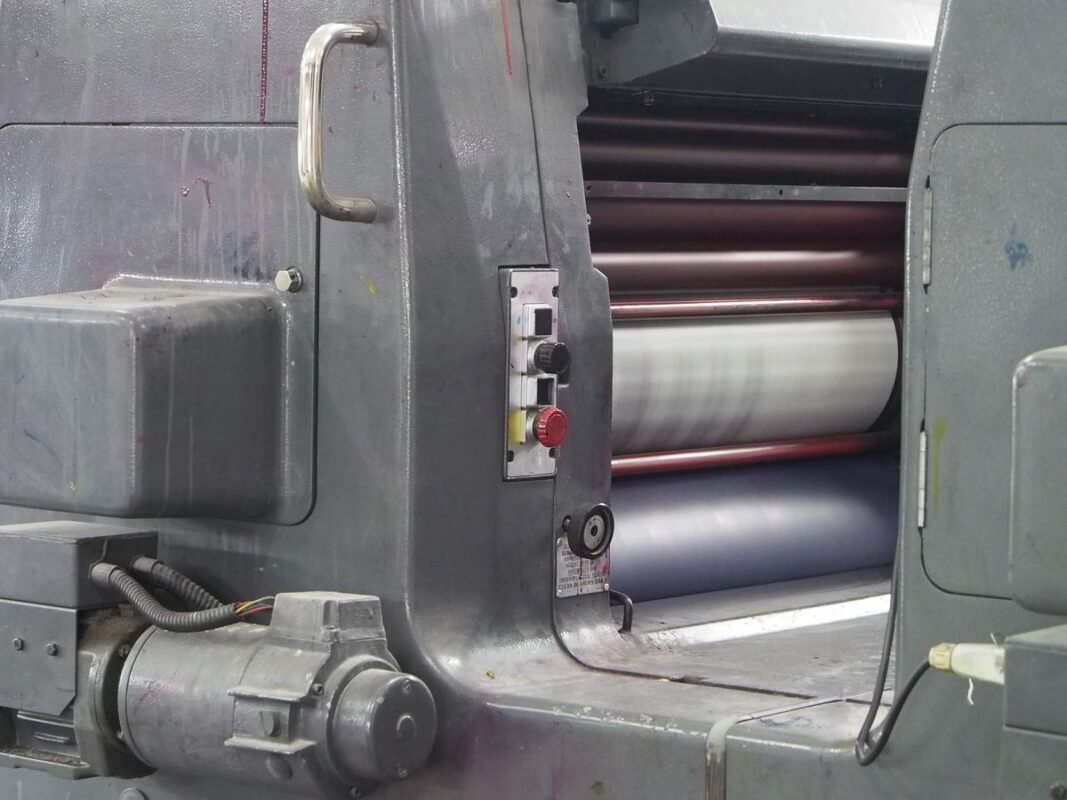
The category is broad and the shipping profile varies a lot within it: sheet-fed and web offset presses, flexographic and gravure presses, digital presses, screen-printing lines, die-cutters and creasing machines, laminators, folder-gluers, guillotines, slitter-rewinders, bag-making machines, pouch and sachet form-fill-seal machines, shrink-wrap and carton sealers, and the ancillary kit — ink systems, chillers, compressors, dryers, UV curing units. A tabletop sealer ships as a crate. A four-colour press ships as several crates plus loose assemblies and can fill a 40-foot high-cube or need break-bulk.
Get the dimensions and weights before anything else
The single most common cause of a blown budget on machinery imports is discovering the true crated size after the deal is done. Insist the supplier provides a packing list with the crated dimensions and weight of every package, not the machine’s bare footprint. Then check:
- Does the largest crate fit a standard container, or does it need a high-cube, an open-top, a flat-rack, or break-bulk? Each step up changes the freight cost and the equipment needed at both ends.
- What is the heaviest single lift? That decides the forklift or crane capacity needed at the factory, the ports, and your site.
- Total gross weight and whether it exceeds road limits for a single trailer in Bangladesh, which can force a low-loader permit and a route survey.
- Centre of gravity marked on the crates — presses are often heavy at one end and will tip a sling that is rigged to the middle.
Crating and protection for a sea voyage
A machine that runs fine in a dry Guangdong workshop can arrive corroded after weeks in a humid container. Specify in the purchase contract:
- Full timber crates (not just a pallet and film) built to ISPM 15 standard, or the crates are refused at the Bangladesh border.
- VCI (volatile corrosion inhibitor) film or paper around bare metal surfaces, plus desiccant inside a sealed barrier bag for control cabinets and electronics.
- Rollers, cylinders and precision shafts blocked so they cannot rotate or shift in transit.
- Loose parts inventoried, boxed, and cross-referenced to the packing list — a missing gear or sensor can idle a whole install.
- Bolt-down points and lifting points clearly marked, with a rigging diagram if the machine needs specific pick points.
Container loading is not optional here
For machinery, loading supervision pays for itself. Someone should watch the crates go in, confirm they are chocked and lashed to the container’s D-rings so a multi-tonne crate cannot slide, verify the desiccant and VCI are actually in place, and photograph everything. For open-top or flat-rack loads, the lashing and the height/width declaration have to be right or the box is rejected at the terminal.
The Bangladesh customs angle
Capital machinery often attracts a lower duty rate than finished goods, but the classification has to be correct and supported. Points to prepare:
- Confirm the HS code for the specific machine and its concessionary rate, if any, before shipping — consider a customs advance ruling for a high-value press.
- A detailed commercial invoice that breaks out the main machine, ancillary units, spare parts, and tooling, because they may classify differently.
- Catalogues, technical drawings, and the operation manual in the entry file to support the classification and value.
- If it is second-hand, expect a used-machinery inspection and valuation, and possibly a pre-shipment condition report.
Delivery, offloading, and installation
Door to door for a press does not end at your gate — the last 50 metres are often the hardest. Before the truck leaves the port, confirm: the site access can take the trailer; there is crane or forklift capacity for the heaviest crate; the floor where the machine lands is rated for its point load and is level; and there is a clear path from the unloading point to the final position. Agree with the supplier whether their engineer travels for commissioning, when, and what utilities (power phase and rating, compressed air, water, extraction) must be in place before they arrive. A machine sitting crated on your floor for six weeks waiting for a three-phase upgrade is a common, avoidable outcome.
How to brief a shipment like this
Give your freight partner the full packing list with per-crate dimensions and weights, the machine drawings, the supplier’s contact for technical questions, your site access details, and your target install date. From that they can tell you the right container or break-bulk plan, the port and inland handling equipment, whether you need an over-dimension permit, and a realistic door-to-door timeline. Every figure — freight, handling, duty, permits — depends on the specific machine and route, so ask us for a quote built around your packing list.
Air freight for the urgent parts
Sea freight suits the machine; it does not suit the sensor that turns out to be missing or the part that fails during commissioning. Plan for a small air-freight budget alongside the main shipment: ask the supplier to ship the commissioning spares kit and any delicate electronics by air so they are not exposed to weeks of container humidity, and keep the supplier’s parts contact and the model and serial numbers on file so a replacement can move within days. A four-week wait for a bracket by sea can idle a press that is otherwise ready to run.
A crated-dimensions worked example
Suppose a supplier quotes a press with a machine footprint of 3.2 by 1.8 metres and says “fits a 40-foot container.” Ask for the crate list. It comes back as a main crate 3.6 by 2.1 by 2.4 metres at 6,800 kg, a delivery unit crate 2.8 by 1.2 by 1.9 metres, a feeder crate, and two boxes of rollers and guards. The main crate at 2.4 metres tall will not stand upright in a standard 2.39-metre-interior container — you need a high-cube, and even then the fit is tight, so an open-top may be safer for craning in. The 6,800 kg single lift sets the forklift and crane spec at every handling point. None of that was visible from the machine footprint alone, and finding it out after booking a standard box is how the budget breaks.
Payment terms and a commissioning holdback
For a machine, the usual China payment split — deposit with order, balance before shipment — leaves you with no leverage if the machine underperforms on install. Where the supplier will agree, negotiate a holdback: a portion of the price (commonly 10–15%) released only after the machine is installed, run at rated speed and quality on your floor, and signed off — a factory acceptance test in China before shipment plus a site acceptance test in Bangladesh. Tie the holdback to measurable criteria (output per hour, reject rate, registration tolerance) written into the contract, not a vague “working to satisfaction.” A serious manufacturer will accept a reasonable holdback; resistance to any retention at all is worth noting.
DE International helps Bangladeshi businesses source from China, move goods door to door by air and sea, clear customs, and set up storage — including cold rooms and warehousing. To talk through a project, contact our team, see the full service list, or start with our China sourcing and buying agent service. Stock lines are in our shop. Prices, capacities, temperatures, and timelines in this article depend on your product and site — ask us for figures built around your case.
