
Import & Export Guides
Container Loading Supervision: The Last Check Before Your China Cargo Ships
Sep
Every other quality check happens before the goods are in the box. Container loading supervision is the only one that happens while the container is being stuffed — and it catches a specific set of problems that a pre-shipment inspection cannot, because those problems are created during loading itself.
If you are new to how full-container shipping is priced and documented, read our pieces on LCL versus FCL and the bill of lading alongside this one.
What loading supervision is
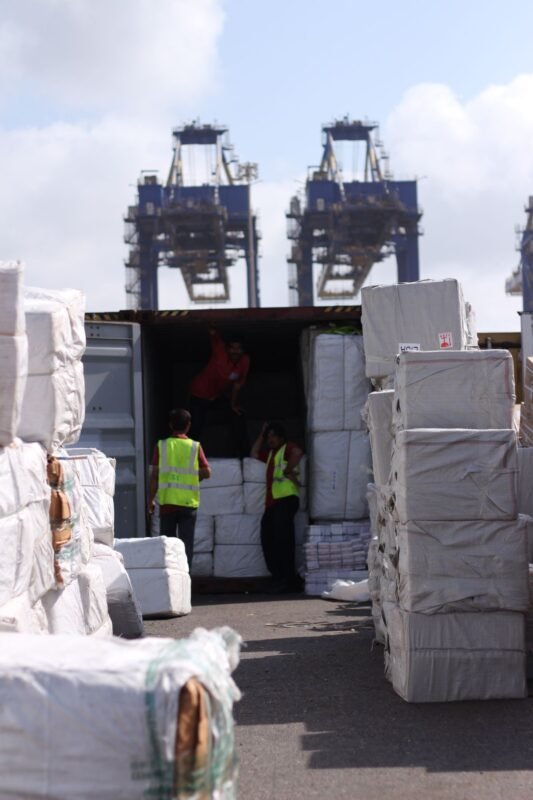
An inspector — yours, your agent’s, or a third-party firm’s — is physically present at the factory or the forwarder’s warehouse when the container arrives empty and stays until it is sealed. They watch the cartons come out of storage, go into the container, and they record the process with photographs and a tally. It is usually a half-day job for one 40-foot container.
The point is not to re-inspect product quality. By loading day the goods have normally already passed a pre-shipment inspection. The point is to verify that the quantity, the condition and the stowage are right at the last moment they can still be fixed.
The empty-container check comes first
Before a single carton goes in, the inspector checks the container itself, because a bad box ruins good cargo at sea:
- Container and seal numbers recorded and photographed, and checked against the booking.
- Doors open and close and the rubber gaskets seal — a common cause of water damage.
- A light test: doors closed, inspector inside, looking for pinholes of daylight through the roof and walls.
- Floor dry, no residual smell from a previous cargo, no protruding nails or damaged planks.
- No major dents or repairs that suggest structural weakness.
If the container fails, this is the cheapest possible moment to reject it and call for another. Once it is loaded and gone, a leak is an insurance claim.
The count that has to be right
The inspector tallies cartons as they are loaded, not from the factory’s say-so. This matters for three reasons. First, a short-load means you paid for units you will not receive, and you will not find out until the container is opened in Chattogram weeks later. Second, the carton count on the packing list feeds your commercial invoice and customs declaration — if the physical count does not match the documents, you have a customs problem on arrival. Third, an over-load into a single HS code can change your duty position.
The inspector also spot-checks carton weights and looks for cartons that are crushed, wet, re-taped or visibly different from the rest of the batch before they disappear into the middle of the load.
Stowage: how the box is packed
Bad stowage is its own damage category. A supervisor checks that:
- Heavy cartons are on the bottom, light on top, and weight is spread evenly so the container is not nose-heavy — terminals reject badly balanced boxes.
- There is bracing, airbags or dunnage filling the gaps so the load cannot shift when the container is lifted and when the ship rolls.
- Cargo is not hard against the doors, which can burst a door open or fall out when the container is opened.
- Moisture protection is in place if the product needs it — desiccant bags, a kraft paper floor layer, or a container liner for goods sensitive to condensation (“container rain”).
- Nothing is stacked so high it will topple, and fragile items flagged on the packing list are where they should be.
Sealing and the paper trail
When loading finishes, the inspector watches the bolt seal go on, records the seal number, and photographs the sealed doors with the number visible. That seal number goes onto the bill of lading. If the number on your B/L does not match the number on the container that arrives, that is the evidence customs and your insurer will ask for. Our article on container seals and ISO 17712 explains why this small number carries so much weight.
When it is worth booking
Loading supervision is not needed on every shipment. It earns its cost when:
- The order is high value or the units are fragile.
- You have had a short-shipment or damage claim with this supplier or route before.
- The goods are moisture-sensitive — electronics, anything with steel parts, food, leather, plywood.
- It is a first order with a new factory and you have no track record for their packing.
- The container is mixed — several products or several HS codes — and the load order matters for clearance.
For a standard repeat order of robust goods from a supplier you trust, a pre-shipment inspection alone is usually enough. For everything else, the few hundred units of risk you remove by having someone watch the box being packed is generally worth the half-day fee. Ask us to build it into your shipping plan where it makes sense for your cargo.
Who does the supervising
Three options, with different cost and independence. Your own sourcing agent or a staff member can attend if they are near the factory — cheapest, but only as reliable as that person. A third-party inspection firm sends a trained inspector with a written procedure and issues a formal report — this is the independent option and the one to use for a first order or after a past claim. The freight forwarder’s own warehouse team supervises loading when the goods are consolidated at their facility rather than stuffed at the factory — convenient, but the forwarder is checking their own handover, so it is not fully independent. For a high-value or disputed shipment, pay for the third party.
A loading-day checklist you can hand over
- Photograph the empty container inside and out, plus the container and seal numbers.
- Run the closed-door light test and check the door gaskets.
- Tally every carton loaded; compare the total to the packing list before the doors close.
- Weigh a sample of cartons; pull any that are crushed, damp or re-taped.
- Confirm heavy-low, light-high stacking and even weight distribution front to back.
- Check bracing, airbags or dunnage fill all gaps; nothing loose against the doors.
- Confirm desiccant, floor paper or a liner is in place if the cargo needs moisture protection.
- Watch the bolt seal go on; photograph the sealed doors with the seal number readable.
- Note the seal number on the loading report so it can be checked against the bill of lading.
After the container leaves
The supervisor’s report — tally sheet, photos, seal number, any exceptions noted — should reach you the same day. File it with the packing list and the bill of lading. If the container arrives in Chattogram with a broken or mismatched seal, or short cartons, that report is the first document your agent and your insurer will ask for, because it establishes the cargo was correct and correctly sealed at origin.
DE International handles China sourcing, supplier verification, quality control, and door-to-door freight into Bangladesh as one service. If you want a second pair of eyes on a supplier, a payment, or a shipment before you commit, contact our team, look at our full service list, or start with our China sourcing and buying agent service. You can also browse ready lines in our shop. Every figure in this article depends on your product, volume, and route — ask us for a quote built around your order.
