
Import & Export Guides
Ice Cube Machine Price in Bangladesh: Choosing a Commercial Ice Maker for a Restaurant or Fish Seller
Oct
An ice cube machine for a Bangladeshi restaurant, café or fish seller should be chosen by the type of ice you need (cube, nugget or flake), the real daily output at Dhaka summer temperatures, the cooling method, and how you will handle hard water and power cuts. The price in Bangladesh is decided by those same factors plus freight and duty, so there is no single figure; DE International sources commercial ice makers from factories in Guangzhou and Shenzhen and delivers them door-to-door to Dhaka or Chattogram, and we quote each machine against your actual use.
This guide explains how a commercial ice cube machine works, which type suits which business, and the questions to ask a Chinese factory before you pay. If you need tonnes of ice for a fish market or a processing plant, that is a different machine class covered in our guide to block ice, tube ice and flake ice plants.
How does a commercial ice cube machine actually make ice
Almost every cube machine you will see from China works on the same cycle. Water is pumped over or sprayed into a cold evaporator plate or a grid of small cups. A refrigeration compressor keeps that evaporator well below freezing, so a layer of ice builds up cell by cell. When a sensor (a thickness probe, a timer, or a water-level float) decides the cubes are full, the machine switches into harvest: hot refrigerant gas is diverted through the evaporator for a short time, the cubes loosen and drop into the storage bin, and the freezing cycle starts again.
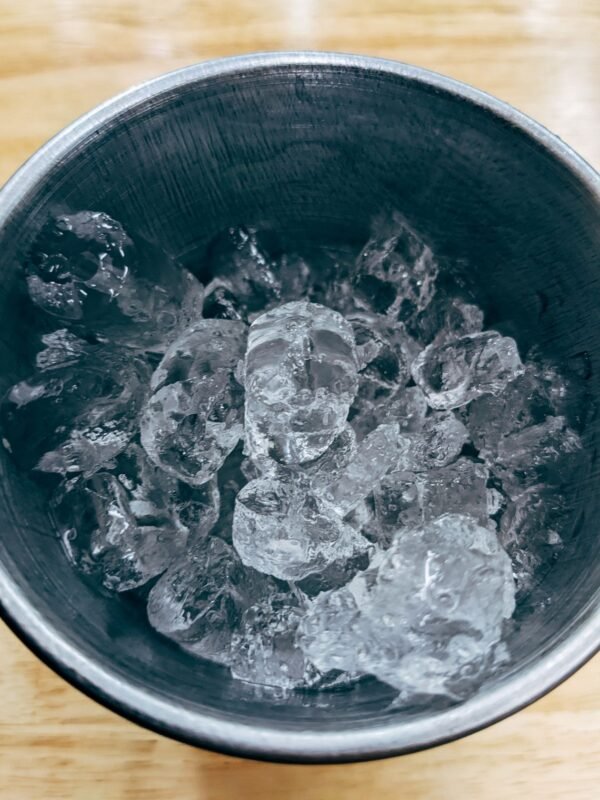
Two practical points follow from this. First, because water is running over the plate while it freezes, minerals and air are washed away, which is why machine-made cubes are clear while freezer-tray ice is cloudy. Second, every cycle depends on how fast the condenser can get rid of heat. That is the single biggest reason a machine produces less ice in a hot Dhaka kitchen than its brochure suggests.
Which type of ice does your business need
The word “ice machine” covers several quite different products. Choosing the wrong ice shape is a common and expensive mistake, because the machine cannot be converted later.
| Ice type | What it looks like | Typical users in Bangladesh |
|---|---|---|
| Full or half cube | Solid, clear square cubes | Restaurants, cafés, juice bars, hotels |
| Crescent cube | Half-moon shape, slides easily in a glass | Fast food chains, soft drink dispensers |
| Nugget or chewable ice | Small soft pellets of compressed flake | Hospital patient care, smoothie and mocktail shops |
| Flake ice | Thin irregular chips, no sharp edges | Fish and meat display counters, supermarkets, labs |
A fish seller who buys a cube machine will find that cubes leave gaps around the fish and bruise soft flesh. A café that buys a flake machine will find the ice melts in a drink within minutes. Decide the ice shape first, then the size.
What decides the ice cube machine price in Bangladesh
Buyers often ask for “the price” of an ice machine, but two machines that look similar in photos can differ a great deal in cost. These are the components that actually move the number:
- Rated output per 24 hours and the test conditions behind it. A factory rating is measured at a stated air and water temperature; always ask what those were.
- Built-in bin or modular head. Self-contained units have the storage bin underneath; modular heads sit on a separate bin and cost more but scale better.
- Air-cooled or water-cooled condenser. Water-cooled units keep output steadier in hot rooms but use more water.
- Compressor and refrigerant. Brand of compressor, refrigerant type and whether spare parts are available in Dhaka.
- Stainless steel grade and evaporator finish, which affect hygiene and lifespan.
- Freight, customs duty, VAT and clearance, which depend on the HS code, weight, volume and shipping method.
Because each of these is different for every order, we do not publish a fixed price list. Send us your daily ice need, ice type and room conditions and ask us for a quote built around your needs.
How do you size an ice machine for a restaurant or shop
Sizing is about two numbers: how much ice you use on your busiest day, and when you use it. A restaurant that serves most drinks between 7 pm and 11 pm needs a bin big enough to store the ice produced during the quiet hours, not only a fast machine. A walk-through for a typical buyer looks like this:
- Count your peak-day use: drinks served, ice used in food prep, ice used for display or chilling bottles.
- Add a margin for growth and for the hottest weeks of April to June, when both demand and kitchen temperature are highest.
- Compare that daily figure with the machine output at your room temperature, not the headline rating. Ask the factory for its output curve at higher ambient and water temperatures.
- Check the bin capacity against your evening rush. If the bin empties before closing time, you need a larger bin, not necessarily a larger machine.
If you are unsure, it is usually cheaper to buy a machine with slightly more output than to run an undersized one flat out, because a machine that never stops cycling wears its compressor faster.
Air-cooled or water-cooled: which works better in Dhaka
An air-cooled machine blows room air across its condenser. It is simpler to install and uses less water, but its output falls when the room is hot, and Bangladeshi restaurant kitchens are often very hot. It also needs space around the vents; pushing it against a wall next to a tandoor or fryer will cut production sharply.
A water-cooled machine passes water through the condenser instead. Output stays more stable in heat, but it consumes extra water and needs a reliable supply and drain. In buildings that depend on a rooftop tank and a pump, or where WASA supply is irregular, that can be a real constraint. A third option on larger systems is a remote condenser placed outside, which keeps the heat out of the kitchen altogether. Discuss the room, not just the budget, before choosing.
Water quality, filters and power cuts
Hard water is the main cause of ice machine breakdowns we hear about. Dissolved calcium and magnesium form scale on the evaporator, the cubes stop releasing cleanly during harvest, and output drops week by week. A sediment and carbon pre-filter, plus a scale-reducing cartridge where the water is hard, protects the machine and also improves taste. Plan regular descaling with a food-safe cleaner; the factory manual will give the method for that model.
Power is the second issue. Most small and mid-size units run on 220 V single-phase, but some larger machines need three-phase supply, so check before ordering. During load-shedding the bin keeps ice for a while because it is insulated, but the machine will stop producing. Running it on an IPS is rarely realistic because of the compressor start-up current; a generator sized for compressor loads is the normal backup. A voltage stabiliser is worth considering where supply fluctuates.
Common mistakes when importing an ice machine from China
- Trusting the headline output. The consequence is a machine that cannot keep up in summer. Always ask for output at higher ambient temperature.
- Ignoring the plug and voltage. A machine wired for another market may need a converter or rewiring before it can run safely.
- No spare parts plan. Water pumps, inlet valves, sensors and fan motors are the parts that fail first. Order a small spares kit with the machine.
- Wrong installation space. Units placed in closed cupboards overheat and short-cycle.
- Skipping inspection. Ask for a running video showing a full freeze and harvest cycle before shipment, or arrange a pre-shipment inspection.
How DE International helps you buy an ice machine
We shortlist factories that make the ice type you need, collect specification sheets with test conditions, check refrigerant and compressor details, and request a running test before payment is released. The machine is then shipped by air or sea, cleared through customs and delivered to your door in Dhaka, Chattogram or elsewhere in Bangladesh. If you also need chilled storage for fish or drinks, see our post on mini cold storage for seafood retailers.
FAQ
What is the best ice cube machine for a small restaurant in Bangladesh?
A self-contained cube machine with a built-in bin usually suits a small restaurant. Choose output based on your busiest day at summer kitchen temperatures, and make sure there is space for air to flow around it.
Can I use a cube ice machine for fish?
It works, but flake ice is better for fish because it wraps around the product without bruising it and cools it faster. Cube ice is designed for drinks.
Does an ice machine need a water filter?
Yes, in most parts of Bangladesh. A filter reduces sediment and scale, which protects the evaporator and keeps cubes releasing properly during harvest.
Where can I buy a commercial ice machine from China for Bangladesh?
DE International sources ice cube, nugget and flake machines from factories in Guangzhou and Shenzhen and delivers door-to-door in Bangladesh. Contact us on WhatsApp +880 1750-859967 for a quote.
Ready to choose a machine? Browse our services and shop, read about our China sourcing and buying agent service, or contact us on WhatsApp +880 1750-859967. For freight and customs on your shipment, you can also request a quote from our cargo team at decl.bd.
