



High-Speed 8 Color Stacked Flexographic Printing Machine for Labels & Plastic Film

Import this from China to Bangladesh — sourcing, freight & customs handled, no trade license needed. Send your inquiry below and we will reply with an all-in price.
Inquiry for: High-Speed 8 Color Stacked Flexographic Printing Machine for Labels & Plastic Film
An 8-color stacked flexographic printing machine is a serious capital investment — Chinese factory pricing for 2/4/6/8-color stack-type flexo machines typically runs from roughly US$48,000 to over US$100,000 depending on print width, speed, and configuration. At this price point, the decision isn’t just “which machine” but “which factory, verified how, shipped and installed by whom.” This guide walks through how to actually evaluate this purchase, not just what the machine does.
What This Machine Is
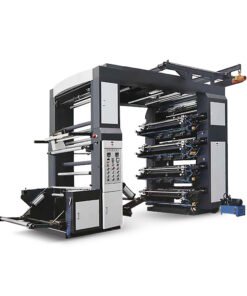
An 8-color stacked flexographic printing machine prints up to eight colors in a single pass by running the web material through eight individually stacked printing units, each applying one color via a flexible printing plate. “Stacked” refers to the printing units being arranged vertically rather than around a single central impression (CI) drum — this gives a simpler structure and smaller footprint than a CI flexo press, at a lower price point, though generally with somewhat less precise multi-color registration than a comparable CI machine. It’s built for label, trademark, and plastic film web printing on materials like BOPP, LDPE, HDPE, and cellophane, at industrial production speeds.
How to Choose the Right Machine
Don’t start from “8-color” as a fixed requirement — start from what you actually print. If most of your jobs use 4-6 colors, an 8-color press is unused capacity you paid for. If you regularly need complex multi-color labels or packaging designs, 8 colors avoids running jobs through the press twice. The other variables that matter as much as color count:
- Print width — matched to your typical roll/film width, not the widest option available
- Print speed (meters/minute) — determines real daily output, not just rated capacity
- Registration precision — more critical for fine text and detailed label designs than for simple packaging graphics
- Material range — confirm the machine is configured for your specific substrate (film, paper, foil)
Stack Type vs. Central Impression (CI) Flexo
| Stack Type (this machine) | Central Impression (CI) | |
|---|---|---|
| Cost | Lower — simpler structure | Higher — more complex build |
| Footprint | Smaller, compact | Larger |
| Registration precision | Good, adequate for most label/packaging work | Generally tighter, better for high-precision multi-color jobs |
| Best fit | Small-to-mid production, cost-conscious entry into multi-color flexo | High-volume, precision-critical commercial printing |
If your work genuinely demands CI-level registration precision at high volume, that’s a different (and significantly more expensive) machine category — worth knowing before you commit to a stack-type press expecting CI-level results.
Who Should Buy This Machine
- Flexible packaging manufacturers printing labels, trademarks, and film packaging
- Printing factories expanding into multi-color web printing
- Food and beverage packaging producers needing in-house label/film printing capability
- Label converters looking for a lower-cost entry into 8-color printing than a CI press
Common Mistakes Buyers Make
- Buying more color capacity than actual jobs need. Paying for 8 colors when 90% of jobs use 4-6 wastes capital that could go toward better registration precision, a wider web, or working capital.
- Not confirming registration precision against real sample artwork. A generic spec sheet claim isn’t the same as seeing the machine’s actual print quality on your design complexity.
- Underestimating installation and commissioning needs. This is not a machine that runs correctly out of the crate — factory training and proper commissioning materially affect output quality from day one.
- Skipping factory verification because the supplier “looks established” online. A polished Alibaba or Made-in-China listing is not verification — it’s marketing.
- Not budgeting for spare parts and consumables (printing plates, anilox rollers, ink systems) as part of the total cost of ownership, not an afterthought.
Factory Verification Advice
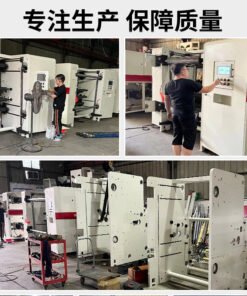
At this price point, factory verification is not optional. DE International verifies the manufacturer’s business license, production facility, and export history before any order is placed. For a machine this complex, we recommend going further than a basic license check: request production photos or video of your specific configuration during manufacturing, ask for reference clients if available, and confirm the factory’s actual export experience to Bangladesh or similar markets — not just their domestic China sales history.
Quality Inspection Recommendations
Before the machine ships, arrange pre-shipment inspection covering: print registration accuracy across all 8 units on sample material, ink system function, drive and tension control consistency, and electrical/control panel testing. For a machine at this investment level, an in-person or third-party inspection before shipment is worth the cost relative to discovering a defect after the machine has landed in Bangladesh.
Main Features
- 8-color stacked printing capability — up to 8 colors in one pass
- Compact stacked-unit design — smaller footprint than CI flexo presses
- Multi-material capability — plastic film, labels, trademarks, web materials
- Continuous industrial-duty operation — built for sustained production runs
Shipping Considerations
A machine of this size and complexity ships by sea freight, typically disassembled into major units (print stations, drive system, control panel) and crated for protection. This is not a small-parcel shipment — plan for container logistics, port handling, and inland transport to your facility. DE International handles freight booking, customs clearance, and door-to-door delivery, coordinating the full logistics chain rather than leaving you to manage a freight forwarder and customs broker separately.
Bangladesh Import Considerations
Industrial printing machinery at this value typically involves formal import documentation — HS code classification, commercial invoice, packing list, and (for many buyers) an LC or bank-guaranteed payment structure rather than simple advance payment. Confirm with us early whether your business has an import registration certificate (IRC) and how you intend to structure payment, since this affects both the sourcing timeline and the customs clearance process. We coordinate the import documentation as part of the service, but planning this early avoids delays once the machine is ready to ship.
Installation & After-Sales
Proper installation and commissioning is critical for a machine this complex — incorrect setup directly affects print registration quality from the first run. Confirm installation support, commissioning, and initial operator training as part of your order, along with spare-parts availability for wear items like printing plates and anilox rollers, before the machine ships.
Frequently Asked Questions
Should I choose an 8-color machine or a lower color-count model?
Base this on your actual job mix, not aspiration. If most jobs use 4-6 colors, that capacity may be more cost-effective, freeing budget for better registration precision or a wider web. Tell us your typical job requirements when requesting a quote and we’ll help you decide.
What’s the difference between this and a central impression (CI) flexo press?
Stack-type machines like this one are lower cost and more compact, with registration precision that’s good but generally not as tight as a CI press. CI machines cost significantly more and suit high-volume, precision-critical commercial printing. Tell us your registration precision needs and we’ll recommend the right category.
How do I verify the factory before committing to an order this size?
We verify business license, production facility, and export history before ordering, and for machines at this investment level we recommend requesting production photos/video during manufacturing and confirming the factory’s actual export experience, not just domestic sales. Pre-shipment inspection is strongly recommended before the machine ships.
What import documentation does Bangladesh require for this machine?
Industrial printing machinery at this value typically requires formal documentation including HS code classification and commercial invoice, and often an LC-based payment structure. Confirm your import registration certificate (IRC) status and preferred payment structure early so the timeline isn’t delayed later.
How is the machine shipped and installed?
By sea freight, disassembled into major units and crated for protection, with container logistics and port handling involved given its size. DE International manages freight, customs clearance, and door-to-door delivery, and installation/commissioning support should be confirmed as part of your order.
Related Machinery & Services
- Two-Color Flexo Printing Machine (Woven Bags) — for simple one-to-two color woven bag/sack printing
- China Sourcing Agent Service — factory verification and supplier vetting
- China Import Support Service — freight, customs, and door-to-door delivery
- Browse all packaging machinery
Tell us your typical color count, print width, and material — we’ll help you choose the right configuration and provide a factory-verified quote.
| specification |
|---|
Be the first to review “High-Speed 8 Color Stacked Flexographic Printing Machine for Labels & Plastic Film”
Related products
Packaging Machine


Packaging Machine

Packaging Machine
Reviews
There are no reviews yet.