
Import & Export Guides
Warehouse Licensing for Hazardous and Flammable Goods Storage in Bangladesh
Sep
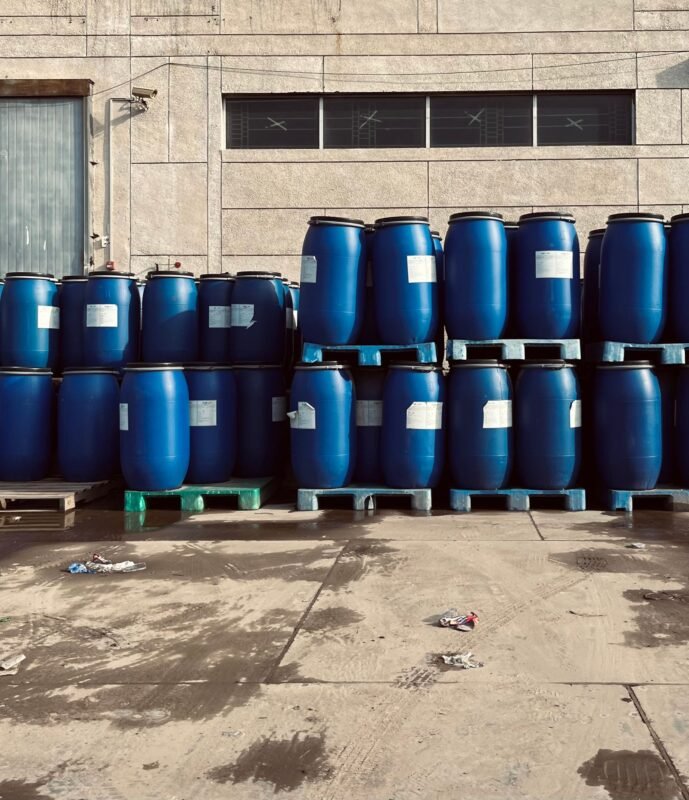
Storing chemicals, solvents, adhesives or other flammable and hazardous goods in an ordinary general warehouse is not simply a bad idea — in many cases, it is not legally permitted at all without a specific licence layered on top of your standard trade and warehouse registration. This is one of the most commonly overlooked compliance gaps we see among importers who move from general cargo into chemical inputs, industrial adhesives, or aerosol and battery products without realising the storage rules changed the moment the product category did.
Why physical segregation alone is not enough
We have written separately about the practical side of keeping chemicals, food and general cargo physically apart inside a shared warehouse in our guide to warehouse segregation. Licensing is a different and additional requirement: even a warehouse with perfect physical segregation, separate ventilation and dedicated chemical storage bays can still be operating illegally if the facility itself has not been licensed to store hazardous or flammable materials in the first place. The two requirements — how you separate goods, and whether you are permitted to store that category at all — are frequently confused, and satisfying one does not automatically satisfy the other.
Which authorities are actually involved
Storage of explosives, compressed gases and certain flammable liquids in Bangladesh falls under licensing administered through the Department of Explosives, operating under the Explosives Act framework, which issues specific storage licences for defined categories and quantities — a drum store below a certain threshold volume may fall under different rules than a bulk tank installation, and the licence has to match the actual quantity and category held, not just the general fact that hazardous goods are present. Separately, the Department of Environment can require a location clearance or environmental clearance certificate for facilities storing chemicals above defined thresholds, and local Fire Service and Civil Defence approval is typically required for the facility’s fire safety design before any hazardous storage licence is finalised, a step that connects directly to the fire compliance points we cover in warehouse fire safety and insurance compliance.
How this connects back to the import itself
The licensing question does not start at the warehouse door; it starts before the shipment even leaves China. Chemicals and hazardous goods moving by sea freight are subject to their own documentation and stowage requirements, which we cover in sea freight for chemicals and hazardous cargo, and the same commodity classification that determines how it ships is usually the same classification a licensing authority uses to decide which storage category it falls into on arrival. If a product was declared and shipped under a dangerous goods classification — the kind of declaration explained in our piece on the Dangerous Goods Declaration for air cargo — that same classification will typically follow the goods into the warehouse licensing conversation, so it is worth confirming storage licensing requirements before the shipment arrives, not after it is already sitting in an unlicensed facility.
The gap importers usually fall into
The most common way businesses end up non-compliant is not deliberate corner-cutting; it is growth. A business that starts by importing general goods, then adds a chemical or aerosol product line to its catalogue, often keeps using the same general-purpose warehouse it always has, without revisiting whether that facility’s licence covers the new category. Because the goods physically fit in the space and nothing looks obviously wrong day to day, the gap can go unnoticed until an inspection, an insurance claim following an incident, or a customs post-clearance review specifically asks for the storage licence tied to that product category — at which point a business can find itself unable to produce a document it did not know it needed.
What an inspection actually checks
When the Department of Explosives or Fire Service inspects a facility for hazardous storage licensing, the review typically covers the licensed quantity threshold against what is physically on site, the separation distance between storage bays and any ignition source, the availability and type of fire suppression equipment appropriate to the specific chemical class stored, electrical fittings rated for the relevant hazard zone, and signage and staff training records for handling an incident. A facility that is over its licensed quantity threshold, even temporarily during a large restock, is technically in violation regardless of how well the goods are otherwise stored — this is a detail worth building into your reorder planning if your chemical volumes fluctuate seasonally.
Renting versus building your own compliant space
For importers who do not yet have the volume to justify building a dedicated licensed hazardous store, renting space within a third-party warehouse that already holds the relevant licence for your product category is usually the faster and cheaper path to compliance, provided the operator can show you their current licence and confirm your specific chemical falls within its approved category and quantity band. We will not estimate a licensing cost or timeline here, since both vary by category, quantity and district; ask us for the current requirement against your specific product and we will point you to the right facility or process rather than guess.
Getting your storage compliance checked before it becomes a problem
If you are importing, or planning to import, any product that falls into a chemical, flammable, or otherwise hazardous category, contact us before you commit to a storage arrangement. Our warehouse and customs clearance service includes checking whether a proposed storage facility actually holds the licence your product category requires, which is a far cheaper conversation to have before the container arrives than after an inspection flags a gap.
Insurance implications of storing without the right licence
An overlooked consequence of storing hazardous goods in an unlicensed facility is what happens if something goes wrong. Most commercial property and stock insurance policies contain conditions requiring the insured premises to be operated in compliance with applicable law, and a fire or chemical incident at a facility later found to be storing goods outside its licensed category or quantity can give an insurer grounds to dispute or reduce a claim, even if the immediate cause of the incident had nothing to do with the licensing gap itself. This connects directly to the coverage questions we raise in our guide to warehouse fire safety and insurance compliance — a policy is only as good as the compliance status of the facility it covers, and licensing is one of the first things a loss adjuster checks after any warehouse incident involving chemicals.
Renewal and quantity-threshold reviews
A hazardous storage licence is not a one-time approval; it is typically issued for a fixed period and tied to a specific maximum quantity for each chemical category, and both the renewal date and the quantity ceiling need active tracking. A business that expands its chemical import volume without applying to increase its licensed threshold can find itself non-compliant purely through growth, even though nothing about its storage practices has changed. Building a simple annual calendar check — licence expiry date, current licensed quantity versus typical stock on hand, and fire clearance renewal date — is a low-cost way to avoid discovering a gap only when an inspector or insurer asks for the paperwork.
