
Import & Export Guides
Cold Chain for Watermelon Export and Distribution in Bangladesh
Sep
Watermelon looks like one of the toughest fruits in Bangladesh’s produce trade — a thick rind, no obvious bruising the way a mango or lychee shows damage, and a fruit that survives being thrown onto a truck bed at the farm gate without visibly cracking. That toughness is deceptive. What happens inside a watermelon during transport and storage is largely invisible from the outside until a buyer cuts one open and finds mealy, watery flesh or an internal crack that never showed on the rind, and by then the loss is already locked in.
Why watermelon damage hides until the fruit is cut open
Watermelon is more than 90% water by weight, which means its internal tissue is under real hydraulic pressure. Rough handling, drops, or being stacked too many layers deep does not always crack the rind, but it can rupture internal cell structure, a condition often called internal breakdown or hollow heart, that leaves the outside looking completely normal while the inside turns mealy, watery, or develops visible cracks radiating from the core. This is why a wholesale buyer or exporter inspecting a truckload from the outside can approve a batch that turns out to be significantly compromised once retailers or consumers start cutting into it, and it is also why loading and stacking discipline matters more for watermelon than for most other fruit in Bangladesh’s domestic and export trade.
The temperature range is narrower than it looks
Watermelon is a chilling-sensitive fruit, similar in this respect to the tomatoes we cover in cold storage for tomatoes and chilling injury. Storing watermelon below roughly 10°C for an extended period causes chilling injury — pitting on the rind, off-flavours, and accelerated decay once the fruit is moved back to warmer conditions — even though the fruit is not actually frozen and looks fine at the moment it comes out of storage. The safe holding range for most watermelon varieties sits between about 10 and 15°C, which is warmer than many other fruits and noticeably warmer than what a generic walk-in cold room is often set to by default. A cold storage operator used to running one universal temperature for mixed produce can easily over-chill a batch of watermelon simply by not adjusting the setpoint for this specific fruit.
Stacking height and rind fatigue
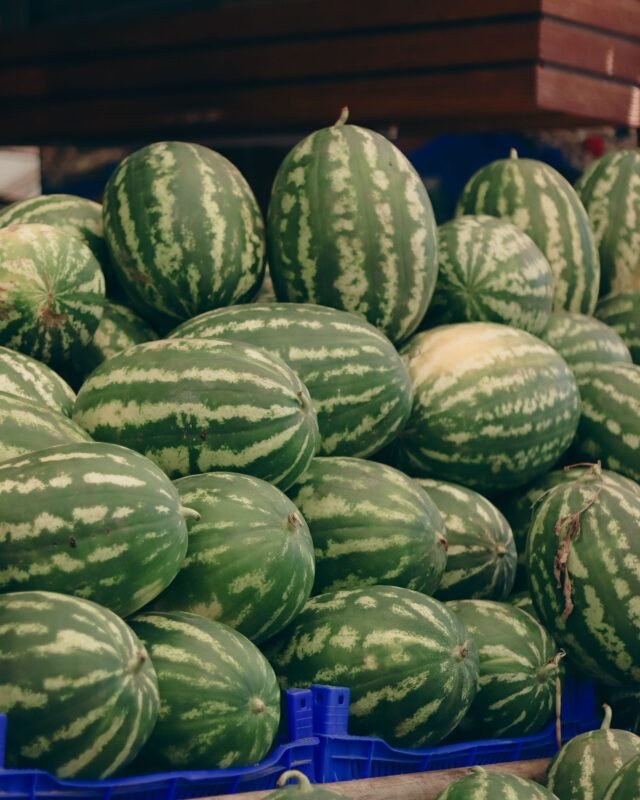
Because watermelons are round, heavy, and typically stacked directly on top of each other in crates or even loose in a truck bed, the fruit at the bottom of a tall stack carries sustained compressive load for the entire transport and storage period, not just a momentary impact. Over hours or days, this sustained pressure is a common cause of the internal cracking mentioned earlier, even when the outer rind shows no visible damage. Limiting stack height, using rigid crates that transfer load to the crate structure rather than fruit-on-fruit contact, and keeping the heaviest, largest fruit toward the bottom of any stack are all basic handling practices that meaningfully reduce this kind of hidden loss, and they cost nothing beyond a bit more care during loading.
Pre-cooling before storage or transport
A watermelon harvested in Bangladesh’s hot season can carry significant field heat, and loading that heat directly into a sealed truck or storage room slows down the room’s ability to bring the whole load to target temperature evenly, leaving fruit in the centre of a stack warmer than fruit near the cooling unit for far longer than expected. Pre-cooling the harvest before loading, using methods like forced-air cooling covered in our general guide to pre-cooling fresh produce, removes this field heat upfront rather than asking the transport or storage refrigeration to fight against it during the journey, which is both slower and less even across the load.
Ripeness at harvest cannot be corrected later
Unlike climacteric fruits such as banana or mango, which continue ripening after harvest and can be managed with ethylene exposure as covered in our piece on ethylene ripening chambers, watermelon does not meaningfully continue to ripen once picked. A watermelon harvested underripe will not sweeten further in storage or transit, and a watermelon harvested overripe is already on a faster decline than proper cold handling can meaningfully slow. This makes harvest timing itself the single biggest quality lever for watermelon — cold chain management after harvest can preserve the quality the fruit already has, but it cannot manufacture sweetness or texture that was not there when the fruit left the field. Exporters and large wholesale buyers who train field staff on harvest maturity indicators, rather than relying purely on downstream cold storage to fix quality problems, see meaningfully better consistency across a season.
What this means for distribution planning during peak season
Watermelon in Bangladesh has a pronounced seasonal peak, and during that peak, volume moving through wholesale markets and cold storage facilities spikes sharply for a relatively short window. Facilities that handle mixed produce need to plan cold room space and appropriate temperature zones for watermelon specifically during this period, rather than assuming existing capacity set up for other produce will simply absorb the seasonal volume at the wrong temperature. We do not publish a fixed cold storage cost or capacity figure here because it depends entirely on your volume and facility; ask us for a specific recommendation against your expected seasonal throughput.
Getting your watermelon supply chain assessed
If you are moving watermelon at wholesale volume, exporting it, or supplying a retail chain and want to reduce the hidden internal-quality losses that a visual inspection alone will not catch, contact our team to review your current handling and storage setup. Our cold chain and mini cold storage sourcing service can help specify the right storage configuration for this specific fruit rather than a generic produce cold room setpoint.
Transport vibration over long domestic distances
Watermelon moving from growing regions to distribution hubs in Dhaka or Chattogram often travels several hours by road, and sustained vibration over that distance has a cumulative effect similar to static compressive load, gradually working at the same internal tissue that stacking pressure damages. Trucks with harder suspension, uneven road surfaces, and loose loading where fruit can shift and knock against each other all add to this cumulative stress. Where volumes justify it, padding layers between tiers, secure loading that prevents shifting during transit, and choosing routes and vehicles with better ride quality for high-value export batches all reduce this largely invisible source of quality loss, even though none of it shows up as an obvious defect during a pre-shipment inspection.
Matching storage duration to realistic shelf life expectations
Even under ideal conditions in the correct temperature band, watermelon has a finite realistic storage life of a few weeks rather than months, which is short compared to root vegetables or grains. Businesses planning storage capacity should size it around actual expected turnover during peak season rather than assuming cold storage extends shelf life indefinitely the way it does for some other produce categories — treating watermelon storage as a buffer to smooth out a few weeks of harvest timing and distribution logistics, not as a long-term holding strategy, keeps expectations realistic and avoids paying for cold storage space that a batch will not survive long enough to use.
