
The back of every air waybill caps the carrier’s liability at a fixed amount per kilogram, not the value of your goods. Here is how the Montreal Convention limit works, the two ways to lift it, and the claim deadlines that end a claim if you miss them.
Monthly Archives: September 2026
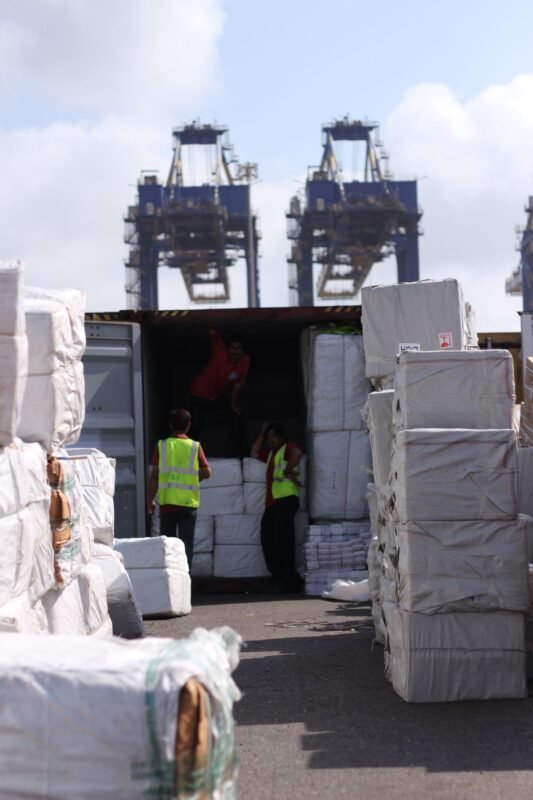
When the ship beats the paperwork, your container sits in Chattogram racking up demurrage. Here is why the original bill of lading controls release, how telex release fixes it, and the options when the goods are already here.
CCC (3C) is China’s mandatory safety certification, and it can hold your export shipment at the Chinese port. What the catalogue covers, how the export exemption works, and how to verify a CCC certificate before you pay a deposit.
Container loading supervision catches short-loads, bad stowage and leaking containers at the one moment they can still be fixed. Here is what the inspector checks, from the empty-box light test to the seal number on your bill of lading.
A practical guide to hiring an independent inspection firm in China: the four inspection stages, what a pre-shipment check actually covers, what the report contains, and the limits importers should not ignore.
The beneficiary name on your telegraphic transfer is the field that stops most China payment fraud. Here is how to match it against the contract, invoice and business licence, and what to do about Hong Kong accounts and mid-deal changes.
Run a room below freezing for long enough and the cold travels down into the ground, freezes the moisture there, and the expanding ice lifts the slab. Here is why frost heave happens under freezer rooms and how it is designed out.
Dates are a low-moisture fruit, so the storage risks are different from fresh produce: moisture pickup, sugar crystallisation, darkening and insect activity. Here is how importers hold khejur in good condition for months.
When a replenishment order from China takes weeks to arrive, the question is not only how much to order but when to place it. The reorder point and safety stock answer that, and they decide how much cash sits as inventory.
First-in-first-out assumes the oldest stock expires first. For imported food, cosmetics and pharma with varied production dates, that assumption breaks, and you need first-expired-first-out instead.