
Import & Export Guides
Backup Power for Mini Cold Storage During Load-Shedding: Generators, Batteries and Solar
Aug
A mini cold storage is only as reliable as its power supply, and load-shedding does not pause for the fact that your compressor needs to run continuously to hold temperature. A few hours without power is rarely catastrophic for a well-insulated unit, but repeated or extended outages during Bangladesh’s peak demand periods can mean real spoilage losses for whatever is stored inside. The question is not whether you need backup power — for most commercial mini cold storage operators, you do — but which combination of generator, battery, and solar actually makes sense for your specific load and outage pattern.
Why a Cold Room’s Power Needs Are Different from a Typical Backup Setup
Most backup power planning for a shop or small office is about keeping lights and a few devices running. A cold storage compressor is a different kind of load entirely — it draws a significant surge of current when it starts up, meaningfully more than its steady running current, and any backup system sized only for the running load will fail to start the compressor when power actually cuts. This is the single most common mistake in sizing backup power for a mini cold storage: taking the compressor’s rated running wattage and sizing a generator or inverter to match it, without accounting for the starting surge that can be several times higher for a brief moment.
Diesel Generators: Reliable, but Not Instant
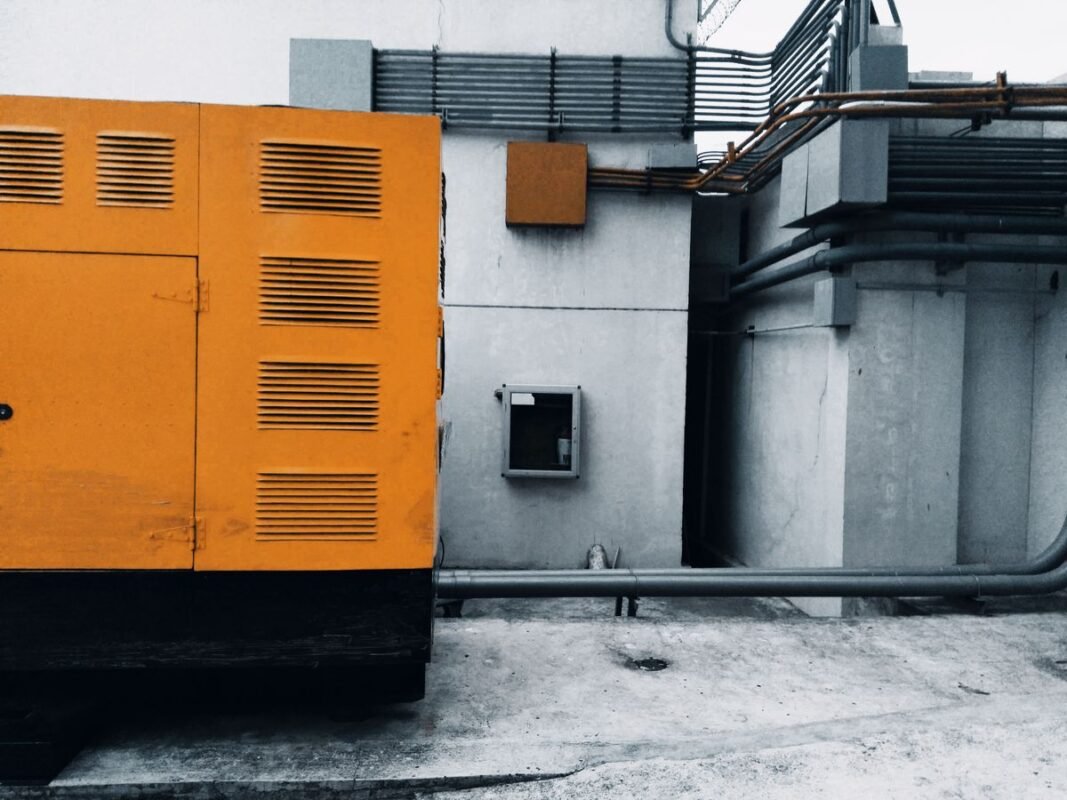
A diesel generator sized correctly for your compressor’s starting load is the most straightforward way to guarantee power through an extended outage, and it is largely unaffected by weather or time of day. The tradeoffs are the ongoing fuel cost, routine maintenance, noise, and the gap between when the grid cuts out and when the generator is manually or automatically started — a gap during which your cold room is running on stored cold air alone. For operators with frequent, unpredictable outages, an automatic transfer switch that starts the generator without manual intervention closes that gap and is worth the additional cost over a manually started unit.
Battery and Inverter Systems: Fast, but Limited by Capacity
A battery-and-inverter backup switches over to stored power almost instantly when the grid drops, which matters for compressor cycles that would otherwise be interrupted mid-cycle. The limitation is capacity: batteries store a finite amount of energy, and a cold room compressor is a continuous, meaningful draw, so a battery bank sized for a short outage will not carry you through a multi-hour one without either a very large and expensive battery bank or a secondary charging source. Battery systems tend to work best either as the fast-response first line of defense paired with a generator for extended outages, or as a standalone solution specifically for operators with predictably short outages rather than extended ones.
Solar as Part of the Mix, Not a Standalone Answer
Solar panels paired with battery storage can meaningfully offset a cold room’s daytime electricity draw and reduce dependence on grid power altogether during sunny hours, which is a genuine advantage in a country with Bangladesh’s solar potential. What solar alone cannot reliably do is guarantee power during an overnight outage or an extended cloudy stretch without a correspondingly large battery bank to store daytime generation for later use. Most cold storage operators who invest in solar treat it as a way to reduce their grid electricity bill and provide a genuine daytime backup layer, while still keeping a generator or grid connection as the fallback for whatever solar and battery cannot cover.
Sizing the System to Your Actual Outage Pattern
The right backup setup depends heavily on how often and how long your specific location loses power, which varies significantly across different areas of Bangladesh and even by season. An operator facing frequent short interruptions has a different problem than one facing rare but multi-hour outages, and sizing a system for the wrong pattern means either overspending on capacity you rarely need or underspending and getting caught out during the outage that actually matters. Tracking your own outage frequency and duration for a few weeks before committing to a backup system size is a genuinely useful exercise, not an unnecessary delay.
What This Costs, Honestly
Generator, battery, and solar system costs vary enormously depending on capacity, brand, and installation complexity, and quoting a fixed number here would not reflect your actual situation — get a sizing calculation and quote based on your specific compressor load and outage pattern rather than a generic figure. What is consistent across setups is that backup power is not a one-time cost; fuel, battery replacement over the system’s life, and routine maintenance all factor into the real cost of keeping a cold room running through outages, and it is worth budgeting for those ongoing costs from the start rather than treating the initial installation as the full picture.
Hybrid Setups Are Increasingly the Practical Default
Very few serious mini cold storage operators in Bangladesh rely on a single backup source today. The more common practical setup pairs solar and battery for daytime coverage and instant switchover, with a generator sized for the compressor’s starting surge held in reserve for extended or overnight outages that the battery bank cannot cover alone. This layered approach costs more upfront than any single option alone, but it matches how outages actually behave — short and frequent most of the time, with occasional longer ones that a battery-only system cannot realistically be sized to absorb without becoming prohibitively expensive.
Do Not Overlook the Automatic Transfer Switch
A correctly sized generator or battery bank is only half the system. Without an automatic transfer switch that detects a grid outage and starts the backup source without a person physically present to flip a switch, your cold room is exposed for however long it takes someone to notice the outage and respond — which, overnight or when the site is unstaffed, can be hours. This is a relatively small additional cost relative to the generator or battery system itself, and skipping it undermines much of the point of having backup power in the first place.
Getting backup power sizing right the first time avoids both the expense of overbuilding and the risk of a system that fails exactly when you need it. DE International sources compressors, panels, and backup-compatible cold room systems from China as part of a full mini cold storage build. See our guide to solar-powered cold storage that beats load-shedding and what drives mini cold storage electricity cost. Want a backup power sizing estimate for your project? Get in touch.
