
Import & Export Guides
Perishable Cargo by Air Freight: Packaging and Handling
Aug
Air freight is the default choice for perishable cargo precisely because speed limits the damage that time and temperature do to fresh goods, but speed alone does not protect a shipment of fish, produce or flowers from arriving spoiled. The packaging and handling decisions made before a perishable shipment ever reaches the airport determine whether that speed advantage is actually captured, or wasted because the product was not protected properly for the parts of the journey where it is not moving — sitting on a loading dock, waiting for a flight, or held during transshipment.
Insulated packaging does the work the aircraft cannot
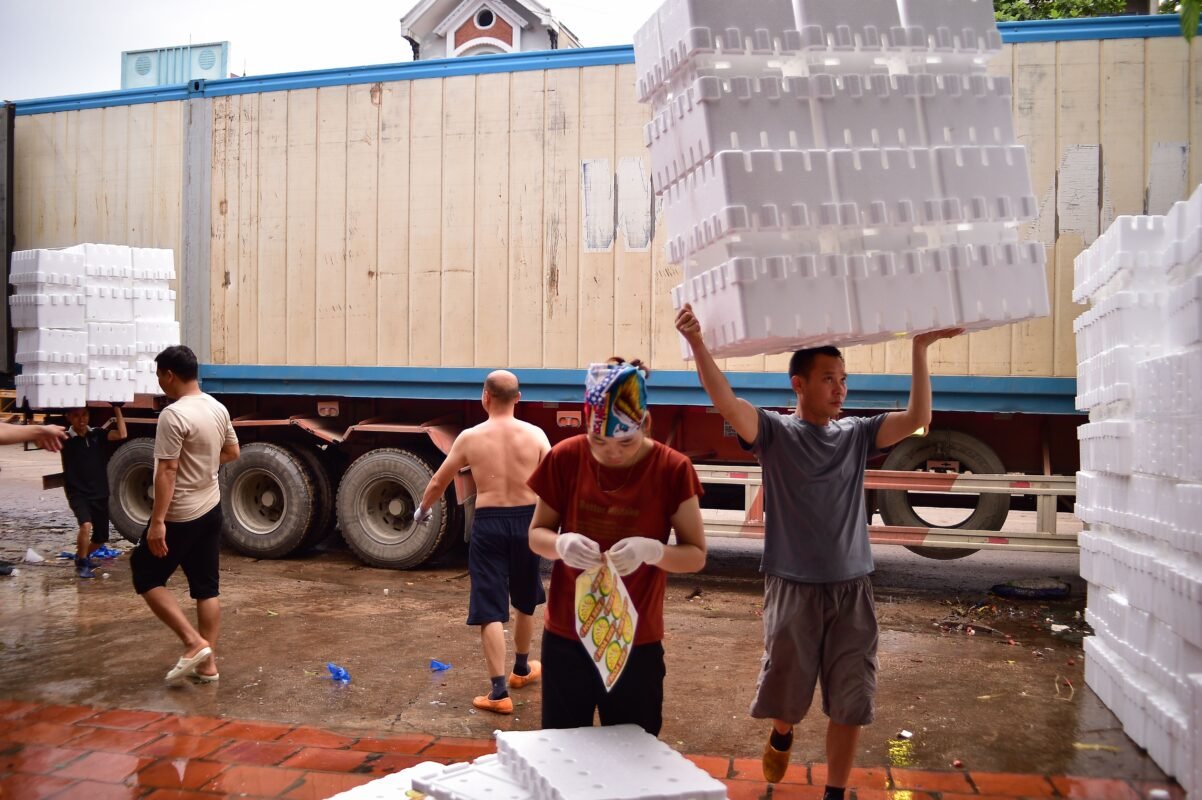
A common misunderstanding is assuming the aircraft cargo hold is refrigerated the way a reefer container is. Most standard aircraft cargo holds are only temperature-controlled to a limited degree, and much of the actual cold protection for a perishable shipment has to come from the packaging itself — insulated styrofoam or corrugated boxes, gel packs or dry ice depending on the product, and enough insulation thickness to hold temperature through the hours the shipment spends outside active refrigeration, including ground handling time before and after the flight. Underestimating this ground-handling window is one of the most common packaging mistakes — exporters plan cooling for the flight duration alone and forget that the shipment may sit on a tarmac or in a warehouse for hours before loading and after arrival, often in ambient heat that is far from ideal.
Matching the cooling method to the product
Gel packs, wet ice and dry ice all cool differently and suit different products. Wet ice is cheap and effective but adds significant weight, which matters for air freight chargeable weight calculations, and it creates meltwater that has to be managed so it does not damage the product or the packaging itself. Gel packs avoid the meltwater problem and are common for pharmaceutical and higher-value perishable shipments, but they hold less total cooling capacity than the equivalent weight of ice. Dry ice sublimates directly into carbon dioxide gas rather than melting into liquid, which makes it useful for deep-frozen products, but airlines strictly limit and regulate the quantity of dry ice permitted per shipment because of the asphyxiation risk the gas poses in an enclosed cargo hold, and this limit needs to be checked against the airline’s specific policy before packing, not assumed.
Product-specific handling that generic packaging misses
Different perishable categories have specific packaging needs that a one-size-fits-all approach misses. Fresh fish and seafood need drainage for melting ice so the product is not sitting in meltwater, along with leak-proof outer packaging since airlines will refuse a box that is actively dripping. Cut flowers need humidity retained rather than the dry-cold environment that works for most food products, since dehydration is the main threat to flower quality, not warmth. Fresh produce needs ventilation appropriate to the specific crop’s respiration rate — some vegetables continue to respire actively after harvest and need airflow, while sealing them too tightly accelerates spoilage rather than preventing it. Treating all perishable cargo as one category, packed the same way, is a reliable way to have some part of a mixed shipment arrive in worse condition than it should have.
Labeling and documentation specific to perishables
Perishable air cargo needs clear “Perishable” labeling that ground handlers can see at a glance, since this affects how the shipment is prioritized and stored during any ground time between flights. For food products, additional documentation such as health certificates or, for certain products, phytosanitary certificates may be required by the destination country’s import authorities, and missing this paperwork can hold a shipment at the destination airport for exactly the kind of delay that perishable cargo cannot absorb. This documentation needs to be arranged well before the flight departs, since some certificates require an inspection that takes time to schedule.
Transshipment is where perishable shipments are most at risk
A direct flight minimizes the ground-handling risk to a perishable shipment, but many China-to-Bangladesh air freight routes involve a transshipment stop, where cargo is unloaded from one aircraft and held before being loaded onto the next. This transshipment window is exactly the kind of unrefrigerated ground time that good packaging needs to survive, and it is also where handling errors — cargo left in direct sun, delayed connections extending the ground time beyond what was planned — are most likely to happen, simply because the shipment passes through more hands and more waiting than a direct routing. When booking air freight for perishables, asking specifically about routing and expected transshipment time is worth the extra step, rather than assuming all bookings handle ground time the same way.
Getting perishable air freight packaging right
- Size the insulation and cooling medium for total ground-plus-flight time, not just flight duration
- Match the cooling method — gel pack, wet ice or dry ice — to the specific product and check airline dry ice limits in advance
- Use product-specific packaging: drainage for seafood, humidity retention for flowers, appropriate ventilation for produce
- Label shipments clearly as perishable and confirm any destination-country certificates are arranged before departure
- Ask about routing and transshipment time specifically, since this is where unplanned temperature exposure usually happens
Working with ground handlers who treat perishable cargo as a priority
Not every airport ground handling agent treats perishable cargo with the same urgency, and this matters more than shippers often realize, since the ground handler — not the airline directly — is usually the party physically moving the shipment between the warehouse, the aircraft, and, at a transshipment point, between flights. A handler experienced with perishable cargo will prioritize moving it out of ambient conditions quickly and into whatever cool storage the airport facility has available for cargo awaiting loading, while a handler without that specific experience may treat a perishable shipment the same as any other box on the belt, with no urgency attached. When booking air freight for a perishable product, asking specifically which ground handling agent is used at each airport in the routing, and whether they have cool storage facilities for cargo awaiting connection, is a more useful question than simply asking about flight schedules.
For a new perishable export product, it is worth treating the first one or two shipments as a test of the packaging and routing plan rather than assuming it is correct from the start. A small trial shipment, checked carefully on arrival for temperature performance and product condition, reveals whether the insulation, cooling medium and routing choices actually held up in practice, before committing to a larger volume where a packaging failure would be a much more expensive lesson to learn.
Shipping perishables that actually arrive in good condition
Perishable air freight rewards planning that goes beyond booking a flight — the packaging, cooling method and routing decisions made before departure determine the outcome more than anything that happens once the shipment is airborne. DE International arranges air freight for perishable and time-sensitive cargo between China and Bangladesh with attention to these packaging and routing details. Get in touch to discuss your product and timeline, or browse the shop.
Related reading: Air Freight Chargeable Weight Explained, Air Freight Packaging Requirements, and Cold Chain Monitoring with IoT Sensors.
