
Import & Export Guides
Band Sealer Machine Price in Bangladesh: Choosing a Continuous Sealer for Pouch Packing
Oct
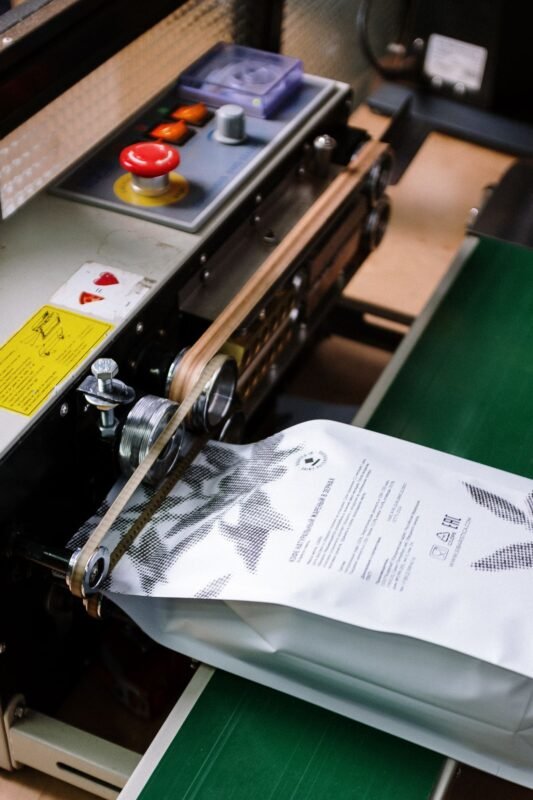
A continuous band sealer is the machine that seals filled pouches one after another as they ride along a conveyor — the bag top passes between moving belts, through a heating block, then a cooling block and pressure rollers. For a small Bangladeshi factory packing spices, snacks, tea, rice or powders, the right band sealer depends on whether you seal vertically (standing pouches) or horizontally (flat bags), the film you use, and whether you need date coding or nitrogen. The band sealer machine price in Bangladesh changes with those choices; DE International sources band sealers from Chinese manufacturers and delivers them door-to-door — ask us for a quote matched to your pouch and film.
How does a continuous band sealer actually seal a bag?
Understanding the mechanism makes it much easier to judge a supplier and fix problems later. A band sealer has two endless Teflon-coated belts that grip the open top of the pouch and pull it through the machine. As the bag moves, it passes in sequence through:
- The heating zone — two heated blocks press against the belts. Heat passes through the belts into the film and melts the inner sealing layer.
- The cooling zone — cooled blocks (air or sometimes water) set the molten layer while the film is still pressed together. Skipping proper cooling is why some cheap sealers give seals that look fine but peel open later.
- The embossing or pressure wheels — patterned rollers press the seal and can emboss a texture or a date code.
- The conveyor — carries the pouch so the bottom is supported while the top is being sealed. Conveyor height is adjustable for different pouch sizes.
Three settings decide the seal: temperature, belt speed and pressure. Faster speed means less time in the heating zone, so it needs higher temperature. That relationship is why a sealer that works perfectly on one film can burn or under-seal another.
Vertical, horizontal or heavy-duty: which type do you need?
| Type | How the bag travels | Good for |
|---|---|---|
| Horizontal (table-top) | Bag lies flat, top fed sideways into the belts | Light flat pouches, sachets, small packs of spices or tea |
| Vertical | Bag stands upright on the conveyor | Stand-up pouches with liquids, pastes, rice, powders that would spill if laid flat |
| Heavy-duty vertical (floor-standing) | Upright, with a stronger conveyor and frame | Large bags such as 5–25 kg rice, feed or flour sacks made of laminated film |
| Solid ink coding band sealer | Any of the above plus an ink roller coder | Printing batch number, MFG and EXP dates in the same pass |
| Nitrogen flushing band sealer | Gas nozzle flushes the bag just before sealing | Chips, nuts, coffee and other oil-rich products that go stale with oxygen |
The labelling rules for packaged food in Bangladesh expect manufacturing and expiry dates on the pack, so a model with a built-in coder saves you a separate printing step. See our note on labelling requirements for packaged goods for the information that usually has to appear on the pack.
Match the sealer to your film, not just your bag size
Most seal problems in small factories come from the film rather than the machine. Each laminate has its own sealing window:
- Plain PE / LDPE bags seal at low temperature and stretch easily; too much heat makes them thin and wrinkled at the seal line.
- BOPP / CPP laminates (the shiny printed snack and tea pouches) need a steady, moderate heat and good cooling to avoid a brittle seal.
- Metallised and aluminium foil laminates need higher heat and longer dwell time; they protect better against moisture and light but seal more slowly.
- Kraft paper pouches with a PE liner — only the inner liner seals; heat must pass through paper, so speed is usually lower.
Send your film sample and printed pouch to the supplier and ask them to seal it on the exact model and send a video plus the sealed samples back. A sealer that is tested on your own film before shipment removes most of the guesswork.
A worked example: sealing 1 kg spice pouches
Take a spice brand in Dhaka moving from a hand-held impulse sealer to a band sealer for 1 kg stand-up chilli powder pouches with a BOPP/metallised laminate:
- Choose a vertical model, because powder in a standing pouch spills if laid flat.
- Ask for a solid ink coder so the batch number and dates print during sealing.
- Send pouch samples to the supplier; ask them to show a video at your planned speed and to send back a few sealed pouches.
- On arrival, start at the supplier’s recommended temperature, seal a test batch, then do a simple squeeze test and an overnight check: a weak seal often shows itself when fine powder works into the seal line.
- Keep the sealing area clean. Chilli dust caught in the seal area is the most common cause of leaking spice pouches — a funnel or a wipe of the pouch mouth before sealing helps.
If you are building the whole spice unit, read our guide on spice grinding machines as well.
What decides the band sealer price?
| Factor | Effect on price |
|---|---|
| Horizontal, vertical or floor-standing frame | Bigger frame and conveyor cost more |
| Body material | Painted steel vs stainless steel for food and wet areas |
| Temperature control | Simple dial vs digital controller with steadier temperature |
| Coding system | No coder, embossing wheel coder, or solid ink coder |
| Nitrogen or vacuum function | Adds valves, nozzles and gas connection |
| Conveyor load capacity | Light bags vs heavy sacks |
| Shipping, duty and VAT | Weight, crate size and classification decide landed cost |
Rather than a fixed figure that will be out of date, ask us for a current quote for your pouch type, film and daily output. We compare models side by side and tell you which features you actually need.
Common mistakes and what they cost you
- Buying horizontal for liquids. Liquid or paste leaks out before the seal sets, wasting product and soiling the belts.
- Running too fast. The seal looks closed but peels apart in transport, and you only learn about it from shop complaints.
- Not keeping spare Teflon belts. Belts wear and burn with use; without spares, the machine stops. Order spare belts and a heating element with the machine.
- Ignoring voltage. Confirm 220V 50Hz single-phase for most table-top models; heavy-duty models may need different supply.
Where a band sealer fits in a packing line
A band sealer is the right step up from hand sealing when you pack a few hundred to a few thousand pouches per shift by hand-filling. When filling itself becomes the bottleneck, the next step is an automatic pouch packing machine that forms, fills and seals in one. For snacks that need nitrogen, see our guide on chips packing machines, and for an overview, essential packaging and sealing machines for small factories.
FAQ
What is the band sealer machine price in Bangladesh?
It depends on frame type (horizontal, vertical, floor-standing), body material, coder and nitrogen options. DE International gives a current quote for your pouch and film.
Which band sealer is best for spice and powder pouches?
A vertical continuous band sealer with a solid ink coder suits standing powder pouches; keep the seal area free of dust.
Can a band sealer print expiry dates?
Yes. Models with a solid ink coder or embossing coder print batch numbers and dates while sealing.
Why do my pouches open after sealing?
Usually the speed is too high for the temperature, the film needs a different setting, or dust is caught in the seal line.
Who can import a band sealer from China to Dhaka?
DE International sources and delivers band sealers door-to-door from China. WhatsApp +880 1750-859967.
Talk to DE International: tell us what you want to make, your daily output and your power supply, and we will shortlist machines from verified Chinese factories and handle shipping and customs to your door. WhatsApp +880 1750-859967, or use our contact page. See all our services, our China sourcing & buying agent service, or browse the shop.
