
Import & Export Guides
Labelling Requirements for Imported Packaged Goods in Bangladesh: MRP, Expiry Dates and Importer Details
Sep
A carton of imported goods can pass customs perfectly and still land its owner in trouble a month later, when a consumer rights officer walks into a shop and finds no maximum retail price on the pack. Labelling is where the rules for importing meet the rules for selling, and the two are enforced by different authorities at different times. Importers from China get caught because the factory prints what it prints for every market, and nobody checks it against Bangladeshi law until it is too late to change the packaging cheaply.
This article walks through the labelling obligations that commonly apply to packaged goods imported into Bangladesh, where each one comes from, and the most practical way to get them right — which is almost always at the factory, before production, rather than with stickers after arrival.
Three sets of rules that overlap
There is no single “labelling law”. Instead, several instruments each require certain information, and a product may be subject to more than one of them:
- The Import Policy Order sets conditions for some product groups at the point of import, including requirements linked to food and to products on the BSTI mandatory certification list. See our Import Policy Order guide.
- Weights and measures rules for packaged commodities, administered by BSTI, which require packaged goods offered for sale to declare things like net quantity and the identity of the packer or importer.
- The Consumer Rights Protection Act, 2009, enforced by the Directorate of National Consumer Rights Protection, which makes it an offence to sell goods without the required price label and with false or misleading information, among other things.
- Food-specific rules under the Safe Food Act, 2013, including the packaged food labelling regulations administered by the Bangladesh Food Safety Authority.
The practical consequence is that customs clearance is not the finish line. A product can be released by customs and still be non-compliant for retail sale, and the penalty then falls on whoever is selling it — often your own shop or your wholesale customer.
Information that is commonly required on the pack
Exact requirements depend on the product category, and food carries the most detailed list. As a working checklist, packaged consumer goods imported for sale in Bangladesh are commonly expected to show:
- The name of the product and, where relevant, its type or variety.
- Net quantity in metric units (weight, volume or count).
- The name and address of the manufacturer, and for imported goods, the name and address of the importer in Bangladesh.
- The maximum retail price (MRP), inclusive of taxes.
- Date of manufacture and date of expiry or “best before”, for goods that have a limited shelf life.
- Batch or lot number, so a defective batch can be traced and withdrawn.
- Country of origin.
- For food: ingredients list, allergen information, nutrition information where required, storage instructions, and any halal or other claims that must be substantiated.
- For products under BSTI mandatory certification: the BSTI mark and licence details once certification is granted.
Treat this as a starting list to discuss with your C&F agent and, for food, with a food safety consultant. The regulations define details such as minimum font sizes, the language to be used and where on the pack certain items must appear, and those details change with amendments.
Why the expiry date and batch code matter so much
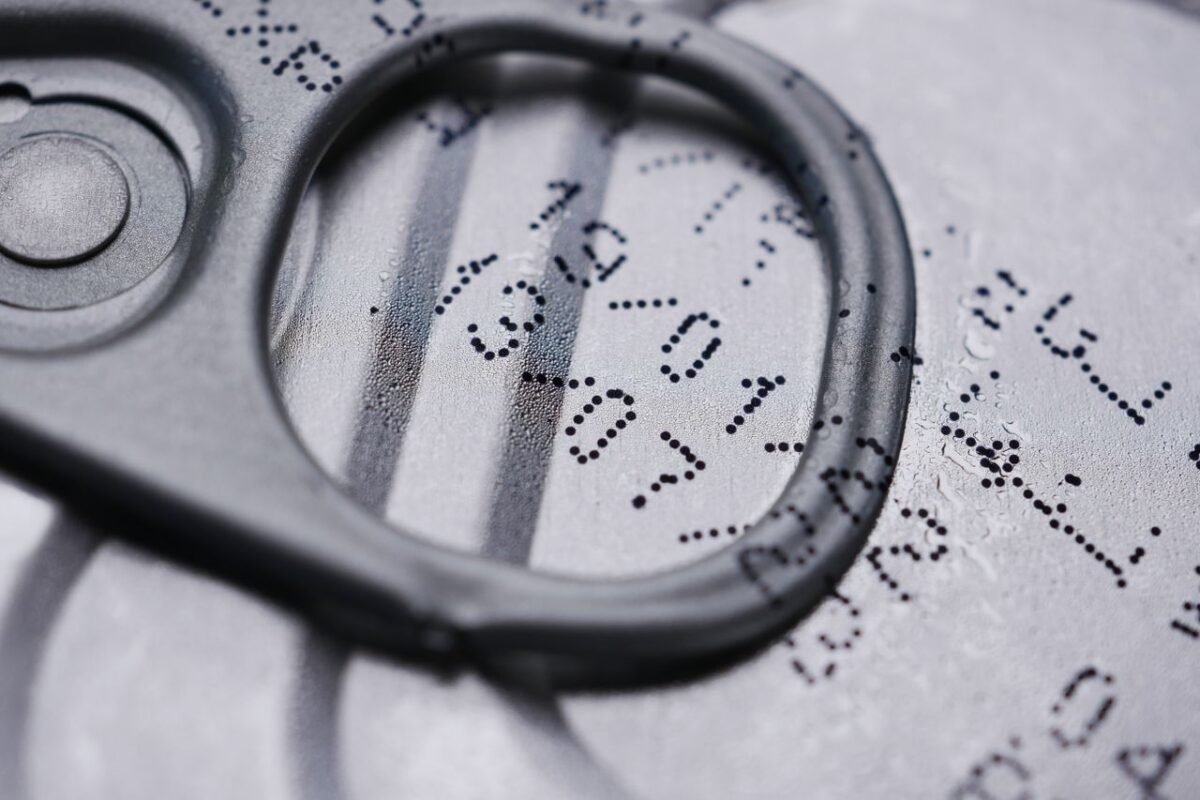
Of all the fields, the date and batch code cause the most rejected shipments and retail problems. Chinese factories often print dates in a format that is normal in China but ambiguous elsewhere, such as a production date only, or a year-month-day string without labels. A Bangladeshi inspector or consumer reading “20260805” cannot tell whether it is a manufacture date or an expiry date. The fix costs nothing at the factory: ask for explicit labels such as “MFG” and “EXP” next to each date, and ask for both dates rather than a production date plus a stated shelf life.
Dates also interact with the remaining-shelf-life conditions that apply to some imported food. If the product sits in a Chinese warehouse for months, then spends weeks in transit and more weeks in clearance, the remaining shelf life on arrival may be shorter than the rules or your buyers accept. Planning the production date around your shipping date, rather than buying old stock, avoids that. Our import timeline guide shows where the weeks go.
Printing at the factory versus stickering in Bangladesh
| Approach | Advantages | Drawbacks |
|---|---|---|
| Printed on packaging at the factory | Permanent, looks professional, no extra handling in Bangladesh, harder to tamper with | Needs artwork approval before production; changes after printing are expensive |
| Sticker applied in China before shipment | Flexible for small runs; factory staff do the labour | Sticker quality and placement vary; must be checked at pre-shipment inspection |
| Sticker applied in Bangladesh after clearance | Allows MRP to be set after landed cost is known | Extra labour and warehouse time; stickers can peel; some information may be expected at import stage |
Many importers use a mix: permanent information (product name, manufacturer, ingredients, net quantity) printed at the factory, and the MRP and importer details applied later on a high-adhesion sticker once the landed cost is known. If you take that route, plan the stickering as a formal job in the warehouse with a sample-approved label, not as an afterthought. Our article on warehouse value-added services covers how relabelling is organised.
Getting it right with a Chinese supplier
- Send a label specification with the purchase order. List every field, the language, and the exact wording, and attach your own artwork where possible. A product specification sheet should include packaging and labelling, not only the product itself.
- Approve a printed proof. Ask for a photo of the actual printed box or label, not just the digital artwork. Colours and small print often change in printing.
- Include labelling in inspection. Add label content, legibility and date format to your pre-shipment inspection checklist.
- Keep shipping marks separate. Carton shipping marks are for logistics; they do not satisfy consumer labelling on the retail pack inside.
- Watch for other countries’ marks. Factories sometimes reuse packaging printed for another market, complete with a foreign importer’s name, a foreign price or a certification mark the product does not actually hold in Bangladesh. That is misleading labelling and can be treated as such.
Common mistakes and their consequences
- No MRP on the pack. The goods may clear customs, but selling them without the price label exposes the seller to penalties under the consumer rights law during market drives.
- Missing importer name and address. Retailers and inspectors expect to see who is responsible in Bangladesh; without it, the product looks like smuggled stock.
- Ambiguous dates. Can lead to rejection by modern trade buyers and questions from inspectors, and can cause perfectly good stock to be treated as expired.
- Health or performance claims you cannot prove. Claims such as “sugar-free” or “certified” must be true and, for food, must follow the regulations on claims.
- Assuming the courier route avoids labelling. Goods sold in Bangladesh must meet the selling rules regardless of how they arrived. See personal vs commercial import.
A simple labelling workflow for your next order
Before placing the order, confirm the HS code and whether the product falls under BSTI mandatory certification or food regulations. Draft the label content in a single document and have it reviewed. Send it to the supplier with the purchase order and require a printed proof before mass production. During pre-shipment inspection, check a sample of retail packs against the approved label. After clearance, apply any MRP or importer stickers in the warehouse under a written instruction, and keep photos of the final labelled pack in your import records. Done in that order, labelling becomes a two-hour task at the start of a project rather than a costly correction at the end.
Talk to DE International
We help importers write label specifications for Chinese factories, check printed proofs during inspection, and arrange relabelling in Bangladesh when needed. See our full range of import, freight and clearance services, China sourcing and buying agent service, browse the shop, or contact us for a quote built around your product and volume.
