
Import & Export Guides
Computer Embroidery Machine Price in Bangladesh: How Many Heads Does a Small Business Need
Oct
For a small embroidery business in Bangladesh, the usual starting point is a single-head or two-head computer embroidery machine with multiple needles, chosen by the products you will stitch (caps, logos, punjabi necklines, school badges) and the work volume you can sell. More heads raise output only if you have repeat orders of the same design. The computer embroidery machine price in Bangladesh depends on heads, needles, embroidery area, frames and the control system; DE International sources machines from Chinese manufacturers and delivers them door-to-door with a quote built around your plan.
How a computer embroidery machine works
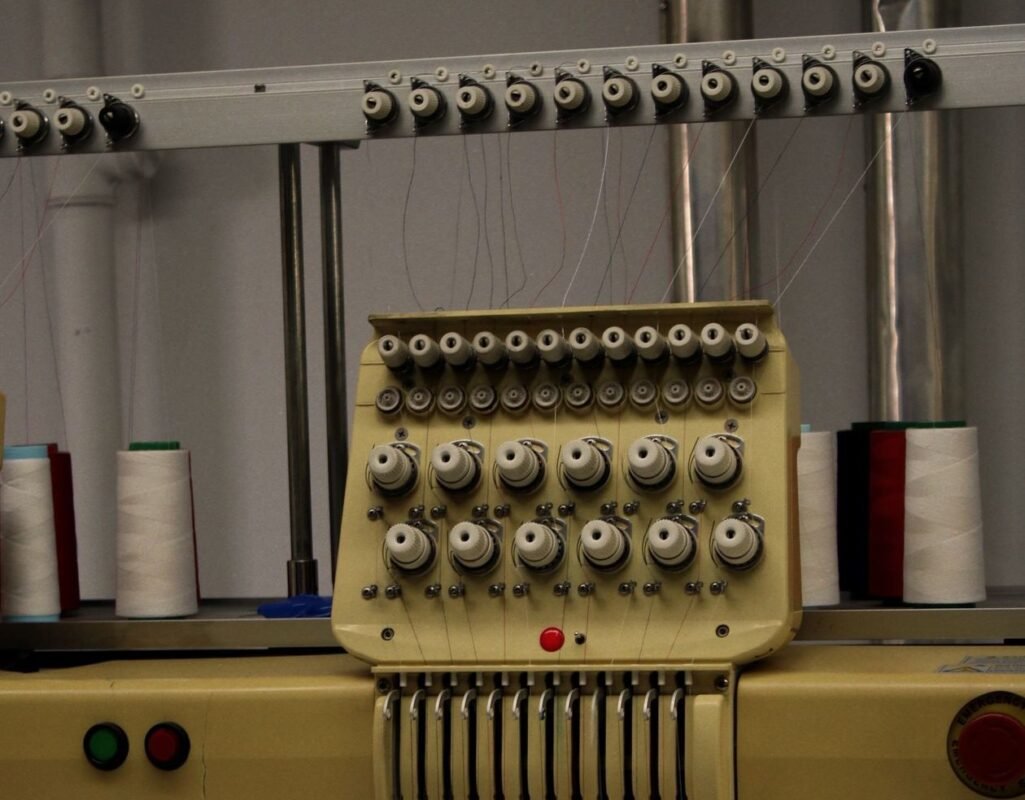
A computer embroidery machine stitches a design from a digital file. The fabric is clamped tight in a hoop or frame, and the frame moves on an X-Y pantograph under the needle while the needle bar goes up and down. Each “head” is one sewing station; a multi-head machine has several identical heads on one long table, all moving the same pantograph and stitching the same design at the same time.
Each head carries several needles, each threaded with a different colour. When the design calls for a colour change, the needle case shifts automatically to the next needle, so a multi-colour logo can be stitched without anyone re-threading. The design file itself is created by digitising software, which converts artwork into stitch types, densities and a stitch sequence. A widely used machine format is DST, and most Chinese controllers read it, but always confirm the formats a controller accepts and that it has USB or network input.
How many heads should you buy
This is the question most buyers ask first, and the honest answer is: as many as your orders can keep busy with the same design. All heads on a multi-head machine stitch the same pattern together. Four heads stitch four identical logos at once; they cannot stitch four different jobs.
| Set-up | Strength | Watch out for |
|---|---|---|
| Single head | Flexible; ideal for samples, one-off names, mixed small orders; can be fitted with cap and tubular frames | Lower output on bulk repeat orders |
| Two to four heads | Good balance for local garment shops and uniform suppliers | One stopped head (thread break) slows the whole run if not handled quickly |
| Six heads and more | High output for repeat logos on export or uniform orders | Needs steady bulk work, more floor space and usually three-phase power |
Many successful small embroidery units start with one single-head machine for samples and urgent work, then add a multi-head machine when bulk orders are steady. That way a big order never blocks the small, higher-margin custom jobs.
What decides the computer embroidery machine price in Bangladesh
- Number of heads and needles per head. More needles means more colours without re-threading.
- Maximum embroidery area. A larger field allows jacket backs and big panels; small fields suit logos and caps.
- Frames and attachments. Cap frames, tubular frames for sleeves and finished garments, and border frames for large panels add cost but add work you can accept.
- Controller and motors. Screen size, memory, file formats, servo motors, automatic thread trimming and thread-break detection.
- Special devices. Sequin devices, cording and chenille attachments are specialised options for fashion work.
- Freight and clearance. Multi-head machines are long and heavy, often shipped crated by sea; that changes shipping cost and handling.
Because a single-head starter and a multi-head production machine are different investments, we do not quote a fixed figure. Tell us your products and expected monthly orders and ask us for a quote built around your needs.
What sells: embroidery work in the Bangladeshi market
Bangladesh has steady local demand that a small unit can serve: school and college uniform badges and monograms, corporate polo shirts and caps, neckline and cuff work on punjabi and kurti for Eid seasons, names on gifts, hospital and hotel uniforms, and logo work for clothing brands selling online. There is also sub-contract work from garment exporters around Dhaka, Gazipur, Narayanganj and Chattogram, though export buyers usually require consistent quality, compliance and capacity, so plan carefully before relying on it.
Seasonality matters. Demand before Eid and at the start of the school year can be several times a normal month. Planning machine delivery so that installation and training are finished before the season is more important than saving a few weeks on shipping.
Running costs and set-up you should plan for
- Digitising. Either learn digitising software or pay a digitiser per design. Poor digitising causes thread breaks and puckering no matter how good the machine is.
- Thread, backing and needles. Polyester embroidery thread, tear-away and cut-away backing, and spare needles in the right sizes.
- Power. Single-head machines usually run on single-phase 220 V; larger multi-head machines may need three-phase. Check before you rent a space.
- Space and lighting. Long multi-head tables need room for an operator to walk along the front and reach every head.
- Training. Ask the supplier for operating videos, the controller manual in English, and remote support for the first weeks.
A worked example: one cap order on different set-ups
Imagine a corporate client orders a batch of caps with a five-colour front logo for an annual event. On a single-head machine with a cap frame, the operator hoops one cap, the machine stitches it, the operator unhoops and loads the next. Output is limited by stitching time plus loading time for every single cap. On a four-head machine with four cap frames, four caps are stitched in roughly the time one took before, and the operator can pre-hoop the next set while the machine runs, so loading time largely disappears.
Now imagine the same week brings twenty different name embroideries for gifts, each with its own file. Those jobs gain nothing from four heads, because each name is different. This is why the ratio of repeat work to custom work, not the size of your budget, should decide the head count. Write down a typical month of orders you already have or expect, split them into repeat and custom, and the right configuration usually becomes obvious.
Questions to ask the Chinese factory before you pay
- Which frames and hoop sizes are included in the price, and which are optional extras?
- Is automatic thread trimming and thread-break detection standard on every head?
- Which file formats does the controller read, and is the menu available in English?
- What spare parts kit comes with the machine, and how are further parts supplied?
- Can you send a video of the machine stitching our own design file on our type of fabric?
Common mistakes and their consequences
- Buying more heads than orders. Idle heads tie up capital and floor space.
- Ignoring frame types. Without a cap frame you cannot accept cap orders, which are among the most common requests.
- No spare parts. Hooks, needle plates, presser feet and bobbin cases wear; a small kit avoids days of downtime.
- Unchecked controller language and formats. A controller that does not read your files forces costly conversions.
- No test stitch before shipment. Always request a video of the machine stitching your own design file before final payment.
How DE International helps
We compare machines from multiple Chinese manufacturers, check controllers, frame options and motors, and ask for a test run with your design. We then arrange export, freight, customs clearance and delivery to your workshop. If you are importing other garment equipment, our guide to shipping sewing and garment machinery from China explains packing and handling, and our import business ideas post covers other small-capital options.
FAQ
How many heads should my first embroidery machine have?
Most new businesses start with a single-head multi-needle machine, because it handles mixed small orders, samples and caps. Add more heads when repeat bulk orders are steady.
Can one embroidery machine do caps and T-shirts?
Yes, if it comes with a cap frame and tubular frames. Confirm these attachments are included in the quotation.
What file format do computer embroidery machines use?
DST is widely used and most Chinese controllers read it, but check the formats your controller supports before buying.
Who can help me buy a computer embroidery machine from China for Bangladesh?
DE International sources embroidery machines from Chinese manufacturers and delivers door-to-door in Bangladesh. Contact us on WhatsApp +880 1750-859967.
See our services and shop, learn about our China sourcing and buying agent service, or contact us on WhatsApp +880 1750-859967. For freight on a crated multi-head machine, get a cargo quote at decl.bd.
