
Import & Export Guides
Customs Laboratory Tests in Bangladesh: Why Samples Are Drawn and How to Avoid Delays
Sep
Sometimes a Bill of Entry is not assessed on the paperwork alone. The examining officer looks at the goods, decides that the description or HS code cannot be confirmed by eye, and draws a sample for laboratory testing. For the importer this is an anxious moment: the cargo is stuck in the port, storage is running, and the outcome of the test may change the duty. Understanding why samples are taken, what happens to them and what you can do to shorten the process takes a lot of the anxiety out of it.
Why customs sends a sample to the laboratory
The Bangladesh customs tariff classifies goods by what they are made of and what they do, and very often the duty depends on a detail no one can see. A fabric declared as 100 percent polyester may attract a different rate from one containing cotton. A chemical declared as an industrial grade may be classified differently from a food or pharmaceutical grade. Paper may fall under a different heading depending on its weight and coating; steel depending on its alloy content; oils depending on whether they are refined. When the tariff line turns on composition, the officer cannot confirm the declaration visually — so the law allows a sample to be drawn and tested. The General Rules of Interpretation explain why composition matters so much.
A lab test is not an accusation. It is often simply the only way to confirm a classification. But it is more likely when the declared HS code carries a noticeably lower rate than a neighbouring code the goods could plausibly fall under, or when the invoice description is vague.
Where samples are tested
The large custom houses maintain their own chemical laboratories for routine composition tests. Where a test needs specialised equipment, or the product is regulated by another authority, samples may go to an outside body — for example the Bangladesh Council of Scientific and Industrial Research (BCSIR) for certain analyses, or the Bangladesh Atomic Energy Commission for the radioactivity testing that applies to many food imports. Products under compulsory standards may also involve BSTI testing, which is a separate requirement from classification testing.
What happens step by step
- Examination. During the physical examination, the officer decides the goods need testing and records this.
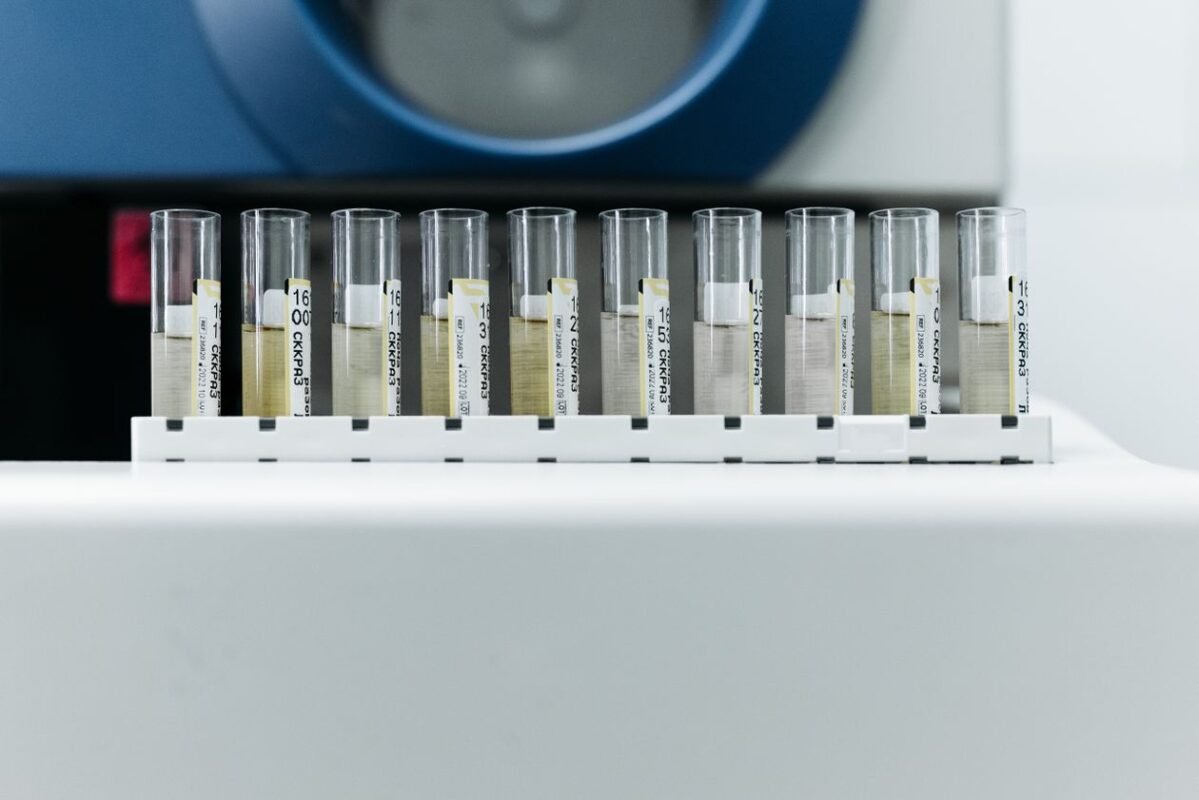
- Sample drawing. A representative sample is taken, usually in the presence of the C&F agent’s representative, sealed, and labelled with the Bill of Entry details. A sample-drawing record is signed by both sides — check that it accurately identifies which cartons or rolls the sample came from.
- Dispatch to the lab. The sealed sample is sent with a test request stating what the lab should determine — composition, percentage of a component, purity, or a specific property.
- Testing and report. The lab tests the sample and sends a report back to the assessing group.
- Assessment. The assessing officer uses the report to confirm or change the HS code and assesses the duty accordingly. If the code changes, the duty changes, and a penalty may be considered if the original declaration is judged to be a misdeclaration.
How long it takes and why the cargo waits
How long a test takes depends on the lab’s workload, the type of analysis and whether the sample goes to an outside body, so there is no fixed number we can honestly promise. What matters is that the goods usually cannot be released until the result is in — and meanwhile port storage and, for FCL cargo, container demurrage may be accruing. For importers with a production line waiting, this is the real cost of a lab test, often larger than any duty difference.
Where the law allows, customs can release goods before a final assessment against security such as a bank guarantee under provisional assessment. The final duty is then settled once the lab result arrives. This is worth discussing with your C&F agent as soon as a sample is drawn, not after two weeks of storage.
Goods that are often sent for testing
Any product can be sampled, but some categories come up again and again because their classification depends on composition or specification. Textiles and yarns are the classic example: the fibre content decides the heading, and blends sit on the boundary between codes. Chemicals, dyes and industrial raw materials follow closely, since purity and grade matter. Food ingredients, edible oils and powdered products may be checked both for classification and for safety. Plastic granules can be tested to confirm the polymer type, and metal products to confirm the grade. If your goods fall into one of these groups, assume a test is possible and prepare the supporting documents before the ship arrives.
What your C&F agent should do on the day
The C&F agent’s representative is your eyes at the examination. On the day a sample is drawn, they should confirm that the sample comes from the declared goods and is representative of the consignment, check that the sample label and seal numbers are recorded correctly, keep a copy of the sample-drawing record, and note exactly what the test request asks the lab to determine. They should also tell you the same day, so that you can gather supporting documents from the supplier and decide whether to seek provisional release. An agent who only reports the sample drawing a week later has cost you a week of storage. Our guide to what a C&F agent does covers the rest of their role.
How to reduce the chance of a test
- Write a precise goods description on the commercial invoice — for fabric, state fibre composition and weight; for chemicals, the chemical name, CAS number and grade; for steel, the grade and standard.
- Obtain supporting documents from the supplier before shipment: a technical data sheet, a material safety data sheet for chemicals, and a certificate of analysis where the product has one.
- Make sure the packing list and invoice match each other and the goods.
- For a product you will import repeatedly, consider an advance ruling on the HS code so the classification question is settled before the first shipment arrives.
- Avoid declaring the lowest-duty neighbouring code unless you are confident and can prove it; a borderline classification is exactly what triggers testing.
If you disagree with the lab result
Lab results are not always final. If the result does not match the supplier’s documentation, first check the obvious: was the sample drawn from the right goods, and was the test request asking the right question? A request to test “composition” when the tariff line actually turns on a specific property can produce a result that is technically correct but irrelevant. Your C&F agent can apply for a re-test, and if the assessment itself is disputed, the adjudication and appeal process is available. Keep every supporting document; an appeal is only as strong as the paper behind it.
Common mistakes
Vague descriptions such as “chemical”, “fabric” or “spare parts”. These practically invite a test. Relying on a supplier’s marketing brochure instead of a technical data sheet. Customs wants measurable facts. Not attending the sample drawing. If the sample comes from a damaged or unrepresentative carton, the result may not reflect the consignment. Waiting for the result before discussing provisional release. By then storage has already built up.
For the wider picture, see what customs checks during clearance and why customs clearance gets delayed.
Every shipment is different, so we do not publish one-size-fits-all prices or timelines for customs clearance involving lab tests. Ask us for a quote built around your product, volume and destination — we will tell you honestly what applies to your case. See our full list of services, browse the product catalogue, learn how our China sourcing and buying agent service works, or contact DE International to talk it through.
