
Import & Export Guides
Choosing a Chinese Departure Airport for Air Cargo to Dhaka
Sep
When you book air freight from China to Dhaka, the quote usually names a departure airport — Guangzhou, Shenzhen, Hong Kong, Shanghai, Kunming — and many importers accept whatever is offered. Yet the airport choice affects how long the cargo spends on the road inside China, how many times it is handled, which airline and routing are available, and even which export customs regime applies. This guide explains how the main Chinese gateways differ for cargo bound for Hazrat Shahjalal International Airport in Dhaka, and how to pick the right one for your factory’s location.
The factory location comes first
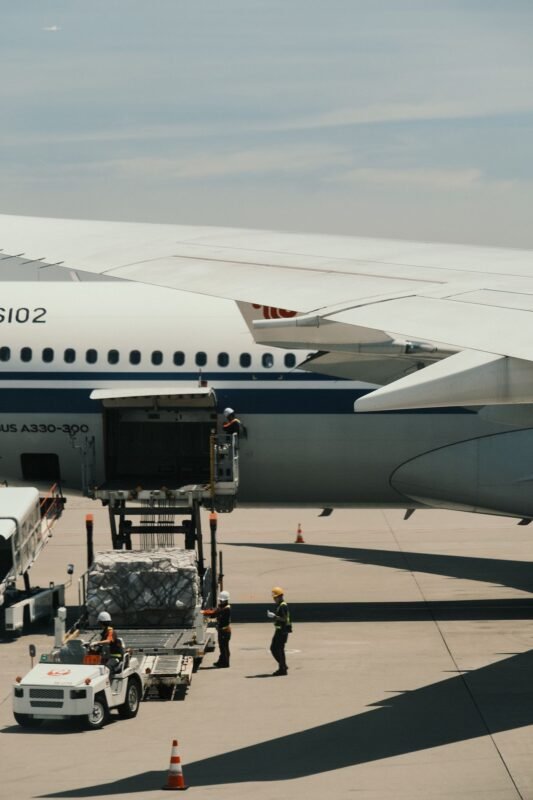
Air freight is priced and planned from the airport, but your goods start at a factory that may be hundreds of kilometres away. Chinese forwarders move cargo from factory to airport by truck, and when that trucking is done under an air waybill it is called a road feeder service. A factory in Dongguan is a short drive from Guangzhou Baiyun or Shenzhen Bao’an; a factory in Yiwu or Ningbo is closer to Shanghai Pudong or Hangzhou; a supplier in Sichuan may be best served from Chengdu. Moving cargo across the country to reach a cheaper flight can erase the saving and add days — so always ask where the factory is before comparing airport quotes.
The main gateways at a glance
- Guangzhou Baiyun (CAN). The main gateway for the Pearl River Delta manufacturing belt and a hub for a major Chinese carrier. A natural choice for goods made in Guangzhou, Foshan, Dongguan and surrounding areas.
- Shenzhen Bao’an (SZX). Close to the electronics clusters of Shenzhen and Dongguan, and a common choice for electronics buyers who have sourced through Huaqiangbei; see our Shenzhen sourcing guide.
- Hong Kong (HKG). One of the world’s busiest cargo airports with a very wide choice of airlines and connections. Hong Kong is a separate customs territory, which matters — see the next section.
- Shanghai Pudong (PVG). The gateway for the Yangtze River Delta — Shanghai, Jiangsu and Zhejiang, including the Yiwu and Ningbo supply base.
- Kunming Changshui (KMG). Geographically the closest major Chinese airport to Bangladesh. Routings via Kunming can be convenient, but capacity depends on the flights operating at the time.
The Hong Kong question: cross-border trucking and two customs regimes
Cargo from a mainland factory going out through Hong Kong has to cross the boundary between mainland China and Hong Kong by truck. It is declared for export by mainland customs, then enters Hong Kong under that territory’s own cargo procedures before being loaded on the aircraft. Forwarders handle this routinely, and Hong Kong’s breadth of airline choice can make it the best option when mainland capacity is tight. But the extra border step adds handling and documentation, and a problem with the mainland export declaration — for example, a mismatch between the declared goods and the commercial invoice — can hold the truck at the border. For simple general cargo from Guangdong, going direct from Guangzhou or Shenzhen avoids that step.
Direct flights versus transit routings
Some airline services link Chinese gateways and Dhaka directly; much other cargo moves via a transit hub, either inside China or in a third country. Transit is not automatically bad — a transit routing with space available beats a direct flight that is full — but each transfer is another point where cargo can be offloaded to a later flight, and where a shipment can be split across flights. When comparing quotes, ask each forwarder for the full routing, not just the departure airport. The master air waybill will show it once the cargo is booked.
| What you are shipping | Airport logic to consider |
|---|---|
| Electronics made in Shenzhen or Dongguan | Shenzhen or Guangzhou direct; Hong Kong if mainland space is short |
| Small commodities from Yiwu | Shanghai Pudong or a Zhejiang airport, not a long truck south |
| Samples needed within days | Whichever gateway has confirmed space soonest — or courier; see courier vs air freight |
| Lithium batteries or dangerous goods | An airport and airline that accept the specific DG class; not every routing does |
| Oversized pieces | A routing with freighter or wide-body capacity; narrow-body holds limit piece size |
Restrictions that change with the airport and airline
Airport choice is not only about distance. Some airlines and routings will not carry certain lithium battery shipments or other dangerous goods; some aircraft types cannot take a tall pallet; security screening rules at the departure airport may require cargo to be broken down for X-ray. If your cargo is unusual in any way, tell the forwarder at the quotation stage so they only offer routings that will accept it. Finding out at the airport that your battery-powered product needs a different airline is how a three-day shipment becomes a two-week one.
Export clearance and documents at the Chinese airport
Before cargo can be loaded, it must clear Chinese export customs at or near the departure airport. The forwarder lodges an export declaration using the shipper’s commercial invoice and packing list, and the goods description and HS code on that declaration must agree with the documents that will travel to Dhaka. Some products need additional paperwork at origin — for example, a transport safety report for battery-powered goods, or a chemical identification report for liquids and powders that could be mistaken for dangerous goods. Different airports and ground handlers can be stricter or more relaxed about how these documents are presented, which is one more reason to use a forwarder who regularly ships from the airport being proposed.
The documents also have to be right for the Bangladesh end. The air waybill, invoice and packing list should match each other exactly, because clearance at Dhaka airport will check them against the manifest. A mismatch created in China is corrected far more cheaply before take-off than after landing.
Packing for the road leg as well as the flight
Cargo that travels several hundred kilometres by truck before it reaches the airport is handled more than cargo that flies from a warehouse beside the runway. Each transfer — factory to truck, truck to forwarder warehouse, warehouse to airline terminal, terminal to aircraft pallet — is a chance for damage. Ask suppliers to pack to air freight standards with strong outer cartons, corner protection and clear shipping marks, and to palletise where the forwarder recommends it. Good packing is cheap insurance when the airport is far from the factory.
Costs that hide behind the airport choice
A cheaper per-kilogram rate from a distant airport can come with extra charges: longer road feeder trucking, cross-border fees for Hong Kong, higher terminal handling at a busy airport, and storage if the cargo waits for space. The chargeable weight stays the same wherever you fly from, so compare total origin charges plus freight, not the headline rate. The weight-break structure also varies by airline, so a routing that looks expensive for 80 kg may be cheaper at 300 kg.
Common mistakes
- Letting the supplier choose. A supplier on EXW or FOB terms may deliver to whichever airport suits their own forwarder, not you. Specify the gateway in your Incoterm instructions.
- Ignoring Chinese holidays. Around Chinese New Year and the October Golden Week, trucking and airport handling slow down; book earlier or ship before the break.
- Assuming the transit time starts at take-off. The clock that matters starts at the factory gate. Road feeder and export clearance can take as long as the flight.
- Not checking the export declaration. Mainland export customs needs the goods description and HS code to match the invoice; errors surface at the airport, not in Dhaka.
To see the whole picture, read our guides on the air freight booking process and air freight transit time from China.
Every shipment is different, so we do not publish one-size-fits-all prices or timelines for air freight from Chinese airports. Ask us for a quote built around your product, volume and destination — we will tell you honestly what applies to your case. See our full list of services, browse the product catalogue, learn how our China sourcing and buying agent service works, or contact DE International to talk it through.
