
Import & Export Guides
Mini Cold Storage for Egg Collection and Distribution Centers
Sep
An egg cracks the moment it leaves the hen, in a sense — not physically, but biologically. The shell is porous, built with thousands of microscopic pores that let the embryo breathe if the egg is fertile, and those same pores keep working long after collection, letting moisture and carbon dioxide escape and letting bacteria in if conditions are wrong. Most Bangladeshi egg distribution still runs on ambient-temperature holding: crates stacked in a back room, moved by rickshaw van, sold within a day or two. That works until volume grows past what same-day turnover can absorb, and it is exactly the point where a mini cold storage stops being a luxury and starts being the thing that determines how much stock a distributor can safely carry.
Why an Egg Actually Needs Cooling
Heat accelerates two things inside an egg: bacterial movement through the shell pores, and internal breakdown of the albumen (the egg white) as it loses carbon dioxide and thins out. A fertile egg held warm can also begin very early embryonic development, which is invisible from the outside but changes grading quality. None of this happens overnight, which is why room-temperature egg trading has survived for decades — but every extra day at ambient heat is a day of accelerated quality loss that a buyer eventually notices as watery whites, off smell, or a higher breakage rate from weakened shells. Cooling does not stop this process; it slows it enough that a distributor’s stock does not degrade faster than it sells.
The Farm-to-Cooler Gap Most Distributors Ignore
Collection is rarely a single event. Layer houses are typically checked multiple times a day, and eggs accumulate in crates in an uncooled holding area before a van arrives to move them to a distribution point. That holding gap — sometimes a few hours, sometimes overnight if collection and pickup schedules do not align — is where a large share of quality loss actually happens, often before the egg has even reached the cold room the distributor invested in. A mini cold storage placed at the collection point rather than only at the final distribution hub closes this gap; placed only at the far end, it cools eggs that have already spent their most vulnerable hours at ambient temperature.
Sizing for Crate Turnover, Not Just Floor Area
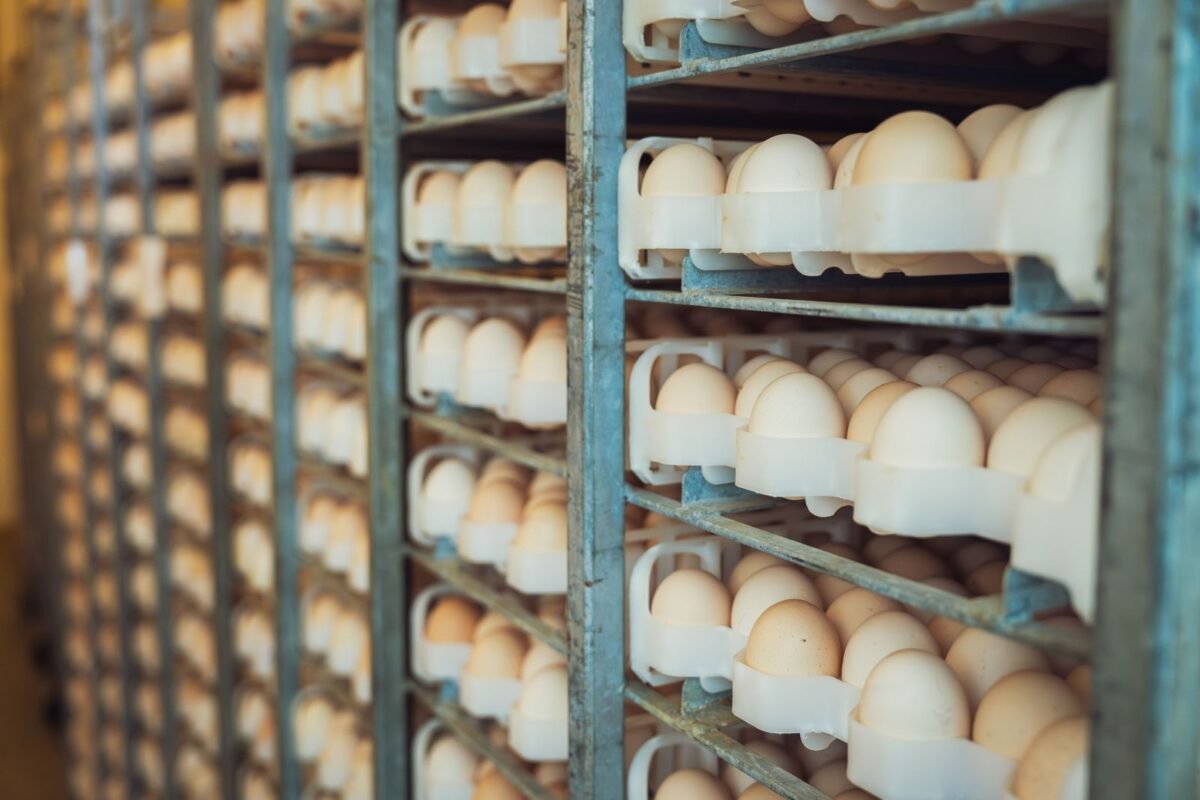
Vegetable cold storage is usually sized around static holding — how much can sit in the room at once. An egg distribution cold room needs to be sized around throughput instead, because eggs move through it constantly: incoming crates from collection, outgoing crates to retailers, and a buffer for the days demand dips. Racking needs enough clearance between rows that a worker can pull the oldest crates first without disturbing newer stock, and the room needs a distinct staging zone near the door where just-arrived, still-warm crates can pre-cool briefly before joining the main stock — mixing a warm batch directly into cooled stock raises the average temperature of everything around it and can trigger condensation on the older crates. Because every distributor’s daily crate volume, van schedule, and retail radius is different, the right room size and layout is something we work out with each business rather than something we can hand over as a fixed number — ask us for a quote built around your actual throughput.
Humidity Works Differently for Eggs Than for Produce
This is the detail that trips up distributors who copy a vegetable cold room design for eggs. Leafy vegetables want high humidity to stop wilting. Eggs want moderate humidity — enough that they do not lose moisture too fast through the shell pores (which causes weight loss and a larger internal air cell, both graded against the seller), but not so much that condensation forms on a cold shell when it meets warmer air, because a wet shell is a shell whose pores are actively drawing in whatever bacteria are on its surface. Airflow inside the room needs to be steady enough to prevent stagnant humid pockets near the walls without blasting cold air directly onto crates, which dries the nearest layer faster than the rest of the stack.
Crating Discipline and First-In-First-Out Flow
A cold room only protects quality if the eggs inside it are moving in a predictable order. That means date-marking crates at collection, arranging racking so the oldest marked crates are physically closest to the exit, and training staff to resist the easy habit of pulling from the front of whichever shelf is nearest. It also means minimizing restacking — every time a crate is lifted and reset, there is a chance of a hairline shell crack that will not show up until the egg is already leaking in a retailer’s crate days later.
Where Grading and Candling Fit In
Some distributors grade and candle (checking each egg against a light source for cracks, blood spots, or embryo development) before cooling, others after. Grading before cooling means sorting warm, more fragile eggs, which raises breakage risk during handling; grading after cooling means the room needs a dedicated, well-lit workstation near the entrance rather than assuming grading happens somewhere else entirely. Either approach works, but the cold room layout needs to be planned around whichever one a distributor actually uses, not assumed.
Power Continuity Matters More for High-Turnover Stock
A vegetable cold room that loses power for a few hours during load-shedding can often recover without major loss if the door stays shut. An egg distribution room running near full daily turnover has less thermal buffer because stock is constantly cycling in and out, and warm outdoor air enters every time the door opens for a delivery. Backup power — whether a generator, battery bank, or solar buffer — is less about protecting a static inventory and more about protecting a process that runs multiple times a day regardless of the grid.
The Mistake We See Most Often
The most common error is treating an egg cold room as a smaller version of a general produce cold room: same humidity settings, same static-storage layout, same assumption that once eggs are inside, the job is done. Egg distribution is a flow business, not a storage business, and the room has to be designed around how fast crates move through it, not just how many can fit.
Getting Eggs From the Cold Room to the Retailer Without Losing the Benefit
All the discipline built into the cold room is undermined if eggs then travel to retailers in an open crate on an uninsulated rickshaw van under midday sun. The temperature swing between a cooled holding room and an un-refrigerated delivery vehicle during Bangladesh’s hotter months can be significant enough that eggs arrive at the retailer having already re-warmed most of the way back to ambient, effectively resetting the clock the cold room spent hours holding back. Insulated delivery crates or a basic insulated van liner cost far less than the cold room itself but protect a meaningful share of what the cold room accomplished, and are one of the more commonly skipped steps in an otherwise well-designed egg distribution setup.
Recordkeeping That Actually Helps When Something Goes Wrong
When a retailer complains about a batch of eggs, the ability to trace that batch back to a specific collection day, and ideally a specific supplying farm, is what separates a distributor who can investigate the cause from one who can only apologize. Simple batch tagging at the point of collection — a marker on the crate noting date and source — combined with a log of which batches left the cold room on which delivery run, gives a distributor the ability to isolate a problem to a specific link in the chain rather than treating every complaint as an unexplained one-off.
DE International sources and ships mini cold storage units from China built around the throughput and layout a specific egg collection or distribution operation actually needs, alongside the door-to-door logistics to get the unit installed. See our full services, browse the shop, work with our China sourcing and buying agent service, or contact us for a layout built around your daily crate volume. Related reading: Mini Cold Storage for Poultry Farms, Backup Power for Mini Cold Storage, and Mini Cold Storage Project Report for Bangladesh.
