
Food Ingredients, Import & Export Guides
Soy Sauce Powder for Noodle and Snack Seasoning: A Guide for Bangladeshi Food Factories
Oct
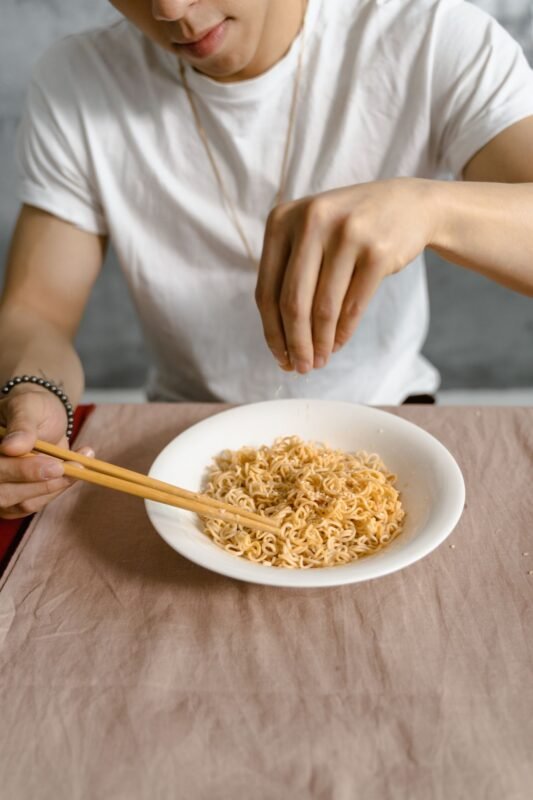
Soy sauce powder is spray-dried soy sauce, usually with a carrier such as maltodextrin and salt, used by Bangladeshi factories to add savoury, umami and slightly roasted flavour to instant noodle seasoning, chips and chanachur seasoning, soup powders and marinades without handling liquid sauce. Factories choose it by salt level, colour, flavour strength and solubility, and must store it carefully because it absorbs moisture. DE International delivers trial quantities door-to-door in Bangladesh, and our sister company Shenzhen Phoenix Rising Technology supplies larger orders, including under LC.
What is soy sauce powder and how is it made
Traditional soy sauce is made by fermenting soybeans and usually wheat with salt and moulds over a long period, then pressing and filtering the liquid. Soy sauce powder starts from that brewed or blended liquid sauce. A carrier (commonly maltodextrin) is added to help drying and reduce stickiness, and the mix is sprayed into a hot-air chamber where the water evaporates almost instantly, leaving a fine, free-flowing powder.
The result keeps much of the sauce’s savoury and roasted character but is easy to dose, blend and pack in a dry seasoning. Because the carrier and salt content vary between grades, two soy sauce powders can taste and behave very differently, which is why sampling matters more than the product name. You can see the grade descriptions on the Phoenix Rising soy sauce powder page.
Where Bangladeshi factories use soy sauce powder
| Product | Why soy sauce powder is used |
|---|---|
| Instant noodle seasoning sachets | Savoury base and colour in a dry, flowable form |
| Chips, chanachur and extruded snack seasoning | Umami depth that blends with spices, chilli and cheese notes |
| Instant soup and cube or powder stock | Rounds out salt and gives a brown, savoury note |
| Marinade and masala powders for meat | Adds Asian-style flavour without liquid handling |
| Frozen snacks and fillings | Dry flavour that does not add moisture to dough |
In most of these products soy sauce powder works alongside other ingredients rather than alone. HVP adds a meaty savoury body, flavour enhancers such as I+G or disodium succinate lift umami, and caramel colour adjusts the brown tone. The right balance is found by trial in your own base, not from a fixed formula.
How to choose a grade: what to compare on samples
- Salt content. Soy sauce powder carries a lot of salt; know the level so you can reduce added salt elsewhere in the seasoning.
- Colour. Light grades suit pale seasonings; darker grades suit noodle and soup bases. Compare in a solution, not only as dry powder.
- Flavour strength and profile. Brewed-type powders tend to have more complex, roasted notes; blended types can be milder.
- Solubility. Important for soup and noodle sachets, where the powder must dissolve fully in hot water without lumps.
- Moisture and flowability. Lower moisture powders cake less, which matters on sachet packing machines.
- Allergen and Halal status. Soy and often wheat are allergens to declare; fermentation can produce traces of alcohol, so ask for the Halal certificate if you sell to Halal-sensitive markets.
A practical trial method for your R and D team
A simple, repeatable trial avoids choosing on taste memory alone. Prepare your current seasoning as the control. Make two or three test batches replacing part of the salt and flavour base with each soy sauce powder sample, keeping total salt as close as possible. Taste them in the finished product, not as raw seasoning: on fried chips, on cooked noodles or in made-up soup. Record colour, salt perception, savoury depth and any bitter or burnt notes. Then run a small storage test: keep sealed sachets of each trial in a warm, humid room for a few weeks and check for caking and flavour change.
Ask the supplier for the recommended dosage range for your application as a starting point and adjust from there. If you are also working on reducing MSG, our guide on reducing MSG with disodium succinate fits well into the same trial.
Storage and handling in Bangladeshi humidity
Soy sauce powder is hygroscopic: it pulls moisture from the air. In the monsoon months, an opened bag can start to clump within a short time, which blocks auger fillers on sachet machines and causes uneven dosing. Good practice is to keep bags sealed in their inner liner, store them on pallets away from walls, open only what is needed for the shift, and reseal immediately. Seasoning rooms with dehumidifiers or air conditioning noticeably reduce caking. Check the best-before date against your usage rate before ordering, so stock is used well within shelf life.
Labelling soy sauce powder on your finished pack
When soy sauce powder goes into your seasoning, it appears in the ingredient list of the finished product. Many factories list it as soy sauce powder and, where relevant, show its components such as soybean, wheat, salt and maltodextrin, following the labelling rules that apply to your product category in Bangladesh. Soy and wheat (gluten) should be highlighted as allergens. If you sell Halal-certified products, the certifying body will want to see the Halal certificate of every ingredient, so keep the supplier documents on file. Confirm current labelling requirements with BSTI or the Bangladesh Food Safety Authority, as rules are updated from time to time.
Questions to ask a soy sauce powder supplier
- Is this grade made from naturally brewed soy sauce, a blend, or another base?
- What are the typical salt, moisture and protein levels on the specification sheet?
- What carrier is used, and is the product free from added MSG if we need that claim?
- What is the shelf life in the original packing, and how is the bag lined?
- Can you send the Halal certificate, COA and MSDS together with the sample?
Common mistakes with soy sauce powder
- Forgetting its salt. Adding soy sauce powder on top of a full-salt seasoning makes the product too salty.
- Judging on dry powder. Colour and taste change in the final product; always test in application.
- Undeclared allergens. Soy and wheat must be declared on the label.
- Leaving bags open. Moisture causes caking and dosing problems on packing lines.
- Ordering bulk before approval. Approve a sample and a pilot batch first.
How DE International and Phoenix Rising can help
Partner factories are FSSC 22000, ISO 22000, HACCP or ISO 9001 certified and offer Halal (including MUI) and Kosher products, with samples and COA provided before you order. DE International delivers small trial quantities door-to-door to your factory in Bangladesh, and Shenzhen Phoenix Rising Technology handles LC orders and factory checks for regular supply. Related ingredients: HVP, flavour enhancers and caramel colour. On this site, see HVP in chanachur, chips and noodles and noodles making machines.
FAQ
What is soy sauce powder used for in food factories?
It adds savoury, umami and roasted soy flavour to dry products such as noodle seasoning, chips and snack seasoning, soup powders and marinades.
Is soy sauce powder Halal?
It depends on the product and process. Ask for a valid Halal certificate for the specific grade, since fermentation can create traces of alcohol.
How should soy sauce powder be stored in Bangladesh?
Keep it sealed in its liner, off the floor, in a cool dry room, and reseal opened bags immediately to prevent caking.
Where can a Bangladeshi factory buy soy sauce powder from China?
DE International delivers trial quantities door-to-door, and Shenzhen Phoenix Rising Technology supplies larger and LC orders. Contact us on WhatsApp +880 1750-859967.
Explore our services and shop, see our China sourcing and buying agent service, or contact us on WhatsApp +880 1750-859967 to request a sample.
