
Import & Export Guides
Warehouse Outbound Dispatch in Bangladesh: Picking, Checking, Loading and Challans
Sep
Much of the advice written for importers’ warehouses focuses on the inbound side — receiving containers, checking counts, putting goods away. That is where cargo from China arrives, so it gets attention. But customers judge your business by the outbound side: whether the right goods, in the right quantity and condition, leave on time with the right paperwork. Most customer complaints that reach an importer’s sales team started as a dispatch error in the warehouse.
This guide walks through a practical outbound dispatch process for a Bangladeshi importer or distributor, from order release to proof of delivery, with the documents typically involved and the mistakes that cause the most damage. It complements our guide to the inbound receiving process.
The outbound process step by step
- 1. Order release. Sales or accounts confirms the order is approved — credit checked, payment received if required — and releases it to the warehouse. The warehouse should not pick from a phone call or a WhatsApp message alone.
- 2. Picking. Staff collect items using a pick list that shows location, item code, description and quantity. For batch-tracked or expiry-dated goods, the pick list should also specify which batch to take.
- 3. Checking. A second person, or a scan, verifies item and quantity against the order before packing. This is the single most effective error-prevention step.
- 4. Packing and labelling. Goods are packed for the transport mode, and each package is labelled with the customer, order reference and package count (for example, 3 of 7).
- 5. Staging. Packed orders wait in a marked outbound area, separated by route or vehicle, never mixed with goods just received.
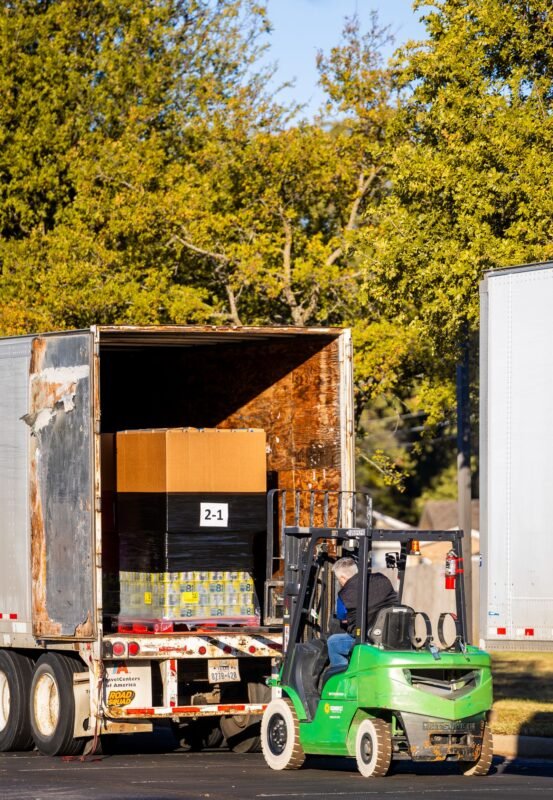
- 6. Loading. Goods are loaded in the right sequence, checked against the load list, and the vehicle is photographed and secured.
- 7. Documentation and gate out. Challans, invoices and gate pass are issued and signed; the vehicle leaves.
- 8. Proof of delivery. The signed copy comes back and is filed against the order.
A small operation may combine several steps in one person, but it should not skip the check. Where the same person picks and checks, errors pass straight through.
Documents that travel with outbound goods
The paperwork for outbound goods in Bangladesh depends on who you are selling to and whether you are VAT-registered. The common documents are:
| Document | Purpose | Who keeps a copy |
|---|---|---|
| Delivery challan | Lists goods and quantities delivered; signed by the receiver as proof of delivery | Warehouse, customer, accounts |
| VAT invoice (Mushak-6.3) | The tax invoice a VAT-registered supplier issues for a taxable supply | Customer and your VAT records |
| Transfer challan (Mushak-6.5) | Used when moving goods between your own premises, such as from a central warehouse to a branch | Both locations |
| Gate pass | Internal control authorising goods to leave the premises | Security and warehouse |
| Packing list | Package-level detail for larger or multi-package orders | Customer and transporter |
VAT forms and their use change from time to time, and the right form depends on your registration and the transaction. Confirm your specific requirements with your VAT consultant; the point here is that the warehouse must know which documents each type of dispatch needs, and must not release goods without them. A goods movement with no matching VAT document can create questions in an audit that are hard to answer months later.
Loading: sequence, weight and weather
How the truck is loaded matters as much as what is loaded. Three principles cover most situations.
Load in reverse delivery order. On a multi-drop route, the last customer’s goods go in first, deepest in the truck. Otherwise the driver unloads and reloads at every stop, which damages cartons and wastes time.
Distribute weight. Heavy items go at the bottom and are spread along the floor, not piled at the back. Fragile items go on top or are secured separately. Tiles, sanitaryware and machinery parts need blocking so they cannot slide; see our guide on handling fragile goods.
Protect from weather. During the monsoon, an open truck with a poorly tied tarpaulin can soak cartons in minutes. For moisture-sensitive goods — electronics, paper products, textiles — use covered vans, and check the vehicle floor and roof for leaks before loading.
Photograph the loaded vehicle before the doors close, and record the vehicle number and driver details. If a customer later claims a short delivery or damage, those photos are often the only evidence of what left your warehouse.
Timing dispatch around Dhaka traffic and truck rules
Dhaka restricts heavy truck movement within the city during certain daytime hours, and traffic makes delivery times unpredictable. Warehouses serving city customers therefore often load in the afternoon or evening for night or early-morning movement, while smaller covered vans handle daytime deliveries. The current rules are set by the traffic authorities and can change; check them before you commit to delivery windows.
This has a knock-on effect on the warehouse. If trucks load in the evening, picking and checking must finish by then, which means order cut-off times for sales teams. A clear daily cut-off — orders released by a set time go out that night — prevents the last-minute rush that produces most picking errors. Dock scheduling helps when several vehicles share one loading bay.
Errors that cost the most, and how to catch them
- Wrong item, similar code. Imported goods from China often come in many variants — sizes, colours, voltages — with codes differing by one character. Scanning barcodes rather than reading codes by eye eliminates most of these errors; see barcode and QR labelling.
- Wrong quantity. Common when picking by the carton and the carton quantity differs between batches. Pick lists should show the carton quantity for the batch being picked.
- Wrong batch or expired stock. For dated goods, picking the newest stock first leaves old stock to expire. Follow first-expiry-first-out.
- Goods dispatched without release. Goods leave before payment or credit approval because a salesperson asked verbally. The written release step exists to prevent this.
- Missing proof of delivery. Without a signed challan, a disputed delivery becomes your word against the customer’s.
Partial stock, back orders and substitutions
Importers regularly face a situation the dispatch process has to handle cleanly: the order says 50 cartons, but only 38 are available because the next container from China is still at Chattogram. What happens next should be decided by the sales team, not improvised on the loading bay. The options are to ship what is available and back-order the rest, to hold the whole order until complete, or to offer a substitute — for example a different colour or model.
Each option needs to be visible in the paperwork. A partial dispatch should produce a challan that shows the quantity actually delivered, and the remaining balance should stay open on the order so it is not forgotten or, worse, shipped twice. A substitution should never happen without the customer’s written agreement; a picker who swaps a 220-volt model for a similar-looking variant because the right one is out of stock creates a return and possibly a safety issue. Warehouse systems, even simple spreadsheets, should record back orders against the incoming shipment so that goods can be allocated to waiting customers as soon as they are received.
Each error also creates a return, which has its own handling cost; our guide on returns and reverse logistics covers that side.
Measuring dispatch performance
Two measures tell you most of what you need to know about the outbound side: order accuracy (the share of orders delivered with no error in item, quantity or condition) and on-time dispatch (the share of released orders that leave by the promised time). Track them weekly and look at the errors individually — a pattern usually appears quickly, such as one product family, one shift, or one type of order. Our guide to warehouse KPIs explains how to set these up without expensive software.
What level of accuracy and speed is realistic depends on your product range, order profile and staffing. If you want an outside view of your current dispatch process, we can walk through it with you and suggest changes specific to your operation.
Talk to DE International
DE International provides warehousing, freight and customs clearance for importers bringing goods from China to Bangladesh. See our China sourcing and buying agent service, browse our shop, or contact us to discuss storage and distribution.
