
Food Ingredients, Import & Export Guides
HVP in Chanachur, Chips and Noodles: Usage Levels and Buying Guide for Bangladeshi Factories
Oct
Hydrolyzed vegetable protein (HVP) gives chanachur, potato chips and instant noodle seasoning a rounded, savory, meaty taste, and manufacturers’ reference usage levels are about 0.30–0.60% in snack products, 10–15% in seasoning blends and 10–20% in soup bases. The right level for your product depends on your salt, spice and flavour-enhancer balance, so test before you buy in volume. DE International delivers HVP samples and small quantities from China door-to-door to Bangladeshi food factories, and our sister company Shenzhen Phoenix Rising Technology supplies LC volumes with COA and factory checks.
This guide explains what HVP is, how it is used in three of Bangladesh’s biggest snack categories, and what to check on the COA before ordering.
What is HVP and why does it taste savory
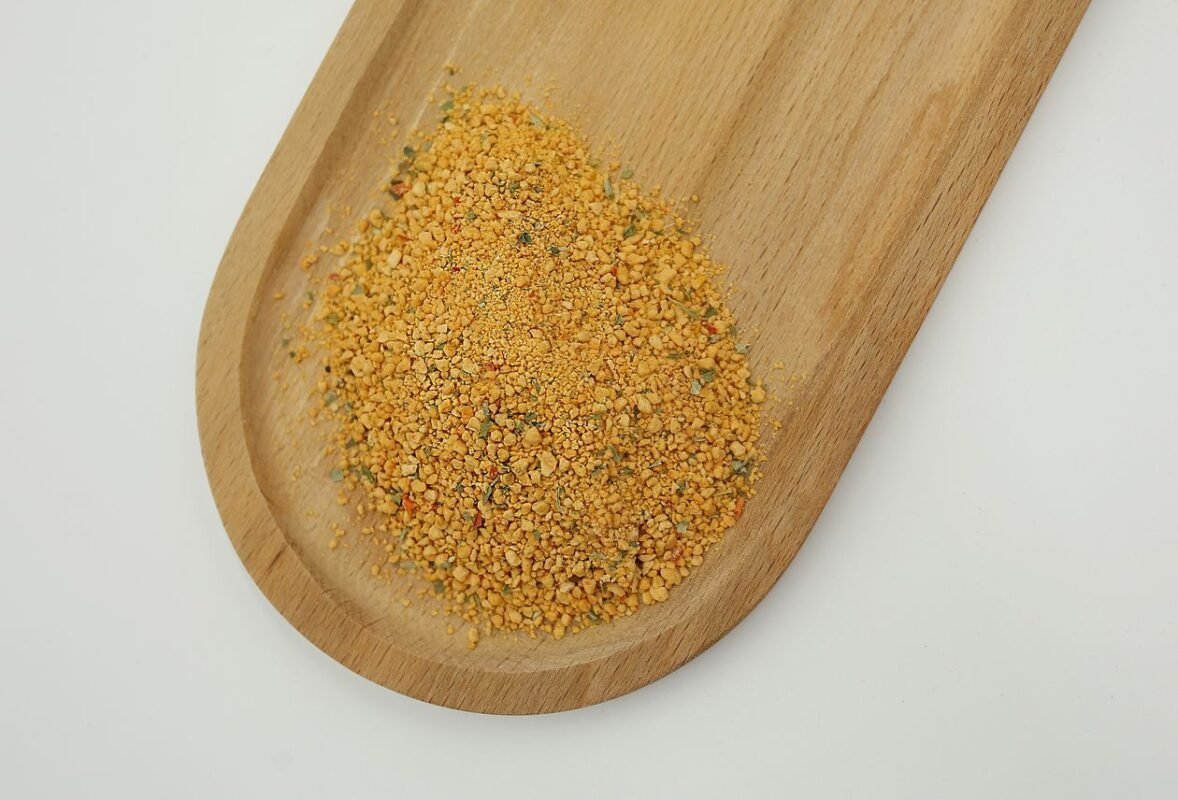
HVP is made by breaking down plant proteins — commonly from soy, wheat gluten or corn — into smaller peptides and free amino acids. Manufacturers do this either with acid, which is then neutralised, or with enzymes. Among the amino acids released is glutamic acid, the compound responsible for umami, the savory “fifth taste”. Other amino acids and reaction products during processing add roasted and meaty notes.
Because acid hydrolysis is neutralised with an alkali, acid-HVP naturally contains salt. That matters: if you add HVP to a recipe without reducing added salt, the product can become too salty. HVP comes as powder, paste or liquid; Bangladeshi snack and noodle factories mostly use powder because it blends easily into dry seasoning.
How HVP is used in chanachur, chips and noodles
| Product | Where HVP goes | What it does |
|---|---|---|
| Chanachur | In the spice seasoning applied in the mixing drum | Deepens the savory taste behind chilli and spices |
| Potato chips and extruded snacks | In the topical seasoning dusted on after frying | Makes flavours like masala, BBQ or chicken taste fuller |
| Instant noodles | In the seasoning sachet | Builds a soup-like, meaty base taste |
| Soup cubes and bases | Main savory component of the blend | Gives body and broth character |
The reference levels from manufacturers are a starting point: about 0.30–0.60% of the finished snack, 10–15% within a seasoning blend, and 10–20% in soup bases. Note the difference between percentage of the snack and percentage of the seasoning. If your chips carry seasoning at a certain percentage of their weight and HVP makes up part of that seasoning, the HVP share in the finished chip is much smaller. Mixing up the two is a common formulation error.
How to run a simple HVP trial
- Take your current seasoning recipe as the control.
- Prepare three trial blends with HVP at the low, middle and high end of the reference range, reducing added salt to compensate for the salt HVP brings.
- Apply each blend to the same base product, made in the same batch, at the same seasoning rate.
- Taste blind: give tasters coded samples so they do not know which is which. A simple triangle test (two identical samples, one different) shows whether people can tell the difference at all.
- Check flowability of the seasoning after a few days in your factory’s humidity — some blends cake.
- Choose the level that improves taste without making the product salty or bitter, then confirm on a production run.
HVP often works alongside other flavour enhancers. Some factories use it to reduce or partly replace MSG while keeping a savory profile. See flavour enhancers and soy sauce powder for related ingredients.
HVP compared with other savory ingredients
| Ingredient | Main contribution | Points to watch |
|---|---|---|
| HVP | Rounded savory and meaty depth | Brings salt; allergen labelling for soy or wheat source |
| MSG | Clean, strong umami | Some brands want to reduce it on the label |
| Soy sauce powder | Fermented, soy-sauce character and colour | Contains soy and wheat; adds salt |
| Disodium succinate and other enhancers | Boosts savory intensity, often with seafood-like notes | Small doses; strong if overused |
Seasoning developers usually combine several of these rather than relying on one. HVP is often the base that makes a blend taste complete, while smaller amounts of other enhancers sharpen it. The right mix depends on your flavour target, cost and labelling preferences.
Applying seasoning evenly on the line
Even the best HVP blend fails if it does not stick evenly to the snack. In chanachur and chips, seasoning is usually tumbled with the product in a rotating drum while the product is still warm, because a thin film of surface oil helps powder adhere. Some lines spray a little oil before seasoning for the same reason. Particle size matters too: very fine powder sticks well but creates dust in the packing area, while coarse particles fall off and collect at the bottom of the pack. Ask your seasoning supplier about particle size, and check the bottom of finished packs for loose seasoning as a routine QC step.
What to check on an HVP COA and specification
- Protein source. Soy, wheat or corn. This affects allergen labelling: soy and wheat (gluten) are common allergens that buyers and export customers ask about.
- Total nitrogen or amino nitrogen. Indicates how much protein breakdown product the HVP contains, which links to taste strength.
- Salt (sodium chloride) content. Needed to rebalance your recipe.
- Moisture. HVP powder attracts moisture; low moisture and good packing prevent caking.
- Heavy metals and microbiology within food-grade limits.
- 3-MCPD. For acid-hydrolysed HVP, ask the supplier how this processing contaminant is controlled and whether it is tested; responsible manufacturers control it in their process.
- Halal status. Our partner factories offer Halal (including MUI) and Kosher certified products.
Partner factories hold FSSC 22000, ISO 22000 and HACCP (or ISO 9001) certification and supply samples with a COA before ordering. Ask us for a quote and sample for your application; price depends on grade and volume.
Storage and handling in Bangladeshi conditions
Monsoon humidity is the main enemy of seasoning powders. Store HVP in sealed bags inside cartons, off the floor, in the coolest dry room you have. Reseal opened bags tightly or transfer to airtight bins. Use first-in, first-out so older stock is used first, and keep the COA with each batch in case a customer complaint needs tracing. If the powder forms hard lumps, it has absorbed moisture; it may still be usable after sieving, but check taste and microbiology before use.
Common mistakes with HVP
- Adding HVP on top of the full salt dose. The product turns salty.
- Confusing seasoning percentage with snack percentage. Leads to large overdosing or underdosing.
- Ignoring allergen labelling for soy or wheat-based HVP.
- Buying a full container before a production trial. Test with a small door-to-door lot first.
- Poor storage. Caked seasoning blocks dosing equipment and gives uneven taste.
FAQ
How much HVP should I use in chanachur or chips?
Manufacturers’ reference level is about 0.30–0.60% of the finished snack. Trial within that range and adjust salt.
How much HVP goes into noodle seasoning?
Reference levels are about 10–15% of a seasoning blend and 10–20% of soup bases. Test against your current recipe.
Can HVP replace MSG?
It can reduce MSG in many recipes by adding savory depth, but the result depends on the full formula. Run blind taste tests.
Is HVP Halal?
HVP is made from plant protein, but Halal status depends on the whole process and certification, not only the raw material. Ask for a valid Halal certificate covering the specific product; our partner factories offer Halal (including MUI) certified products.
Why does my seasoning with HVP taste too salty?
Acid-hydrolysed HVP contains salt from the neutralisation step. Reduce added salt when you introduce HVP and re-test.
Where can a Bangladeshi factory buy HVP from China?
DE International delivers HVP samples and small lots door-to-door; Shenzhen Phoenix Rising Technology handles LC orders. WhatsApp +880 1750-859967.
Read more on the Phoenix Rising HVP page and food ingredients range, our guides to chanachur machines, noodle lines and importing food additives, and our services, sourcing agent service and shop. Contact us or WhatsApp +880 1750-859967.
