
Import & Export Guides
Offset Printing Press Machine Price in Bangladesh: New or Used for a Small Press?
Nov
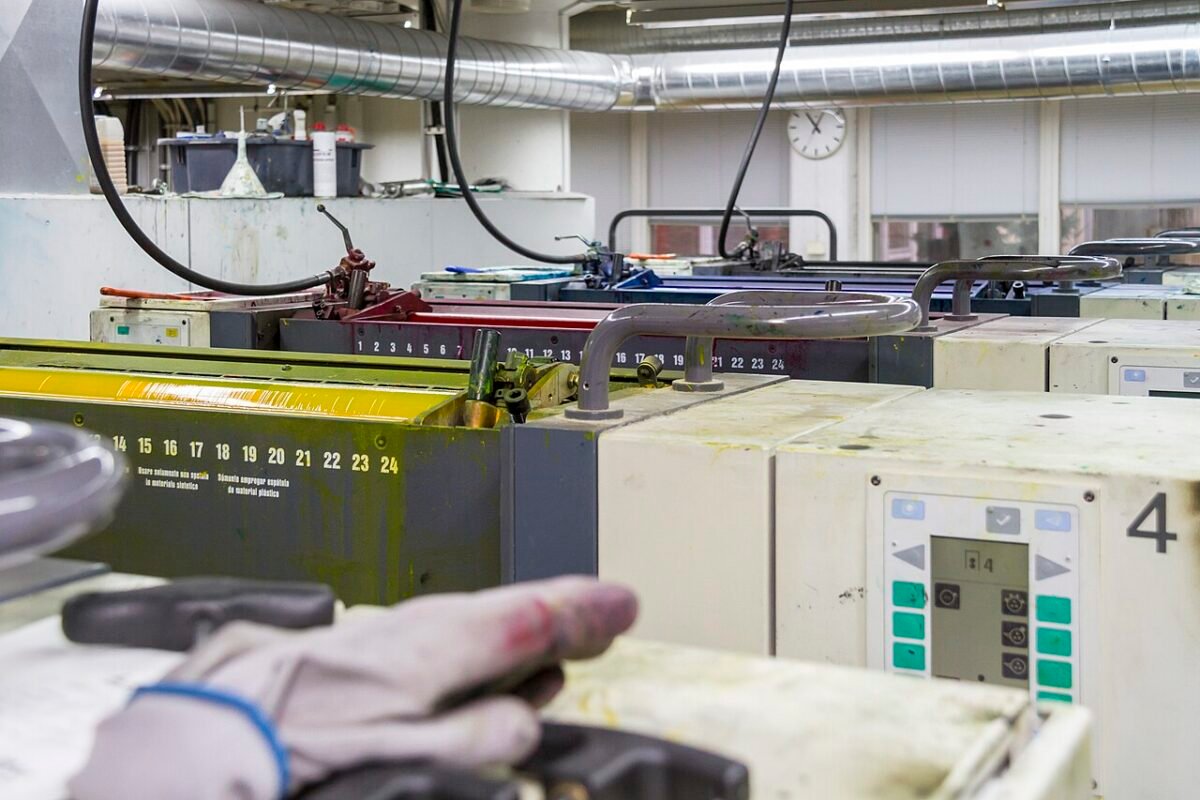
For a small press in Bangladesh, the choice between a new and a used offset printing machine comes down to what you print, how many sheets a job runs, and how much risk you can carry on repairs. A new Chinese sheetfed offset press gives you a warranty, known history and available parts; a used Japanese or European press gives you a recognised name but an unknown history and harder-to-find spares. The offset printing press machine price in Bangladesh depends on the number of colours, the maximum sheet size, the level of automation, new or reconditioned condition, and freight and duty. DE International sources new offset presses and their support equipment from factories in China and delivers them door-to-door to Dhaka or Chattogram; tell us your sheet size and job mix and we will quote a press matched to it.
How does an offset press print, and why does it suit long runs?
Offset lithography relies on the fact that oil and water do not mix. The image is on a thin aluminium plate: image areas accept greasy ink, non-image areas accept water. On every rotation the plate is first dampened, then inked; ink sticks only to the image. The plate does not touch the paper. It transfers (offsets) the inked image onto a rubber blanket cylinder, and the blanket presses it onto the sheet. Because the soft blanket follows the paper texture, offset prints sharp text and smooth photographs on everything from newsprint to coated art card.
This explains the economics. Making the plates and getting ink and water in balance takes time and spoils a stack of make-ready sheets at the start of every job. Once the press is running, each extra copy costs very little. So offset wins on long runs — books, textbooks, magazines, calendars, posters, cartons and leaflets in thousands — while digital printing wins on short runs where set-up cost would dominate.
Which offset press configurations are available from China?
| Configuration | Typical jobs | What to know |
|---|---|---|
| Small-format single-colour (mini offset) | Letterheads, bill books, forms, envelopes, simple leaflets | Easy to learn and needs little floor space; colour jobs require several passes |
| Single-colour larger format | Book text pages, exam papers, one-colour posters | A workhorse for text printing; the sheet size must match the paper sizes you buy |
| Two-colour | Books with a spot colour, forms with a logo, simple packaging | Prints two colours in one pass, halving passes compared with single-colour |
| Four-colour | Full-colour posters, magazines, brochures, calendars | Prints CMYK in one pass with tight registration; needs a skilled operator and good prepress |
| Four-colour plus coating unit | Pharmaceutical and food cartons, premium packaging | Adds varnish or coating inline; check that sheet thickness range suits carton board |
When comparing models, look at maximum and minimum sheet size, the thickness range (thin paper to board), the dampening system, whether plate loading is manual or semi-automatic, and whether ink keys are set by hand or from a console. Each of these changes how long make-ready takes and how many sheets you waste between jobs.
New Chinese press or used Japanese or European press?
Many presses running in Fakirapool, Arambagh, Nilkhet and Banglabazar are reconditioned machines that arrived second-hand. They have a strong reputation, and a well-maintained used press can serve for years. The risk lies in how much of its life has already been used. The comparison below is general; individual machines vary a great deal.
| Point | New press from China | Used or reconditioned press |
|---|---|---|
| History | Known: new from the factory, with test print records | Unknown or partly known; impression count may not be reliable |
| Warranty | Factory warranty on parts | Usually sold as-is or with a short dealer guarantee |
| Spare parts | Ordered from the same factory and shipped with your other cargo | May need sourcing from abroad; older models can have discontinued parts |
| Wear | Bearings, grippers and rollers are new | Worn grippers and bearings cause registration problems that are costly to fix |
| Import rules | Imported as new capital machinery | Old or reconditioned machinery has extra conditions under the Import Policy Order; confirm before you pay |
If a used press is still your choice, insist on seeing it print, check the impression counter, look at gripper wear and roller condition, and ask your C&F agent what documents are currently required for importing reconditioned capital machinery. Rules on old machinery change from time to time, so treat any older advice, including ours, as something to re-check.
What else do you need besides the press?
An offset press alone cannot produce a finished job. A realistic small press setup includes:
- Plate making. Either a CTP (computer-to-plate) unit or access to a nearby plate-making service. Many small presses in Dhaka buy plates from outside rather than owning CTP at first.
- Paper cutting. A paper guillotine to cut sheets to press size and trim finished work.
- Finishing. Folding, stitching or perfect binding for books; lamination and die-cutting for packaging. Our guides on flexo printing and label printing machines cover adjacent equipment.
- Air compressor and power. Most presses need clean compressed air for the feeder and a stable three-phase supply. A voltage stabiliser and a generator or IPS backup protect against load-shedding mid-run.
- Climate control. Dhaka humidity makes paper swell and curl, which upsets registration. Many presses run an air conditioner or dehumidifier in the press room for this reason, not for the operators.
How do you import an offset press from China to Bangladesh?
- Define the job mix. List your main jobs, sheet sizes, paper thickness and typical run lengths. This decides the press format and number of colours.
- Shortlist models and request test prints. Ask the factory to print a sample of your own artwork on the exact model and send the sheets or a video.
- Confirm specifications in writing. Sheet size range, thickness range, power supply, included accessories, spare parts kit, installation and training support.
- Inspect before shipment. A pre-shipment check confirms the model, serial number and accessories match the contract. See how to verify a Chinese supplier.
- Pack and ship. Presses travel by sea, usually crated or on a flat rack depending on size, to Chattogram port. Printing machinery is classified under HS heading 8443; your C&F agent will confirm the exact sub-heading and current duty.
- Clear and deliver. After customs clearance the press is trucked to your premises. Check that the gate, stairs and floor can take its weight and size before it arrives.
- Install and train. The press must be levelled on a solid floor, connected, and set up by a technician. Plan for an installation visit or remote video support.
Our door-to-door shipping for printing machinery handles steps 4 to 6 in one quote, so the press arrives at your gate with duty and transport included.
Common mistakes when buying an offset press
- Choosing by press size alone. A press that is too large for your usual jobs wastes paper and plates on every short run.
- Underestimating prepress. Without reliable plates and correctly prepared files, even a new four-colour press prints badly.
- Forgetting the floor. Offset presses are heavy and need a level, solid base; upper-floor premises in old buildings may not be suitable.
- Hiring no trained operator. Four-colour printing depends on a skilled operator for ink-water balance and registration. Budget for one before the press arrives.
- Ignoring the busy season. Textbook, calendar and election work all come with deadlines. Plan delivery and installation well before your peak season.
FAQ
What is the offset printing press machine price in Bangladesh?
It depends on the number of colours, sheet size, automation, new or used condition, and freight and duty. Ask us for a current quote based on your sheet size and job mix instead of comparing listings for different models.
Is a single-colour offset press enough to start a printing business?
For forms, bill books, letterheads and book text pages, many small presses start with single-colour. If most of your work is full-colour posters or packaging, a two- or four-colour press saves passes and paper.
Should I buy a new Chinese press or a used Japanese press?
A new press gives you known history, warranty and parts; a used press may cost less up front but carries unknown wear. Inspect any used press printing before you buy, and check the current import rules for reconditioned machinery.
Do I need a CTP machine with my offset press?
Not at the start. Many small presses buy plates from a local plate-making service and add CTP later when volume justifies it.
Who can import an offset printing press from China to Bangladesh?
DE International sources offset presses and related equipment from Chinese factories, arranges test prints and pre-shipment checks, and delivers door-to-door to Dhaka or Chattogram. Message us on WhatsApp +880 1750-859967, or estimate machine shipping volume with the CBM calculator.
Ready to plan your machine purchase? See our services, browse the shop, read how our China sourcing and buying agent service works, or contact DE International — WhatsApp +880 1750-859967.
