
Import & Export Guides
Live Mud Crab and Eel Export From Bangladesh: Keeping the Cold Chain Alive
Sep
Most seafood cold chains are about keeping a product frozen or chilled. The live crab and eel trade is different: the product has to arrive alive. A frozen shrimp that warms a few degrees loses quality; a live mud crab that is handled badly for a few hours simply dies, and a dead crab has little or no value in the markets that buy live ones. That single fact shapes every step of the chain, from the collection point in the coastal south-west to the cargo hold of the aircraft.
Bangladesh has long exported live mud crab and the swamp eel known locally as kuchia, mainly to East and South-East Asian buyers, with China among the most important. This guide explains how the live chain works, where losses happen, what documents and approvals are involved, and what exporters should get right before the first consignment leaves Dhaka.
The product: mud crab and kuchia
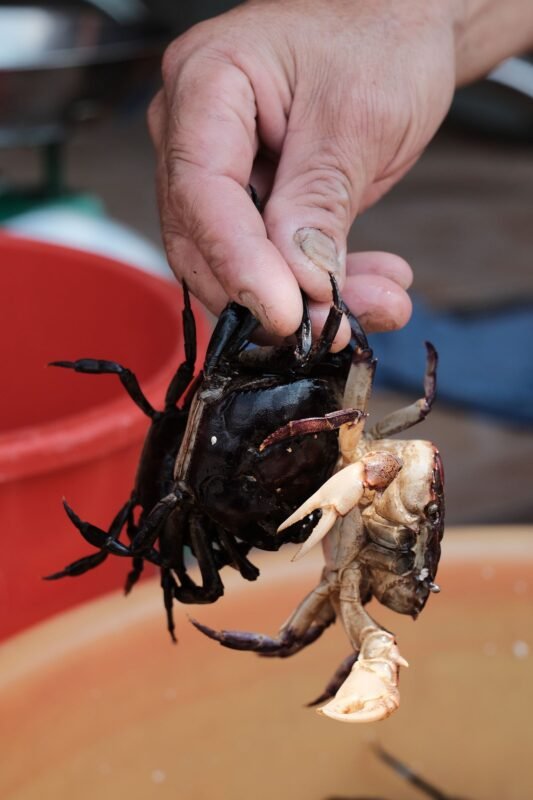
The mud crab trade in Bangladesh is concentrated in the coastal districts around the Sundarbans — Satkhira, Khulna and Bagerhat — along with parts of the south-east coast. Crabs come from wild collection and from pond fattening, where lean or recently moulted crabs are held until they fill out. Buyers grade them by weight, by sex, and by condition; mature females carrying roe are typically the most valued grade, while weak or damaged crabs are rejected.
Kuchia is a freshwater swamp eel found in wetlands, haor areas and rice fields. It is widely collected rather than farmed at scale, and it has become a notable export item because of demand from Chinese and other Asian buyers. Both products share the same core challenge: they must be kept alive, calm and unstressed from collection to the buyer’s holding tank.
Why live animals die in the chain
Understanding the mechanism behind mortality explains why the handling rules exist. Crabs and eels are cold-blooded; their metabolism rises with temperature. In heat, they use oxygen faster, produce more waste and become stressed. In the wrong kind of cold, they can suffer shock. Out of water, crabs can survive for a period because they can breathe through moist gills, but only if the gills stay damp and the animal stays cool and still. Dry air, heat, crushing and repeated disturbance are what kill them.
The practical aim of the whole chain is therefore to keep the animals cool enough to slow them down, moist enough to breathe, and still enough not to injure themselves or each other. The exact holding and transport temperatures depend on species, the animals’ condition and the duration of the journey; they should come from your buyer’s specification and from experience on your route, not from a generic number. We do not publish a single figure because a wrong one applied to the wrong batch can cause mortality.
From collection point to airport: the handling sequence
- Collection and depot holding. Crabs arrive at local depots from collectors and farms. Weak, injured or recently moulted soft crabs are separated early; they will not survive a long journey.
- Conditioning. Exporters usually hold the animals for a period before packing, keeping them in clean water or damp conditions so they settle. Feeding is normally stopped before packing to reduce waste inside the box, which fouls the packing and raises ammonia.
- Tying and grading. Crab claws are tied so the animals cannot injure each other or handlers. Each crab is graded and counted by size and sex against the buyer’s order.
- Packing. Crabs are packed in ventilated boxes with damp material to keep the gills moist. Eels are packed according to the buyer and airline requirements, commonly in bags with water and oxygen or in damp packing.
- Road transport to Dhaka. The journey from the south-west coast to Hazrat Shahjalal International Airport is itself long. Covered, ventilated vehicles and night travel reduce heat exposure; the timing must connect with the flight cut-off without long waits on a hot airport apron.
- Airport acceptance and flight. The airline inspects live animal cargo before acceptance, and the shipment then often travels via a transit hub before reaching China.
Every hour between packing and the buyer’s tank increases risk. Direct routings, sensible connection times at transit hubs, and avoiding weekend arrivals when the consignee may not collect quickly are as important as the packing itself. Our guide to perishable air cargo handling covers airport-side practices in more detail.
Airline rules: the IATA Live Animals Regulations
Live crabs and eels move under the IATA Live Animals Regulations (LAR), which set container requirements for different species groups, including crustaceans and fish. Airlines apply the LAR, and each carrier can add its own conditions or refuse certain live cargo entirely. The shipper signs a Shipper’s Certification for Live Animals confirming that the animals are correctly described, fit to travel and packed according to the regulations.
In practice this means your packaging needs to satisfy the airline, not just the buyer. Boxes that leak water onto other cargo, boxes without adequate ventilation, or boxes that cannot be stacked safely will be refused at acceptance — and a refused live shipment has nowhere good to go. Confirm the carrier’s live-animal acceptance terms before you book, the same way exporters of day-old chicks do; see our guide on live animal air freight.
Documents and market access for China
Live aquatic exports involve both Bangladeshi and importing-country requirements. On the Bangladesh side, exporters typically need an export registration, an EXP form processed through their bank, and a health certificate from the Department of Fisheries — the Fish Inspection and Quality Control function inspects and certifies fish and fishery products for export. A certificate of origin may be required by the buyer.
On the China side, market access matters as much as paperwork. China controls which countries and which specific aquatic products may be imported, and requires overseas food and aquatic product establishments to be registered with the General Administration of Customs of China (GACC) through the competent authority of the exporting country. Access for particular species can also be suspended, and has been interrupted in the past. Before you accept any order, confirm that your product is currently permitted and that your establishment is registered; a consignment that arrives without access is not a quality problem you can fix at the airport.
For the wider picture of shipping to Chinese buyers, see our guide for Bangladeshi businesses exporting to China.
Mortality terms and how claims are handled
Some mortality in a live chain is expected, which is why buyers and sellers agree dead-on-arrival (DOA) terms in advance. The contract should say what level of mortality is accepted, how it is measured, and what evidence is needed for a claim — for example, photos or video when boxes are opened, within a stated time after arrival. Without agreed terms, every loss becomes a dispute about who was at fault.
Exporters protect themselves with records: counts and photos at packing, time stamps at each handover, and, where possible, small temperature loggers inside sample boxes. These records also help you learn. If mortality is consistently higher on one routing or one season, the data will show it.
Common mistakes and what they cost
- Packing weak crabs to fill the order. Weak animals die first, foul the box and stress the others, raising mortality across the whole carton.
- Letting boxes dry out. A crab with dry gills cannot breathe. Dry packing material or boxes left in moving air lead to losses that look sudden but were caused hours earlier.
- Waiting in the heat. Boxes left on a truck or apron in afternoon heat can lose a shipment even if everything else was done well.
- Assuming market access. Shipping without confirming current Chinese access and registration can mean refusal at destination.
- No written DOA terms. Without them, the buyer decides what counts as a loss.
The cost of each mistake depends on the consignment value and the terms with your buyer. What we can do is review your route, packing, documents and timing and give you an honest view of where the risk sits — ask us for an assessment built around your product and volume.
Talk to DE International
DE International supports Bangladeshi exporters and importers with freight, documentation and cold chain logistics, and works with China-side buyers every day. Read our guide on shrimp and prawn cold chain for frozen seafood, see our China sourcing and buying agent service, browse our shop, or contact us.
