
Import & Export Guides
Logo and Brand Printing Methods on Chinese Products: A Guide for Bangladeshi Importers
Sep
When an importer says “put our logo on it,” a Chinese factory hears a question, not an instruction: which decoration process, in how many colours, at what position, on which material, and approved against what reference? Getting the answer wrong does not usually show up at the sample stage. It shows up three weeks after the goods land in Dhaka, when the logo on a stainless bottle starts scratching off, or the navy blue on your carton looks purple next to the one on your website. This guide walks through the main brand printing methods Chinese factories use, what each one is actually good for, and how to specify it so the finished result matches what you imagined.
Why the decoration method matters more than the artwork
Most first-time private-label buyers spend their energy on the logo design and very little on the process that puts it onto the product. But the process decides durability, sharpness, colour accuracy, and whether the factory can even do it in-house. A logo that looks crisp as a vector file may be impossible to reproduce with fine detail by pad printing on a curved surface, and a gradient that looks beautiful on screen cannot be screen printed without converting it into halftone dots. The material also limits the options: polypropylene is notoriously hard to print on without surface treatment, powder-coated metal behaves differently from bare stainless, and textiles need processes that survive washing.
The main brand printing methods compared
Below are the processes you will meet most often when ordering branded goods from China. The right choice depends on the surface, the number of colours, the level of detail, and how much wear the product will face in use.
| Method | Best suited to | Strengths | Watch out for |
|---|---|---|---|
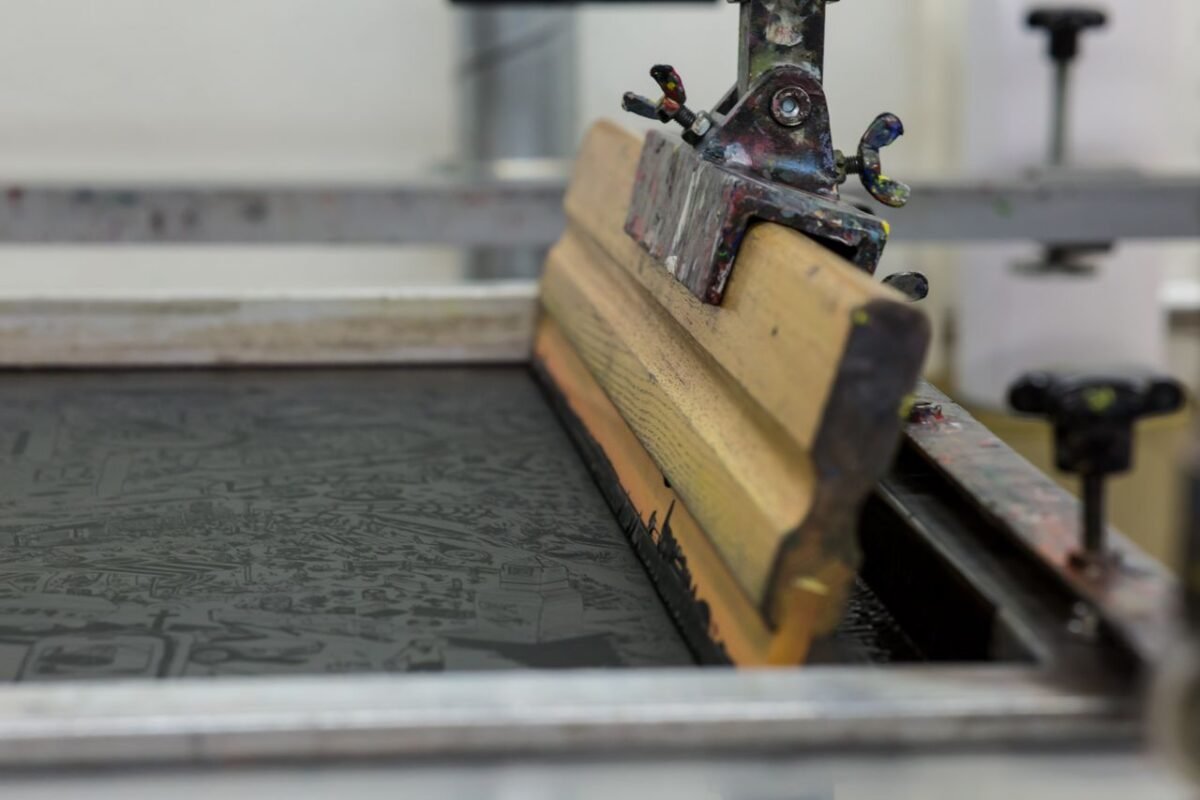
| Screen (silk) printing | Flat or cylindrical surfaces: bottles, cartons, bags, T-shirts | Bold, opaque colour; durable with the right ink | Each colour needs its own screen; fine gradients are difficult |
| Pad printing | Small, curved or uneven items: pens, caps, electronics housings | Reaches awkward shapes | Limited print size; very fine lines can blur |
| Laser engraving / marking | Metal, anodised aluminium, wood, some plastics | Permanent, no ink to wear off | Single tone only; result depends on material |
| Heat transfer / sublimation | Textiles, polyester items, coated mugs | Full colour and photographic images | Sublimation needs polyester or special coatings |
| Hot foil stamping | Paper boxes, leather, some plastics | Premium metallic look | Foil can flake if the substrate is wrong |
| Embossing / debossing | Paper, leather, soft plastics | Tactile, no ink needed | Requires a metal die; detail is limited |
| UV digital printing | Rigid flat items, short runs, full colour | No screens, fast set-up | Adhesion and scratch resistance vary by substrate |
For garments and bags, embroidery and woven labels are the norm and are specified by stitch count and thread colours rather than ink. For plastic parts, in-mould decoration builds the print into the part itself but needs tooling changes — read our notes on mould and tooling ownership before paying for any.
How to specify colour so it actually matches
“Our blue” is not a specification. Screens, phones and office printers all show colour differently, so the factory needs a reference system. The common one is Pantone: for printed packaging you give Pantone Coated or Uncoated codes depending on the paper stock; for textiles, factories often work from Pantone textile (TCX) references. If you only have RGB colours from your website, ask a designer to convert them to Pantone references before sending artwork. Otherwise the factory will pick the closest match by eye, and you will not know which reference they chose.
Even with a Pantone code, the same ink looks different on white plastic, natural kraft paper, and black fabric. Printing a light colour on a dark product usually needs a white underbase layer first, which is effectively an extra colour pass. For any colour-critical brand, the practical answer is a physical printed sample on the actual production material, photographed next to your reference under daylight, and then kept as the approved standard. This is the same principle as the golden sample process: the approved physical item, not the digital file, becomes the reference that the bulk order is checked against.
Artwork files and the details that trip people up
Factories will ask for vector artwork, usually as AI, EPS or PDF with fonts converted to outlines. A JPG pulled from a website is not enough, because enlarging it makes the edges blurry and the factory’s pre-press staff will redraw it — sometimes changing proportions without telling you. Along with the file, send a dimensioned drawing or marked-up product photo showing:
- The exact print position, measured from a fixed edge of the product
- The logo size in millimetres, not “medium” or “same as sample”
- The number of colours and the Pantone reference for each one
- The decoration method you expect, or a request for the factory to recommend one
- Any legal text that must appear, such as the importer name, country of origin or batch field
The last point links to Bangladesh labelling requirements. If the branded product is a packaged consumer good, the printed information may need to include specific details once it is sold in Bangladesh, and it is much cheaper to include them in the original artwork than to sticker every unit after arrival. Our guide to labelling requirements for imported packaged goods explains what to check before artwork is finalised.
Trademark authorisation letters and why factories ask for them
A step that surprises many Bangladeshi importers is when a Chinese supplier asks for a brand authorisation letter or proof of trademark before printing a logo. This is not bureaucracy for its own sake. Chinese customs can check exports for intellectual-property infringement, and factories that print famous marks without permission risk seizure and penalties. So a careful factory wants evidence that you own the brand or are authorised to use it. If you have a registered trademark in Bangladesh, send a copy of the certificate. If you do not yet have one, many factories will accept a signed letter on your company letterhead declaring that the logo is your own and that you take responsibility for its use.
Testing durability before you approve bulk production
A logo that looks perfect on day one can fail within weeks of normal use. Simple checks catch most problems before the bulk order is printed. For printed hard goods, a tape test — pressing adhesive tape firmly over the print and pulling it off sharply — shows whether the ink has bonded to the surface. Rubbing the print with a cloth dampened with alcohol reveals inks that will wipe away with household cleaners. For drinkware, ask whether the decoration is rated for dishwasher use, and if it matters to your customers, test a sample yourself. For textiles, wash a sample several times the way your customers will, and check for cracking, fading or peeling.
It is worth writing these checks into your purchase agreement and inspection checklist rather than relying on verbal promises. An independent pre-shipment inspection can include a tape test and a print-position check on a random sample from the finished goods, which is far more reliable than photos sent by the factory’s sales staff.
Common mistakes with brand printing orders
- Approving a digital mock-up instead of a physical sample. The mock-up shows where the logo goes, not how the ink behaves on the real material. Colour and adhesion problems only appear on the physical piece.
- Changing artwork after the screens or dies are made. Screens, pad clichés and embossing dies are made for a specific design. A late change means new tooling, extra cost and delay.
- Not specifying position tolerance. Without a stated position and tolerance, a logo that is a few millimetres off-centre is hard to reject, because nothing written says it is wrong.
- Forgetting the decoration minimum. Decoration often has its own minimum run separate from the product MOQ. Ask about both — see our guide to understanding MOQ.
- Assuming packaging and product printing come from the same place. Printed cartons and gift boxes are usually made by a separate packaging supplier; coordinate the artwork for both so colours match.
Putting it together: a worked example
Imagine a Dhaka retailer ordering insulated stainless steel bottles with a one-colour logo and a two-colour gift box. A sensible sequence would be: confirm with the factory that laser engraving is available in-house for the bottle (permanent, no ink to wear off, and it suits stainless); send vector artwork with the logo size and its distance from the base marked; send Pantone references for the gift box to the packaging supplier; request one engraved bottle and one printed box as pre-production samples; check the box colour against the brand reference in daylight; approve in writing with photos attached; and add an engraving position check to the pre-shipment inspection. None of these steps is expensive, but skipping any of them is how branding problems end up on a shop shelf. Actual costs and lead times depend on the product, the method and the quantity, so ask us for a quote built around your specific item.
DE International helps Bangladeshi businesses brief Chinese factories on logo printing, check samples, and inspect branded goods before they ship. See our services, explore our China sourcing and buying agent service, browse the shop, or contact us with your product and artwork for a quote built around your needs.
