
Import & Export Guides
Air Freight for Garment Accessories and Trims from China to Bangladesh RMG Factories
Oct
In Bangladesh’s ready-made garment industry, the fabric usually arrives by sea, planned weeks ahead. The trims often do not. A missing zipper colour, a late batch of care labels or a shortfall of buttons can stop a sewing line just as surely as missing fabric, and with the buyer’s ex-factory date fixed, air freight from China becomes the only way to save the order. Trims and accessories are small, light and high in value relative to their weight, which makes them natural air cargo. But they also come with paperwork, bonded rules and buyer compliance requirements that a simple courier booking does not handle well.
This guide explains how to air-freight garment trims from China to Bangladesh factories efficiently and without clearance problems.
What counts as trims and accessories
The term covers everything other than the main fabric that goes into a finished garment or its packaging:
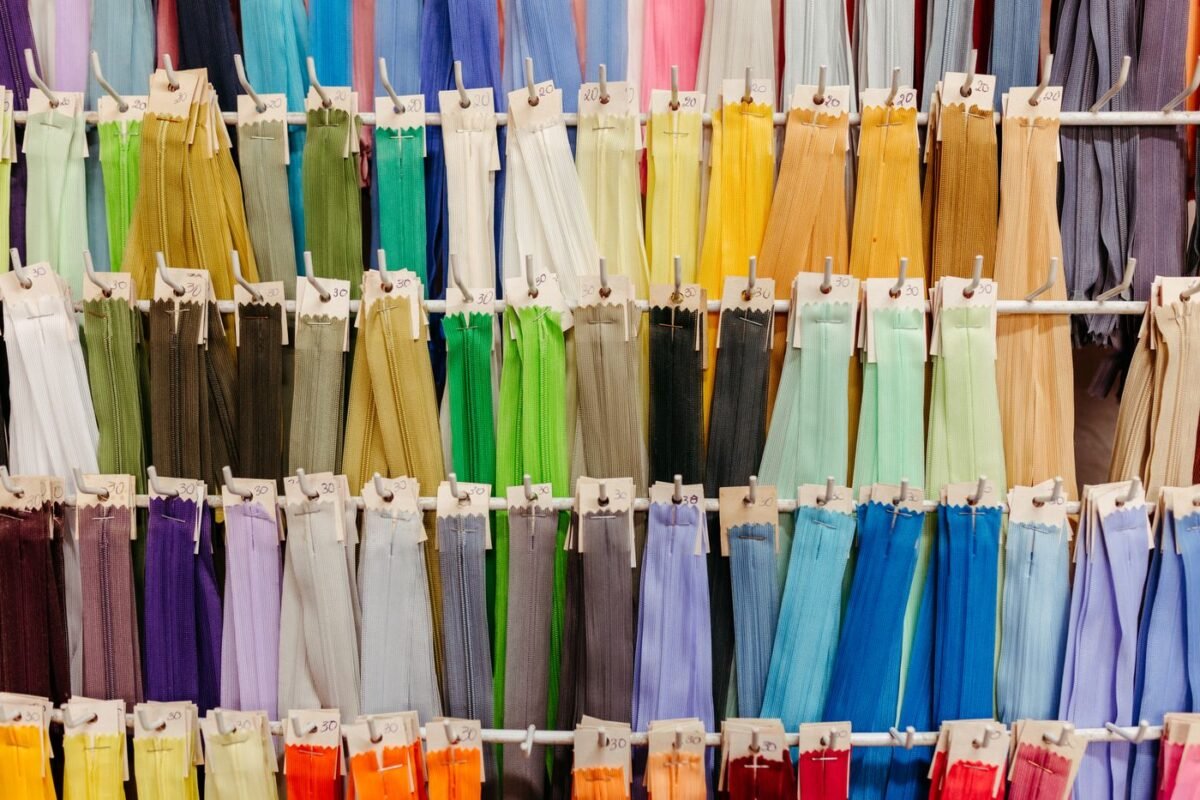
- Zippers, buttons, snaps, rivets, hooks and eyelets.
- Woven labels, printed care labels, size labels and heat-transfer labels.
- Hangtags, price tickets, barcode stickers and swing tickets.
- Interlining, fusing, elastic, tapes, drawcords and piping.
- Sewing thread, embroidery thread and lace.
- Packaging trims such as polybags, tissue, hangers, clips and cartons.
Many are nominated by the buyer: the brand specifies the supplier, the exact item code and the colour standard. Others are sourced by the factory. Either way, Chinese suppliers in Guangdong, Zhejiang and Fujian supply a large share of them.
Bonded imports, back-to-back LC and the UD
Export-oriented garment factories usually import trims under bonded warehouse facilities, duty free, against an export order. The trims are typically financed by a back-to-back LC opened against the master export LC or contract, and the factory must have a Utilization Declaration (UD) issued by BGMEA or BKMEA covering the materials. Customs at the airport checks the import against the factory’s bond licence and UD entitlement.
This has practical consequences for air shipments:
- The description and quantity on the commercial invoice and air waybill must match what the UD and back-to-back LC allow.
- Shipping more than the UD covers, or items not listed, causes clearance problems for the excess.
- Trims for an order whose UD is not yet issued may be held until it is.
Our guides on UD for bonded garment imports and back-to-back LC for fabric imports cover these documents in detail.
Chargeable weight: why interlining and buttons behave differently
Air freight is charged on the greater of actual weight and volumetric weight. Our chargeable weight guide explains the calculation. For trims, this produces very different costs depending on what is in the carton:
| Trim type | Typical density | What drives the air freight charge |
|---|---|---|
| — | — | — |
| Metal buttons, snaps, rivets | Dense | Actual weight |
| Zippers | Medium to dense | Usually actual weight |
| Woven and printed labels | Medium | Depends on packing |
| Hangtags and paper items | Medium | Depends on packing |
| Interlining, padding, polybags | Light and bulky | Volumetric weight |
| Hangers | Very bulky | Volumetric weight, often expensive by air |
Two practical lessons follow. First, ask suppliers to pack tightly in right-sized cartons; a half-empty carton of labels pays for the air it contains. Second, consider mixing dense and bulky trims in one consolidated shipment, since the combined chargeable weight can be lower than shipping them separately. Bulky items such as hangers are often better sent by sea or sea-air if the timeline allows. See sea-air via Dubai and Colombo.
Consolidating many suppliers into one air shipment
A single garment order may need trims from five or more suppliers in different Chinese cities. Sending each by separate courier multiplies the paperwork and clearance work at Dhaka. A better approach is to have every supplier deliver to one forwarder’s warehouse, usually in Guangzhou, Shenzhen or Shanghai, where the cargo is checked, consolidated under one master air waybill and sent with one set of documents.
For this to work, each carton should carry clear marks: buyer name, style number, PO number, item description, colour and quantity. The consolidator should photograph and count each delivery against the purchase order, so shortages are caught in China rather than discovered on the factory floor. Our guide on consolidated air freight explains the house and master air waybill structure.
Buyer compliance: testing before shipping
Most international buyers set restricted substance requirements for trims: limits on nickel release from metal parts that touch skin, restrictions on certain azo dyes, lead and other substances, and sometimes requirements that trims come from approved suppliers only. Metal trims may also need to pass needle detection, where finished garments go through a metal detector to catch broken needles, so the buyer may specify detectable or non-detectable materials.
Practical steps before air-freighting trims:
- Confirm the trim matches the buyer’s approved sample and item code.
- Ask for test reports relevant to the buyer’s requirements, and check they cover the actual item and colour, not a similar one. See our guide on verifying supplier test reports.
- Check colour against the approved shade, especially for zippers and thread, where small shade differences are obvious on the finished garment.
Discovering a non-compliant trim after it has been air-freighted means paying for a second air shipment, so these checks are worth doing in China.
Labels and printed trims: approve artwork before production
Printed and woven labels, hangtags and stickers carry information that must be exactly right: fibre content, care symbols, country of origin, size, barcodes and the buyer’s brand assets. A spelling error on a care label or a wrong barcode on a hangtag can mean the whole lot is unusable. Because these items are often ordered at the last minute, the temptation is to skip artwork approval. Always approve a digital proof and, for woven labels, a physical strike-off before bulk production. Barcode stickers and price tickets should be test-scanned on a sample before the lot ships.
Documents to prepare for each trims air shipment
Before the consolidated shipment leaves China, check that the following are ready and consistent with each other:
- Commercial invoice with item-level descriptions, quantities, unit prices and the back-to-back LC or contract reference.
- Packing list showing carton numbers, contents per carton, weights and dimensions.
- House air waybill with consignee and notify details exactly as required by the LC.
- Copy of the relevant UD and bond details for your C&F agent at Dhaka.
- Any test reports or certificates the buyer or bank requires.
Our air freight documentation checklist covers the general documents; the trims-specific point is that item descriptions must be precise enough for customs to match them against your UD.
Common mistakes and their consequences
- Ordering exact quantities with no wastage allowance: the line runs short and a second urgent air shipment follows.
- Invoice descriptions too vague: customs queries the goods against the UD, and clearance slows.
- Samples mixed with bulk cargo: confusion at clearance over what is commercial and what is free of charge. See clearing FOC samples.
- Loose packing of bulky trims: high volumetric charges.
- Shipping before the UD is ready: cargo waits at the airport while the document is processed.
- Shade not checked: the whole lot rejected by the buyer QA.
Planning for speed
Air freight for trims is usually urgent, so the realistic aim is to remove avoidable delays rather than to promise a fixed delivery time. Transit and clearance time depend on the origin city, flight availability, the season and the completeness of your documents; ask us for a quote and timeline built around your specific order. Getting the UD, invoice and air waybill aligned before the cargo leaves China is the single biggest factor you control.
DE International consolidates trims from multiple Chinese suppliers, checks counts and labels before dispatch, and arranges air freight and bonded clearance into Dhaka. Explore our services, browse the shop, use our China sourcing and buying agent service, or contact us. Related: Dhaka airport cargo clearance and air freight for fashion and seasonal apparel.
