
Import & Export Guides
Capsule Filling Machine Price in Bangladesh: Which Machine Suits a Small Pharma or Herbal Unit
Nov
For a small pharma, herbal or nutraceutical unit in Bangladesh, the capsule filling machine that fits is decided by daily output and by how your powder behaves: a manual capsule filling board suits trials and very small batches, a semi-automatic machine suits most Unani, Ayurvedic and supplement makers, and a fully automatic machine only pays back when one product runs for hours every day. The capsule filling machine price in Bangladesh depends on that automation level, the number of capsule sizes you need change parts for, the dosing system, the support equipment around the machine and the documents you ask the factory for. DE International sources capsule filling machines from factories in China and delivers them door-to-door to Dhaka, Gazipur, Savar, Bogura or Chattogram — ask us for a quote built around your capsule size and powder.
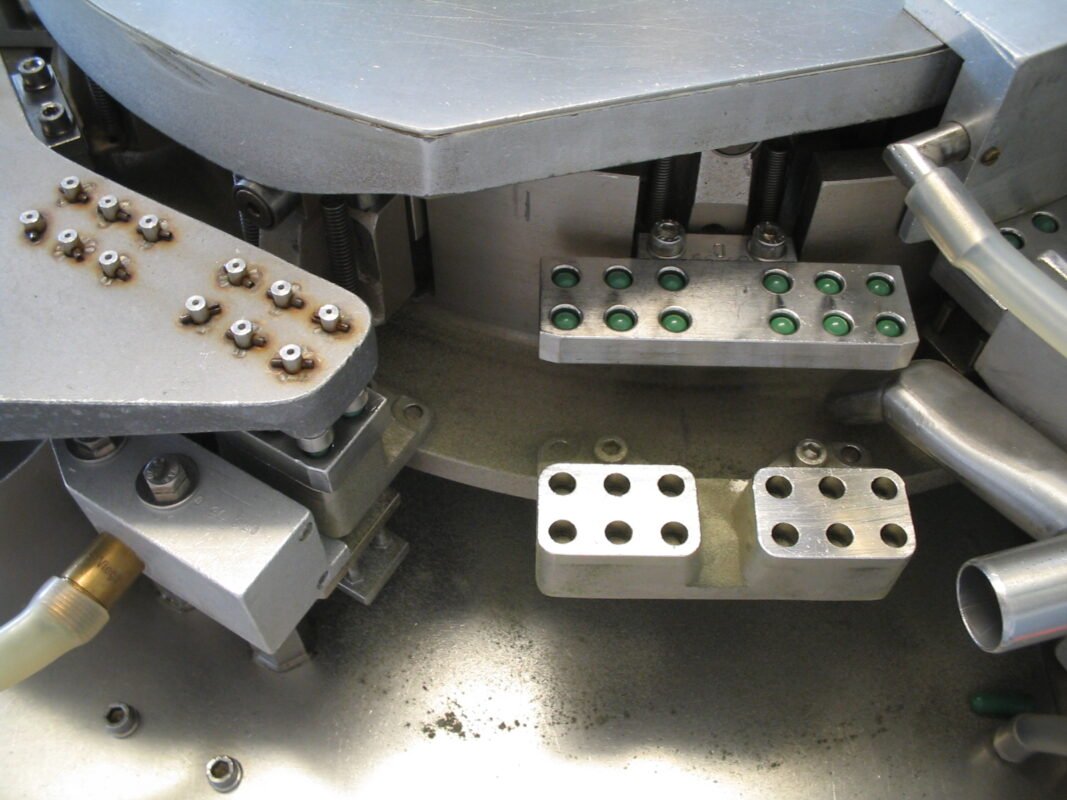
Photo: Franz von Assi / Wikimedia Commons, CC BY-SA 4.0.
Which capsule filling machine suits a small unit in Bangladesh
All three machine classes below fill two-piece hard capsules, the kind with a body and a cap that slide together. They differ in who does the handling: your operator, or the machine.
| Point | Manual filling board | Semi-automatic machine | Fully automatic machine |
|---|---|---|---|
| How it works | Operator loads empty capsules into a hole plate, separates caps by hand lever, spreads powder with a scraper, tamps and closes | Machine orients and separates capsules into rings; operator moves the ring to the powder hopper and then to the closing station | Turret indexes through sorting, separating, filling, reject, closing and ejection without handling |
| Typical buyer | R&D room, clinic dispensary, start-up testing a formula | Herbal, Unani, Ayurvedic and food supplement makers with several products | Pharma plants and contract packers with long runs |
| Weight consistency | Depends on the hand of the operator | Depends on powder flow and auger setting | Best, set by tamping pins or dosators |
A point that surprises first-time buyers: softgel capsules are not made on these machines. Fish-oil style soft capsules are formed and filled in one step on a rotary-die encapsulation line with gelatin melting tanks and a drying tunnel — a different project with a different budget. If your product is an oil, say so at the first enquiry.
How an automatic capsule filler works, station by station
Understanding the stations helps you read a quotation and question a supplier. Chinese factories commonly sell intermittent-motion automatic machines under NJP-style model names, and the number in the model name normally refers to the nominal capsules per minute. The turret carries segments (the blocks with holes you see in the photo above) through these steps:
- Sorting and orienting. Empty capsules drop from a hopper into feed tubes and are turned so every body points down.
- Separation. Vacuum pulls the body into the lower segment while the cap stays in the upper segment. Capsules that fail to open stay joined.
- Filling. In a tamping-pin machine, powder is pressed into a dosing disc by several sets of pins to form a light plug, which is pushed into the capsule body. In a dosator machine, a tube dips into a powder bed, picks up a plug and ejects it into the body.
- Rejection. Unopened or faulty capsules are pushed out so they do not reach your finished stock empty.
- Closing and ejection. Upper and lower segments realign, pins push the body into the cap until it locks, and the filled capsule is discharged.
What decides the price of a capsule filling machine
We do not print fixed prices here because the same model can be quoted far apart depending on tooling, materials and paperwork, and freight, duty and VAT are added on top of the factory price. Compare quotations line by line using these factors:
| Price factor | What to ask the supplier |
|---|---|
| Automation level | Manual, semi-automatic or fully automatic? For automatic machines, what is the realistic output on a powder like yours, not the brochure maximum? |
| Capsule sizes and change parts | Which size is fitted (for example size 0 or 00)? Each extra capsule size needs its own set of segments, feed tubes, pins and dosing disc. |
| Dosing system | Tamping pin or dosator? Can it also dose pellets or granules if you need that later? |
| Contact part materials | Which stainless steel grade touches the powder, and are material certificates supplied? |
| Vacuum pump and dust collector | Included in the price or quoted separately? What type of pump, and does it need water? |
| Documentation | Manual in English, electrical drawings, and for licensed drug production the DQ, IQ and OQ protocols and a factory acceptance test. |
Gelatin or HPMC capsules, and why humidity matters here
The machine is only half of the decision. Empty capsules are a recurring purchase and they behave differently in the Bangladeshi climate.
- Gelatin capsules are the long-standing standard. The gelatin source matters to Bangladeshi consumers, so ask the capsule supplier for a Halal certificate and keep it in your batch records.
- HPMC (vegetable) capsules are plant-based and tolerate dry or moisture-sensitive fills better, but they separate and close a little differently, so tell the machine factory which shell you will use.
- Humidity. Gelatin shells soften and stick to each other in humid monsoon air, and turn brittle and crack when kept too dry. Soft capsules jam in the feed tubes; brittle ones split at the closing station. A closed filling room with air-conditioning and a dehumidifier, and capsules stored in sealed liners until use, prevents most of these stoppages.
Will your powder run? Send samples before you order
Herbal powders are the hardest products to fill. Ground leaves, roots and bark are light, fibrous and often slightly oily or sticky; they bridge in the hopper and give uneven weights. Fine chemical powders can be the opposite, flowing like water and flooding the dosing disc. Before paying a deposit:
- Send the factory a few kilograms of your real powder blend and a supply of your chosen empty capsules, with the target fill weight and capsule size written down.
- Ask for a video of the trial showing the machine speed, plus a weight check of a sample of filled capsules on a balance.
- If weights wander, discuss the fix with the factory: sieving, a small amount of a permitted flow aid or lubricant, or granulating the powder first. This is a formulation decision for your pharmacist or technologist, not only a machine setting.
DE International can arrange this trial and attend the pre-shipment test on your behalf in China.
Support equipment a capsule room needs
A filling machine on its own does not produce saleable capsules. Budget for the room around it:
- Capsule polisher and sorter to brush off powder and remove empty or loose shells.
- Dust collector so powder does not spread to the next product.
- Balance for in-process weight checks, and a simple log sheet for every batch.
- Counting and bottling line or a blister machine downstream — see our guide to the blister packing machine price in Bangladesh.
If you also press tablets, read our tablet making machine guide; many small units buy both from the same sourcing trip. Our overview of a herbal medicine and supplement processing line shows how grinding, mixing, filling and packing fit together.
Licensing and importing: what to check in Bangladesh
Capsules sold as medicine — allopathic, Unani, Ayurvedic, herbal or homeopathic — fall under the Directorate General of Drug Administration (DGDA), which licenses manufacturing premises and expects Good Manufacturing Practice. That is the reason to ask for stainless contact parts, cleanable design and validation documents at the time of order; they are difficult to obtain after the machine has left China. Food supplements follow a different route, so confirm the current requirement for your product category with the authority or a regulatory consultant before you fix the factory layout.
On the import side, the machine is declared through ASYCUDA World under its HS code with the commercial invoice, packing list, bill of lading or air waybill and your IRC. Duty and tax depend on the HS classification and on whether any concession applies to your registration, so ask your C&F agent for a current calculation rather than relying on an old figure. For a freight estimate, use the decl.bd quote form, and see our Bangla guide to importing machines from China.
Mistakes that cost capsule makers money
- Buying on capsules-per-minute alone. A fast machine that stops every few minutes on sticky powder produces less than a slower one that runs steadily.
- Ordering one capsule size. The next product needs a different size and the machine waits weeks for change parts.
FAQ
What is the capsule filling machine price in Bangladesh?
It depends on whether the machine is manual, semi-automatic or fully automatic, how many capsule sizes you need tooling for, the dosing system, support equipment, documents, freight and duty. Send DE International your capsule size, powder type and daily target and we will quote a landed cost.
Which capsule filling machine is best for a small herbal or Unani company?
Most small herbal, Unani and Ayurvedic units in Bangladesh are well served by a semi-automatic machine, because it handles several products with quick cleaning and tolerates difficult powders better than a high-speed automatic line.
Can one machine fill different capsule sizes like 00, 0 and 1?
Yes, but each size needs its own change parts. Order the sizes you expect to use together with the machine so the parts are made and tested at the factory.
Who can source a capsule filling machine from China and deliver it to my factory in Bangladesh?
DE International sources the machine, arranges a trial with your powder, inspects before shipment and delivers door-to-door. WhatsApp +880 1750-859967 or use our contact page.
Setting up a capsule or tablet room? See our services, our China sourcing and buying agent service, or browse machines in our shop. Also useful: powder, granule and tube filling machines and our China sourcing agent page. WhatsApp: +880 1750-859967.
