
Import & Export Guides
Door-to-Door Shipping for Mobile Phone Accessories and Small Electronics from China to Bangladesh
Sep
Mobile phone accessories are one of the most popular product categories for new importers in Bangladesh. The items are small, light, cheap per unit in China, and in constant demand from phone shops, online sellers and corporate buyers. They are also a category where shipments are frequently delayed, because a typical accessories order mixes products that customs, airlines and regulators treat very differently. A carton of phone cases and a carton of power banks may sit side by side in the same container, but only one of them is dangerous goods.
This guide covers what to know before shipping cables, chargers, power banks, earphones, cases, screen protectors and similar items door to door from China to Bangladesh.
Sorting your order into risk groups
The first step is to divide the order by how each item will be treated in transport and at customs, because that decides the route and paperwork:
| Group | Examples | Main issue |
|---|---|---|
| Passive accessories | Phone cases, screen protectors, holders, stands, cable organisers | Mainly classification and valuation; low transport risk |
| Cables and chargers without batteries | USB cables, wall chargers, car chargers | HS classification, quality and electrical safety |
| Items containing lithium batteries | Bluetooth earphones, smartwatches, selfie sticks with remote | Dangerous goods rules (batteries contained in equipment), plus radio equipment approval |
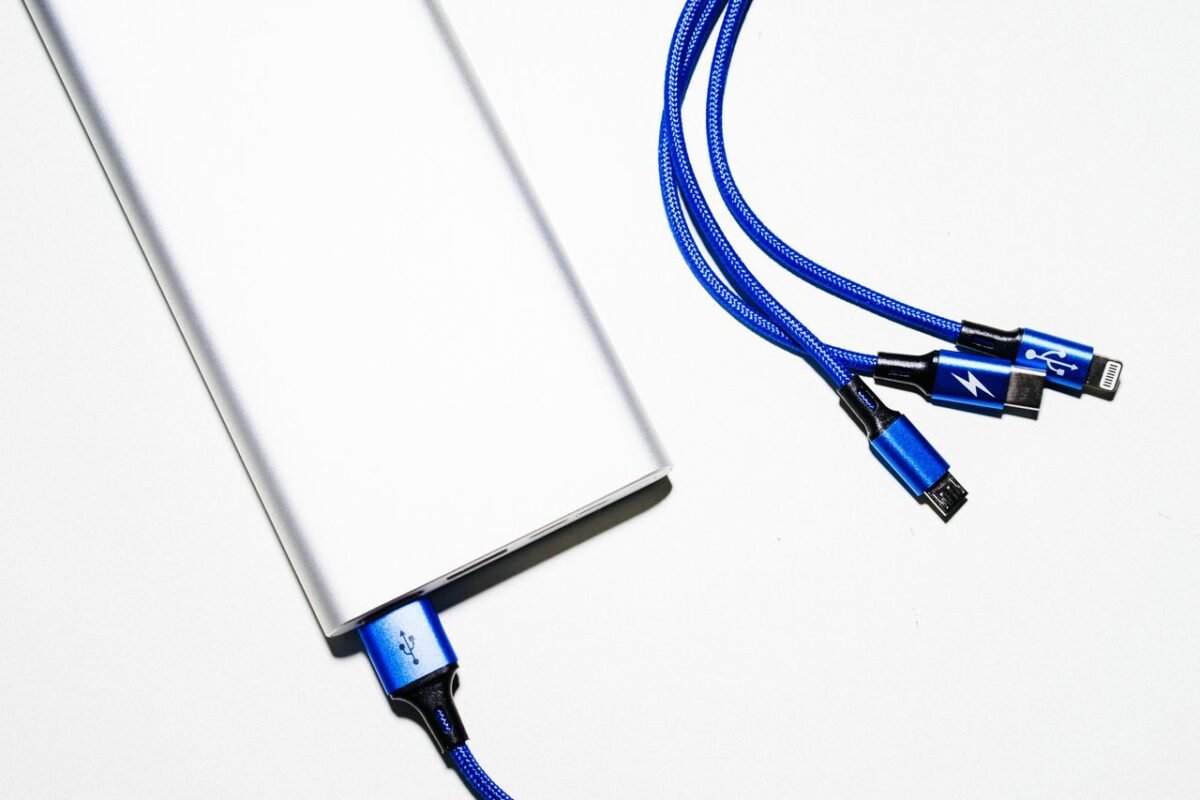
| Standalone lithium batteries | Power banks | Dangerous goods rules for lithium ion batteries; the most restricted group |
Power banks and batteries: why they are different
A power bank is, in transport terms, a lithium ion battery. It is shipped under the UN number for lithium ion batteries (UN3480), whereas a product that merely contains a battery, such as a Bluetooth headset, falls under the entry for batteries contained in equipment (UN3481). The difference matters most by air. Under IATA dangerous goods rules, standalone lithium ion batteries cannot be carried as cargo on passenger aircraft, must be shipped at a reduced state of charge, and need specific packing, marking and documentation. Many forwarders and consolidators simply refuse power banks on general air consolidation.
By sea, lithium batteries are still regulated as dangerous goods under the IMDG Code, but shipping lines generally accept them when they are properly declared, packed and labelled. That is why power banks for commercial quantities usually move by sea, while small quantities of battery-free accessories often move by air. Our lithium battery air freight guide covers the requirements in more detail.
The practical rule: never hide power banks inside a general cargo shipment. Undeclared lithium batteries are a known cause of fires in transport, and discovery leads to cargo being stopped, penalties from the carrier, and in the worst case refusal of all your future bookings.
Radio equipment and BTRC
Any accessory with a wireless function — Bluetooth earphones and speakers, smartwatches, wireless chargers with communication features, Wi-Fi devices — is radio equipment. The Bangladesh Telecommunication Regulatory Commission (BTRC) regulates the import of such equipment, and customs will usually expect evidence of BTRC clearance for the model being imported. Requirements and procedures change, so check the current process before ordering, and allow time for it in your plan. See our electronics import rules and the Import Policy Order guide.
HS codes, valuation and mixed cartons
Accessories orders often contain dozens of product lines, each of which may fall under a different HS heading with a different total tax incidence. Chargers, cables, cases made of plastic, cases made of leather or textile, and earphones are all classified separately. When a supplier packs several products in one carton and lists them on the invoice as “mobile accessories”, customs has no way to assess them line by line and may apply the highest rate or order a physical examination.
Ask the supplier to list every product separately on the commercial invoice with quantity, unit price and material, and to pack each product line in its own cartons where possible. Our article on mixed cargo with multiple HS codes explains why this saves time.
Valuation is the other sensitive point. Customs compares declared prices with its own reference values for similar goods, which is why an unusually low invoice price for cables or earphones tends to trigger a query. Declaring the true transaction value, supported by the payment record, is the only reliable approach. See assessment value versus invoice value.
Brand names and counterfeit risk
A large share of the accessories offered on Chinese wholesale platforms carry, or imitate, well-known phone brand names and logos. Importing goods that infringe trademarks exposes you to seizure and legal action by the rights holder, and customs authorities in many countries act against counterfeit goods at the border. The safe path is to import unbranded products or products carrying your own brand under a private label arrangement. “Compatible with” wording is different from using another company’s logo, but get advice if you are unsure where the line is.
Quality problems specific to this category
- Overstated capacity. Power banks are frequently sold with capacity ratings the cells cannot deliver. Test samples with a USB meter before ordering, and write the tested capacity into the quality agreement.
- Thin conductors in cables. Cheap cables can use very thin copper, which charges slowly and heats up. Ask for the conductor specification and check it at inspection.
- Charger safety. Poorly insulated chargers are a genuine safety risk. Ask for test reports and inspect the internal construction on samples.
- Packaging damage. Retail blister packs crush easily. Specify carton strength and inner packing so the retail box arrives sellable.
Choosing the route
For a first order of battery-free accessories, consolidated air or courier is often practical because the goods are light and high-value per kilo. Once volumes grow, or once power banks enter the mix, sea freight with LCL consolidation usually makes more sense. A door-to-door service handles pickup from the Chinese supplier, export clearance, freight, Bangladeshi customs and delivery, but it only works smoothly if the product list, battery details and approvals are known before pickup. Surprises discovered at the warehouse in Guangzhou cost days; surprises discovered at Chattogram cost weeks.
Packing, marking and documents for a mixed accessories shipment
A clean accessories shipment starts with the way the supplier packs it. Ask for one product line per carton wherever possible, with the product name, model, quantity and carton number printed on each carton, so a customs officer opening carton 14 can match it to line 14 of the packing list within seconds. Cartons containing lithium batteries must be separated from the rest, marked and labelled as the dangerous goods rules require, and listed on the shipper’s declaration. Mixing a few power banks into a carton of cases defeats both the customs check and the dangerous goods declaration.
For battery products, ask the supplier for the UN38.3 test summary, which shows the battery design passed the transport tests required by the UN manual of tests, and a Safety Data Sheet. Forwarders and carriers routinely ask for these before accepting the booking, and a supplier who cannot produce them is a warning sign about the batteries themselves. For wireless products, keep the model numbers exactly consistent across the invoice, the packaging and the BTRC paperwork; a model number that differs by one character can mean the approval does not cover the goods.
Planning a first accessories order: a worked approach
Suppose a shop owner in Dhaka wants to start importing cables, chargers, phone cases and a small quantity of power banks and Bluetooth earphones. The sensible sequence is to split the order into two shipments. The first carries the battery-free, non-wireless items — cases, screen protectors, cables and chargers — which can move by consolidated air or LCL with ordinary documents and reach the shop quickly. The second carries the power banks and earphones, and is only booked once the battery test documents are in hand and the BTRC position for the earphones is clear; it usually moves by sea as declared dangerous goods.
Splitting the order this way means a delay on the regulated items does not hold up the simple ones, and it keeps the dangerous goods paperwork to one clearly defined shipment. Before either ships, order samples of every product, test the chargers and cables, measure the real capacity of the power banks, and only then confirm quantities. The sample stage is cheap compared with a container of accessories that nobody wants to buy twice.
Talk to DE International
Send us your accessories product list, including which items contain batteries or wireless functions, and we will advise on routing, documents and approvals before your supplier ships. See our full range of import, freight and clearance services, China sourcing and buying agent service, browse the shop, or contact us for a quote built around your product and volume.
