
Import & Export Guides
Door-to-Door Shipping of Supermarket Shelving and Retail Fixtures from China to Bangladesh
Oct
New supershops, pharmacy chains, mobile phone outlets and neighbourhood grocery stores keep opening across Dhaka, Chattogram and district towns, and almost every one of them needs the same set of things before the first customer walks in: shelving, end displays, a checkout counter, trolleys or baskets, and often a wall of refrigerated display. Many owners find that Chinese manufacturers in Guangdong, Jiangsu and Zhejiang offer the range and finish they want. The challenge is not finding a supplier. It is making sure that what arrives fits the shop, survives the journey and can be assembled by the opening date.
This guide covers how retail fixtures are specified, packed and shipped door to door from China to Bangladesh, how customs typically treats them, and the mistakes that most often delay a store opening. For the overall process, see our explainer on door-to-door shipping from China.
What retail fixture orders usually include
A typical store fit-out order combines several product types, and each behaves differently in shipping:
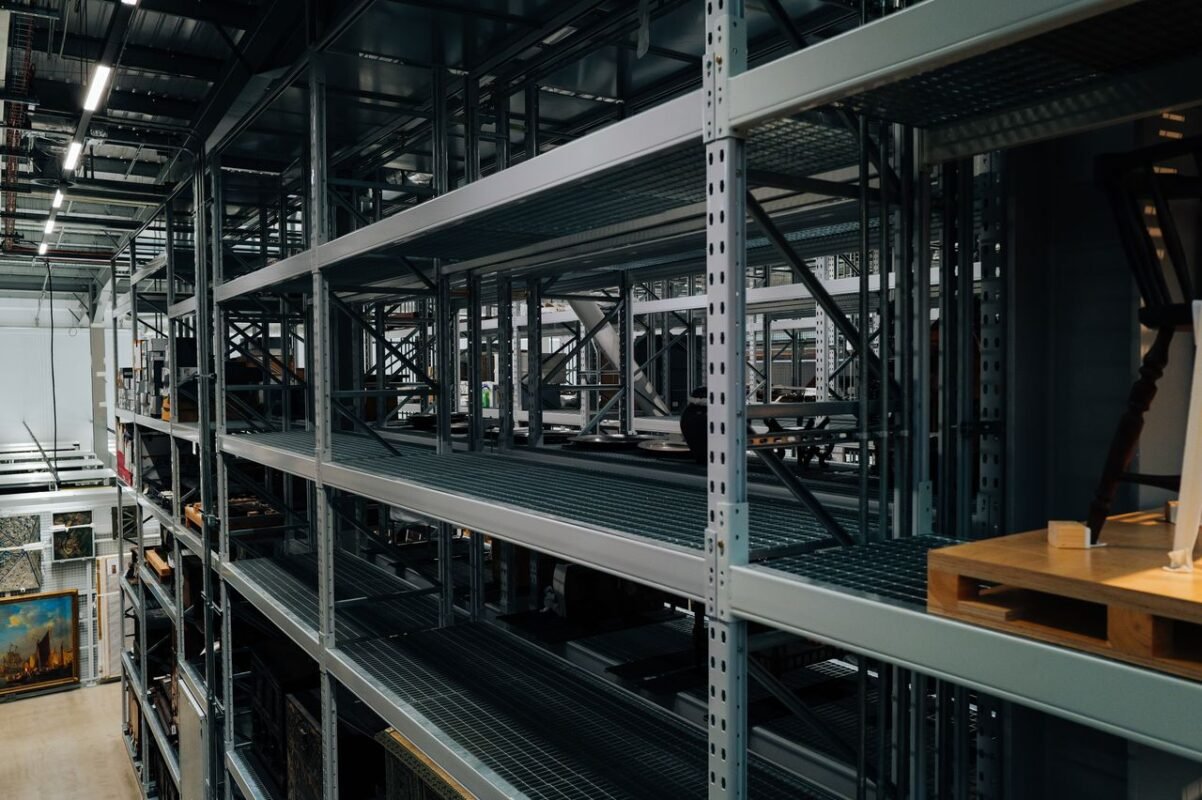
- Gondola shelving, the double-sided island units used in grocery aisles, built from uprights, base feet, back panels and adjustable shelves.
- Wall shelving, single-sided units against the perimeter.
- End caps and promotional displays at the ends of aisles.
- Checkout counters, often with built-in drawers, conveyor sections or bag shelves.
- Shopping trolleys and baskets, which are bulky because they nest only partially.
- Accessories such as price strips, dividers, hooks, label holders and signage frames.
- Refrigerated cabinets and display chillers, which are really refrigeration equipment and raise separate questions covered in our guide to cold rooms for supermarkets.
Mixing all of these in one container is common and usually sensible, but it complicates the packing list and customs classification, so plan the documents as carefully as the layout.
Specify from your floor plan, not the catalogue
The most expensive mistakes in fixture orders are dimensional. A Chinese catalogue lists standard widths and heights, but your shop has columns, a low beam near the back, an uneven floor, a narrow entrance and a fixed position for the electrical supply to the chillers.
Before you confirm any order, share a measured floor plan with the supplier and ask for a layout drawing in return, showing every unit in place with aisle widths. Check these points specifically:
- Ceiling and beam heights against the tallest unit, including any top signage.
- Aisle width for trolleys passing each other and for customers in wheelchairs.
- Column positions, which may require shorter bays or special filler pieces.
- Entrance and stair access, since long uprights and counters must physically get into the shop.
- Floor level; ask whether the base feet are adjustable to cope with uneven tiled floors.
Our guide to writing a product specification sheet explains how to turn these requirements into a document the supplier signs against.
Load capacity, finish and materials
Shelf load capacity varies widely with steel thickness, shelf depth and bracket design. A shelf that is fine for packaged snacks may sag under bottled water, cooking oil or rice. Ask the supplier to state the rated load per shelf for each shelf type in writing, based on its own testing, and match the specification to what you will actually stock. We do not quote capacities here because they genuinely depend on the design you buy.
Finish is the other major quality point. Most metal fixtures are powder coated. Ask about the pre-treatment process, coating colour codes and whether you can see a sample panel before production. Coastal humidity and cleaning with water make poor coatings rust at cut edges and fixing holes. Wooden or laminated elements, common on counters and premium displays, need protection against moisture in transit and in the shop.
For a large order, a pre-shipment check that counts components, measures key dimensions and inspects finish is worthwhile. Our guide to pre-shipment inspection explains how this works.
Packing and shipping: flat-pack versus assembled
Most shelving travels knocked down, as flat-packed uprights, shelves and panels, which saves a great deal of volume. Counters and some displays may arrive fully or partly assembled, which takes far more space per unit. Trolleys nest but still take more space than buyers expect.
| Item type | Usual packing | Shipping concern |
|---|---|---|
| Gondola and wall shelving | Knocked down, bundled by component | Scratches on coated surfaces; missing fixings |
| Checkout counters | Assembled or part-assembled, crated or cartoned | Volume and corner damage |
| Trolleys | Nested in stacks, wrapped | Bulky; bent frames if crushed |
| Baskets | Nested in cartons | Light but voluminous |
| Accessories | Small cartons | Easily lost inside a mixed load |
Because steel is heavy and cartons are dense, a shipment of shelving can reach container weight limits before it fills the space, while trolleys and counters do the opposite. Our article on freight optimisation and carton packing explains how to balance weight and volume, and the guide to container weight limits covers what happens if a container is overloaded. For a single store, the order may suit LCL; for a chain fit-out, a full container is often more practical. Which works better depends on your quantities, so ask for both options when you request a quote.
Ask the supplier to label each bundle with a component code that matches the assembly drawing and the packing list, and to pack fixings in clearly marked boxes by unit type. Missing bolts are the most common installation-day delay.
Customs classification and documents
Retail fixtures often fall into more than one HS heading. Metal shelving and display furniture, trolleys, refrigerated cabinets and accessories may each be classified differently, with different duty rates. Your C&F agent determines the correct codes from the product descriptions, so the commercial invoice and packing list should describe each line clearly rather than lumping everything under “shop equipment”. Our guides to clearing mixed cargo with multiple HS codes and packing list and invoice mismatches explain why consistency matters.
Wooden crates or pallets must meet ISPM 15 treatment rules, described in our article on wood packaging compliance.
Delivery to the shop and installation planning
Door-to-door delivery ends at the shop entrance, and that last stage needs as much planning as the ocean leg. Many new stores are in market buildings or shopping complexes with restricted loading hours, shared lifts and no space to park a covered van for long. Confirm with the building management when deliveries are permitted and whether the lift can take long shelving uprights or a checkout counter. If it cannot, the counter may have to be delivered knocked down even if it was ordered assembled.
Plan the unloading sequence so the fixtures needed first, usually wall units and gondola bases, are accessible first. Arrange for the installation team to be on site when goods arrive, with the supplier’s assembly drawings printed and the packing list ready to tick off. Counting components against the packing list before the delivery team leaves gives you a clear record of any shortage, as described in our guide to receiving a door-to-door shipment.
Common mistakes that delay a store opening
- Ordering from a catalogue without a layout drawing, then discovering a column where a gondola run should be.
- Under-specifying shelf strength for heavy goods, leading to sagging shelves within weeks.
- No spare fixings or accessories. Ordering a few extra price strips, hooks and bolts costs little; airfreighting them later costs a lot.
- Scheduling the opening on the estimated arrival date, with no allowance for clearance, delivery and assembly.
- Combining chillers with shelving without checking electrical requirements such as voltage and plug type.
How DE International can help
We help retailers source fixtures from Chinese manufacturers, review layout drawings and specifications, arrange inspection and consolidate mixed orders into one door-to-door shipment cleared through customs and delivered to the shop. Shipping cost and timing depend on volume, weight, port and the season, so we quote around your actual order rather than a generic rate.
Planning a new store or a chain fit-out? Contact us for a quote built around your floor plan and product list. You can also explore our door-to-door services, our China sourcing and buying agent service, or browse our shop.
