
Import & Export Guides
Mini Cold Storage Electrical Setup: Voltage Protection, Wiring and Earthing in Bangladesh
Sep
When a mini cold room fails, the first suspect is usually the compressor. In many Bangladeshi installations the compressor is only the victim; the cause is the electrical supply feeding it. Low voltage at peak load, sudden outages followed by immediate restarts, a missing phase, poor earthing and undersized cable all shorten compressor life and can lose a room full of stock overnight.
This guide explains why refrigeration equipment is unusually sensitive to power quality, what protection devices are worth installing, how wiring and earthing should be approached, and what to ask your electrician. It is a planning guide, not an electrical design: sizing of cables, breakers and stabilisers must be done by a qualified electrician for your specific equipment and supply.
Why compressors are fussy about power
A refrigeration compressor motor draws a large surge of current when it starts, several times its normal running current, before settling. If supply voltage is low at that moment, the motor struggles to accelerate, draws even more current for longer and heats its windings. Repeated hard starts degrade the insulation on those windings. Persistently low voltage while running has the same effect through sustained overcurrent. High voltage is not harmless either: it stresses insulation and can trip protection or damage the electronic controller. The important mechanism to remember is that the damage is cumulative. A compressor rarely dies from one bad evening; it dies from hundreds of small ones.
The restart delay problem
Power cuts create a second, less obvious hazard. When power returns immediately after an outage, a compressor may try to restart while high pressure remains in the refrigerant circuit, because pressures need time to equalise. Starting against that pressure overloads the motor and can trip the overload or damage it. For this reason, refrigeration systems benefit from a time delay before restart after power loss; some controllers include it, and separate delay devices are available. When you review a quotation for a room, ask whether an anti-short-cycle or restart delay is provided and how long it is set for, and do not assume the manufacturer has enabled it. Our note on compressor types explains how the different compressor designs respond to starting conditions.
Voltage protection: stabiliser, protector or both
Two kinds of device are often confused. A voltage stabiliser corrects the supply to a narrower band when the mains drifts. A voltage protection relay (sometimes with a built-in delay) simply disconnects the load when voltage goes outside safe limits and reconnects when it returns, usually after a delay. For a compressor load, a plain stabiliser that is undersized may be worse than none: a unit that cannot supply the starting surge will sag exactly when the compressor needs it. The rating must cover the starting demand of the compressor, not just its nameplate running load, and it is a question for your electrician and the equipment supplier together. Ask for the device to be sized against the manufacturer’s stated starting and running current, and for the specification in writing. In some locations a combination works well: a protector to cut out dangerous extremes, and a correctly sized stabiliser for ordinary drift.
Single-phase or three-phase supply
Smaller rooms often run on single-phase, larger ones on three-phase. Confirm which the equipment needs before you order and confirm what your building actually has. The sanctioned load on your electricity connection is set by the utility, and a cold room can push a small connection past its limit; check it with your distribution company or electrician before installing, because upgrading a connection takes time and may involve paperwork. On three-phase systems, a phase failure or phase reversal is a real risk. Some compressor types, notably scroll compressors, can be damaged if they run in the wrong rotation direction, and any three-phase motor suffers if one phase drops. A phase failure and phase sequence relay is a modest component that protects against both, and it is worth asking whether it is included.
Dedicated circuit, breaker and cable
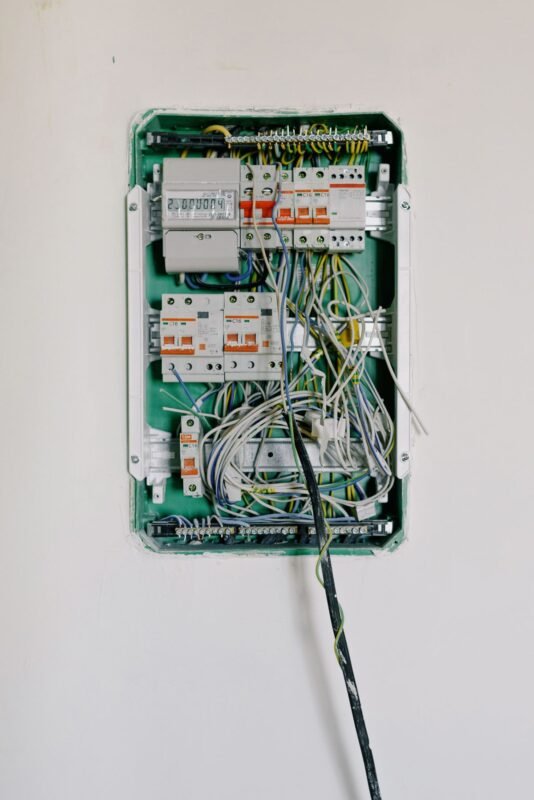
A cold room should not share a circuit with other appliances. Give it its own protected circuit from the distribution board, with a breaker suited to the motor load and a cable sized for the current and the run length. Long cable runs lose voltage, which adds to the low-voltage problem at the compressor. Loose or corroded terminals are a common hidden fault: they heat under load and can cause intermittent failures that look like a controller fault. Ask the electrician to tighten and label terminals at handover, and to photograph the panel before closing it, so future technicians can understand what is installed. The circuit should also account for the condenser fan, evaporator fans, defrost heaters and lighting, each of which adds load; the heaters in particular can be a large share of the connected total. Our article on defrost methods shows why.
Earthing and leakage protection in a wet environment
Cold rooms are damp, floors are wet during cleaning, and metal panels and racks are touched constantly. That combination makes proper earthing important for safety. Every metal enclosure, the panel frame, compressor unit and condenser should be bonded to a reliable earth connection, and the earth resistance should be checked with an instrument, not assumed. A residual current device (often called an RCD or ELCB) adds protection by disconnecting the circuit if current leaks to earth. Because refrigeration equipment can produce small standing leakage currents, and because moisture in a cold room can cause nuisance trips, the choice and rating of the device should be made by an electrician who understands the load. Do not bypass a tripping device to keep the room running; find the leakage.
Backup power and changeover
If you run a generator or a solar system, the changeover between sources must be wired so that the generator can never back-feed the utility line and so that the compressor does not restart abruptly on the swap. A proper changeover switch and the restart delay mentioned earlier handle both. Sizing a generator for a compressor also depends on starting surge, not the running figure. Read backup power for mini cold storage and solar-powered cold storage for the broader options, and remember that any of them still needs the protection devices above.
Monitoring and maintenance
You cannot manage what you never see. Fit a simple voltmeter or a monitoring relay that shows supply voltage, and log it when you check the room. A pattern of low readings in the evening tells you to raise the issue with the utility or add correction, before the compressor complains. Combine electrical checks with routine upkeep from our maintenance guide: check terminals and connections, clean condenser coils so the motor does not work harder, and record temperatures. If you want continuous alerts, IoT temperature monitoring can notify you of a power failure or a warming room. Electricity is also the biggest running cost, so see electricity cost for mini cold storage.
Questions to ask before you buy
- What supply does the unit need — single-phase or three-phase — and what starting and running current will it draw?
- Does the controller include a restart delay, and is it enabled?
- Which protection devices are supplied and which must I buy locally?
- What cable size and breaker rating do you recommend, and for what run length?
- How should the room be earthed, and who tests it?
- What does the warranty say about damage from supply faults? See warranty and after-sales service.
Warranties frequently exclude damage caused by voltage problems, so protection is not optional if you want the cover to be valid. We supply and help plan mini cold rooms and can describe the electrical requirements of a specific model; give us your room size and location and we will explain what to prepare, though your own electrician must approve the final installation.
Need help with your own shipment? Explore our sourcing and logistics services, contact the DE International team for a quote built around your cargo, look at our China sourcing and buying agent service, or browse the catalogue.
