
Import & Export Guides
How Much Space Do You Need? Sizing a Mini Cold Storage for Your Business
Jul
“What size cold room do I need?” is one of the first questions any buyer asks, and guessing wrong is an expensive mistake — too small and you run out of space within a season, too large and you pay for room you never use. This guide walks through how to think about sizing a mini cold storage, without inventing a number for you.
Last updated: August 2026. Written by the DE International sourcing team — we run our own teams in China and Bangladesh, inspect cold storage units before they leave the factory, and handle customs clearance on arrival in Bangladesh.
Start with What You Actually Store
- Product type: crates of vegetables stack differently to boxed frozen fish or trays of flowers.
- Peak volume: size for your busiest period, not your average day — a harvest glut or a festival rush.
- Turnover speed: stock that moves fast needs less standing room than stock held for weeks.
The Sizing Checklist
| Question | Why It Matters |
|---|---|
| What’s your peak (not average) daily/weekly volume? | Sizing for average volume causes overflow at peak times |
| How is product packaged (crates, boxes, trays)? | Different packaging stacks and stores differently |
| How long does stock typically sit before moving? | Fast turnover needs less standing room than long-held stock |
| Do you need aisle space for trolleys or hand-carrying? | Usable volume is always less than total room volume |
| What’s your realistic growth over 2-3 years? | Extending later costs more than sizing slightly ahead now |
A Rough Starting-Point Formula
This will not replace a proper sizing conversation, but it gives you a rough number to start from: storage volume (m³) = total product weight (kg) ÷ product density (kg/m³). For example, storing 6,000 kg of potatoes at a typical density of around 600–700 kg/m³ works out to roughly 9–10 m³ of product volume — then add space for aisles, stacking clearance and door access on top, which typically adds 30–50% to the raw product volume. Treat this as a starting estimate, not a final number; your actual product, packaging and turnover will shift it.
Leave Room to Work, Not Just to Stack
- Aisle space to walk or wheel a trolley between racks.
- Stacking height your crates or boxes can safely reach.
- Space near the door for loading and unloading without blocking the room.
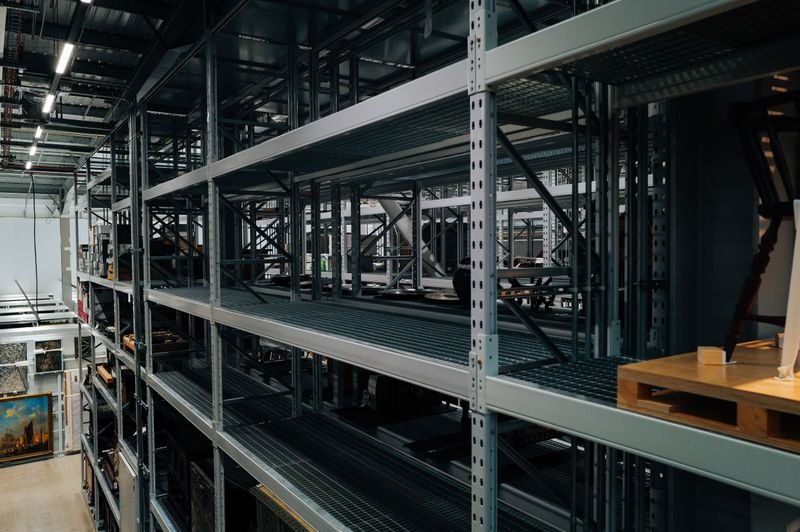
- Shelving or racking layout — see our guide to doors, panels and shelving — which affects how much usable space a given room actually gives you.
Plan for Growth, Within Reason
It costs more to extend a cold room later than to size it slightly ahead of today’s volume — but oversizing wastes money on space and on running cost, since a bigger room costs more to cool. If you are between a deep freezer and a small room, our comparison on mini cold storage versus deep freezer may help you decide.
Common Sizing Mistakes
- Sizing for average volume instead of peak volume. The room needs to handle your busiest realistic period, not a typical week.
- Forgetting usable vs. total volume. Aisles, stacking clearance, and door space all reduce actual storage capacity below the room’s total volume.
- Sizing for today only, with no growth margin. A small margin for growth is usually cheaper than a second capital purchase soon after the first.

How DE International Sizes Your Cold Room with You
There is no universal size, so we do not quote one here — the right answer comes from your product, your peak volume and your site. Tell DE International what you store and roughly how much, and we will come back with a room size and layout to match, plus a full landed-cost quote. See the price factors to budget for and our mini cold storage buyer’s guide.
Frequently Asked Questions
How much extra space should I add for growth?
There’s no universal percentage — it depends on how confident your growth projection is. A modest margin based on realistic 2-3 year plans is generally more cost-effective than either under-sizing or building for an aggressive best-case scenario.
Does room shape affect usable capacity?
Yes — a well-proportioned room with efficient shelving layout stores more usable volume than an awkwardly shaped space of the same total size. This is part of what a proper sizing consultation accounts for.
Can I extend a cold room later if I undersize it?
It’s possible in some cases but generally more expensive and disruptive than sizing correctly the first time — factor this into your decision rather than assuming easy expansion later.
Can DE International help me calculate the right size?
Yes — tell us your product type, peak volume, and site details, and we’ll help you work out the right room size and layout as part of your quote.
Tell us what you want to store and roughly how much, and we will come back with the right cold-room option and a full landed-cost quote. See our services, our China sourcing and buying agent service, or contact us. You can also browse our shop for other machinery we source.
Prefer to talk it through?
✉ Chat on WhatsApp for a Quote