
Import & Export Guides
Cold Chain for Winter Vegetables in Bangladesh: Cauliflower, Cabbage, Carrot and More
Sep
Every Bangladeshi farmer and wholesaler knows the winter vegetable pattern. From roughly the end of Kartik through Magh, cauliflower, cabbage, carrot, radish, beans and tomato come to market in enormous volumes, prices at the farm gate drop sharply, and a share of the harvest is sold at a loss or not sold at all. A few months later, the same vegetables are scarce and expensive. Cold chain does not remove this seasonality, but it can flatten the worst of it — if it is matched to how each vegetable actually behaves after harvest. This article looks at the cold chain for the main winter vegetables, from the field in vegetable belts such as Jashore and Bogura through to city markets and processors.
Why winter gluts cause such heavy losses
The loss during a glut is partly physical and partly economic. Physically, vegetables harvested faster than they can be sold sit in open-air collection points, on trucks and in wholesale markets without protection. Cauliflower curds yellow and develop spots, cabbage loses outer leaves, carrots go limp as they lose moisture. Economically, when every farmer harvests the same crop in the same weeks, the buyer sets the price, and a farmer with no way to hold the crop has to accept it.
Storage gives the seller time. Even a short extension — holding produce for a couple of weeks instead of selling on the day of harvest — can let a trader move stock to a different market, wait out the lowest price days, or supply a processor steadily rather than all at once. For some winter vegetables the possible extension is longer; for others it is short. Knowing which is which is the key to spending money sensibly.
Storage behaviour of the main winter vegetables
| Vegetable | How it behaves after harvest | Main cold chain priority |
|---|---|---|
| Carrot | Root crop; stores comparatively well if kept cold and humid; loses moisture and goes limp in dry air | High humidity, remove tops before storage |
| Cabbage | Stores reasonably well; outer leaves protect the head; sensitive to ethylene | Cold, humid, away from ethylene-producing fruit |
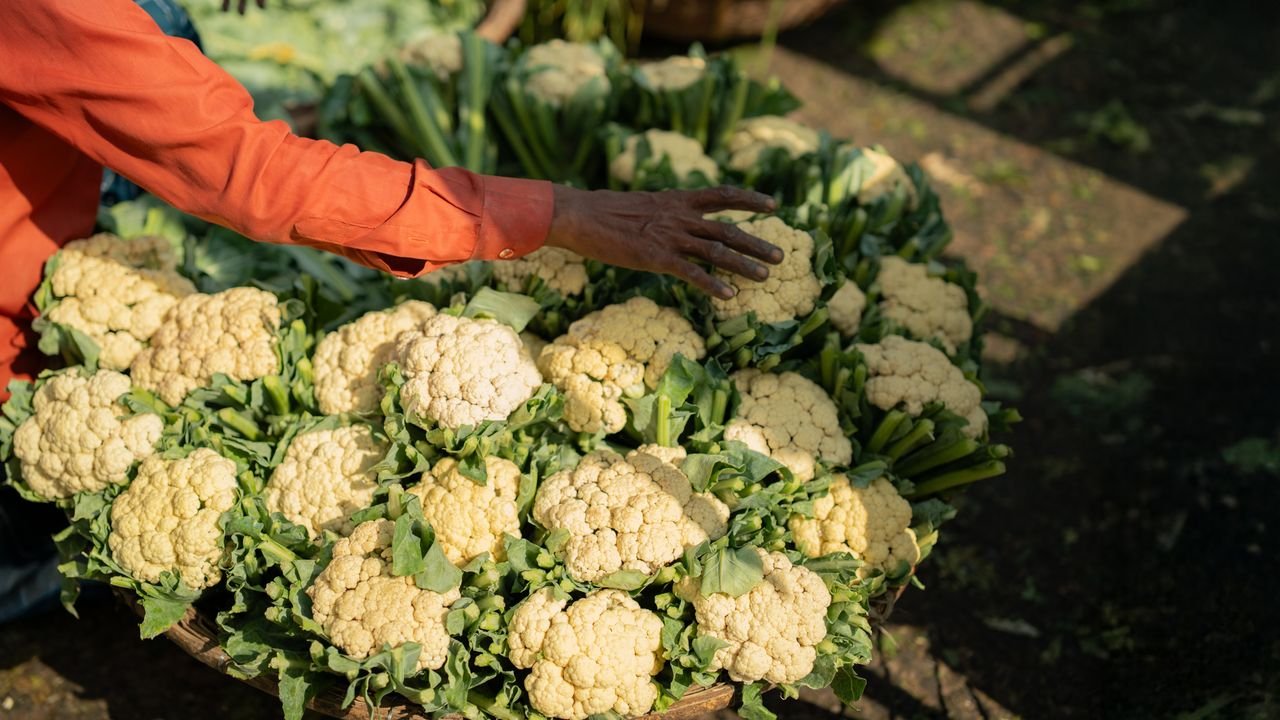
| Cauliflower | More perishable; curds discolour and spot; damage shows quickly | Fast cooling after harvest, gentle handling, wrapper leaves kept on |
| Radish | Loses moisture fast if tops are left on | Trim tops, keep humid |
| Beans and peas | Short life; lose sweetness and freshness quickly | Rapid cooling, sell or process quickly |
| Tomato | Chilling-sensitive when held too cold | Separate handling; see dedicated tomato guide |
The table deliberately avoids single temperature figures, because the right setpoint depends on variety, maturity at harvest and the intended storage period, and a wrong generic number does more harm than good. The pattern that matters is that root and head vegetables such as carrot and cabbage are the best candidates for longer holding, while cauliflower, beans and peas need a fast, short chain. Tomato is chilling-sensitive and should not share a very cold room with the others; our tomato chilling injury guide covers why.
Field heat: the step most often skipped
Vegetables harvested on a sunny winter afternoon carry field heat — warmth absorbed from the sun and soil — and they keep respiring quickly until that heat is removed. Every hour of delay between harvest and cooling uses up storage life that cannot be recovered. This is why the first link of the chain, at or near the field, often matters more than the storage room in the city.
Practical steps are within reach even for small producers: harvest in the early morning when produce is coolest, keep harvested crates in shade rather than in the sun on the field edge, and move produce to a collection point with pre-cooling as soon as possible. Methods such as forced-air cooling and hydro-cooling are explained in our guide to pre-cooling fresh produce. Hydro-cooling suits many root vegetables; forced-air cooling suits most leafy and head crops. For cauliflower in particular, keeping a few wrapper leaves on protects the curd from both bruising and discolouration.
Where storage fits: field, collection point, or city
There are three realistic places to add cold capacity for winter vegetables, and each serves a different business:
- At the collection point in the growing area. A farmer group, cooperative or aggregator runs a small cold room or pack house near the fields, removes field heat, grades produce and holds it until trucks leave. This protects the most value per taka spent because it acts earliest. Our pack house guide covers the layout.
- At the wholesale or distribution end. A trader in a city market holds graded stock to supply retailers, restaurants and supermarkets over several days. This helps with price timing but cannot undo damage done earlier.
- At a processor. Frozen vegetable makers and ready-to-cook suppliers buy during the glut, when raw material is cheapest, and process it. Here storage is often frozen rather than chilled — see our frozen vegetable guide.
Transport joins these points. A truck carrying pre-cooled carrots in an open body under the midday sun undoes much of the cooling. Insulated or refrigerated trucks are covered in our reefer truck guide; for smaller volumes, even covering loads, travelling at night and avoiding long waits at market entry points helps.
Grading, packaging and handling
Storage amplifies whatever quality goes in. Damaged, diseased or over-mature produce does not improve in a cold room; it spoils there and spreads rot to the good produce around it. Grading before storage — removing split carrots, cabbages with rotten outer leaves, and cauliflowers with damaged curds — is not an optional step. Packaging matters too. Traditional jute sacks and overloaded bamboo baskets bruise produce under their own weight. Ventilated plastic crates cost more upfront but are reusable, stack without crushing, and let cold air reach the produce. For export-oriented vegetables, cartons and liners come into play, as covered in our vegetable export cold chain guide.
A worked example: a cooperative in a vegetable belt
Consider a farmer cooperative in a winter vegetable area that currently sells everything the day it is harvested to visiting traders. A realistic first step would not be a large cold store. It might be a shaded collection shed, ventilated crates, a simple grading table and a modest cold room sized for a few days of the group’s peak harvest of carrots and cabbage. Cauliflower and beans would continue to move quickly but would be graded and cooled before loading. Over a season, the cooperative can record how much it held, how long, and what price difference it achieved by selling later or to a different buyer. That record is what justifies — or does not justify — expanding. What the room costs to build and run depends on its size, insulation and power arrangement, so treat any figure you hear second-hand with caution and ask for a quote based on your actual volumes.
Mistakes that waste a winter vegetable cold chain
- Storing produce with field heat still in it. The room spends its capacity cooling the produce instead of holding it, and condensation encourages rot.
- Mixing tomatoes with carrots and cabbage. The tomatoes suffer chilling injury, or the room is set too warm for the rest.
- Storing next to ripening fruit. Ethylene from fruit such as bananas or apples yellows cabbage and other leafy crops.
- Expecting cauliflower to store like carrots. It will not; plan for a short chain.
- Ignoring humidity. Root crops in a dry cold room lose weight and firmness — see our humidity control guide.
For the wider picture of post-harvest loss and what cold chain can realistically achieve, read reducing post-harvest loss with cold chain and our overview of building a cold chain network in Bangladesh.
DE International sources mini cold storage rooms, pre-cooling equipment, crates and cold chain components from China for Bangladeshi growers, cooperatives and traders. See our services, the China sourcing and buying agent service, the shop, or contact us — the right setup depends on your volumes and crops, so ask us for a quote built around your needs.
