
Import & Export Guides
Cold Chain for Ethnic Vegetable Exports from Bangladesh: Potol, Korola, Brinjal and Gourds
Sep
Walk into a South Asian grocery in London, Birmingham, Dubai or Riyadh and you will find potol, korola, kakrol, lau, begun, borboti and kochur loti — vegetables that many customers grew up with and cannot easily find grown locally. A share of that supply comes from Bangladesh, mostly by air, and it is a trade that rewards exporters who handle the cold chain and plant health rules well and punishes those who do not. The same consignment that sells at a premium when it arrives firm and clean can be rejected or destroyed at the destination border if it arrives soft, rotting or carrying a pest.
This article looks at the cold chain and compliance steps that matter most for exporting these fresh vegetables from Bangladesh.
Why these vegetables are difficult to export
They are mostly chilling-sensitive. Many of the vegetables in this trade — gourds, brinjal, okra and similar tropical produce — are damaged by temperatures that suit leafy greens or apples. Stored too cold, they develop pitting, water-soaked patches and discolouration, and they decay faster once they warm up again, which often happens only after they reach the retailer. Stored too warm, they soften, lose water and yellow. The target is a moderate cool temperature well above freezing, and the right setpoint differs between products; published postharvest references and an agronomist familiar with the crop should be your source for each one, not a single number for the whole consignment.
They are perishable and high in water. Gourds and leafy stems lose moisture quickly, and every hour in the Bangladeshi heat after harvest uses up shelf life that cannot be recovered.
They attract quarantine pests. Fruit flies, whiteflies, thrips and other insects that are common in tropical vegetable production are regulated pests in many importing countries. The European Union in particular carries out plant health checks on imported vegetables and has intercepted consignments from South Asia for harmful organisms, which puts every exporter from the region under scrutiny.
From field to aircraft: the cold chain step by step
1. Harvest in the cool of the day. Early morning harvest means lower field heat in the produce and less work for cooling afterwards. Harvest at the right maturity for export, which is usually firmer and less mature than for local sale, because the product must last through transport and retail.
2. Get it into shade immediately. Produce left in the sun in a field heats up far above air temperature. A shaded collection point is the cheapest cold chain equipment there is.
3. Pre-cool. Removing field heat quickly, using forced-air cooling or a well-designed cold room, is the step that most extends shelf life. See pre-cooling methods.
4. Sort, grade and inspect in a pack house. Remove damaged, diseased and insect-affected produce. Pest inspection at this stage is part of the export compliance system, not just quality control. Our guide to fruit and vegetable pack houses covers layout and hygiene.
5. Pack in ventilated cartons. Use strong, ventilated cartons so cool air can reach the produce, and do not overfill them. Bruising from overpacking is a common source of decay in transit.
6. Hold cool until the flight. Keep packed cartons in a cool room at the right temperature until they are trucked to the airport, and use a refrigerated truck for the journey rather than an open pickup.
7. Minimise time at the airport. Deliver close to the cut-off time agreed with your forwarder, and check what temperature-controlled holding is available at the cargo terminal. Cartons sitting on a warm apron are where many cold chains break. See perishable air cargo handling.
Plant health documents and compliance
Fresh vegetables exported from Bangladesh need a phytosanitary certificate issued by the Plant Quarantine Wing of the Department of Agricultural Extension, confirming that the consignment has been inspected and meets the importing country’s plant health requirements. Importing countries set their own rules, which can include specific treatments, registration of farms or pack houses, and inspection at the border. The requirements differ between the EU, the UK and Gulf markets, and they change, so confirm the current requirements for your destination and product before planning the season.
Traceability supports compliance. Being able to identify which farm and which harvest date produced each carton lets you respond quickly if a consignment is questioned, and lets you fix problems at their source. Some exporters use the government central packing house facilities or approved private pack houses precisely because those facilities are set up for inspection and traceability.
Product notes
| Vegetable | Main handling concern |
|---|---|
| Potol (pointed gourd) | Softening and yellowing; sensitive to both heat and excessive cold |
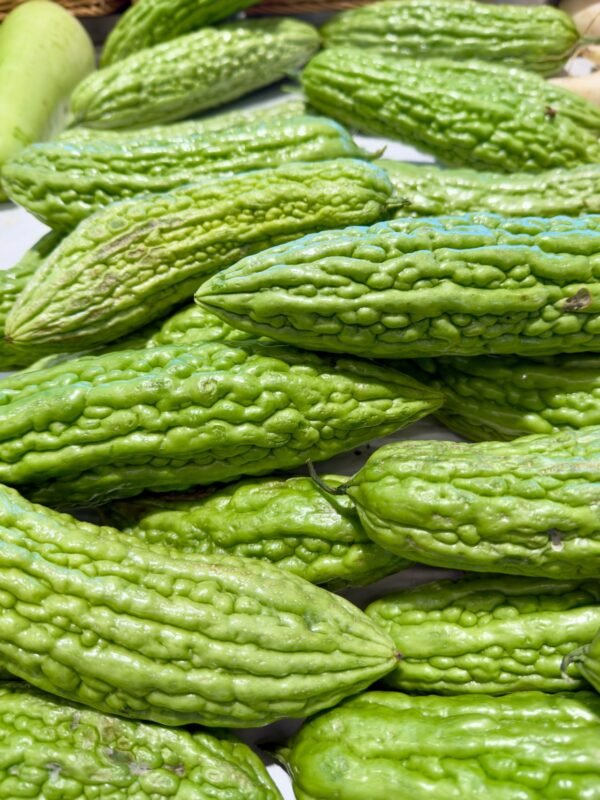
| Korola (bitter gourd) | Ripening and yellowing after harvest; the ridged surface bruises easily |
| Kakrol (teasel gourd) | Spiny skin damages neighbours if packed loosely |
| Lau (bottle gourd) | Large, heavy and easily scarred; needs careful packing |
| Begun (brinjal) | Calyx browning and skin pitting from chilling; stems must be trimmed cleanly |
| Borboti (yardlong bean) | Rapid moisture loss and yellowing; needs bundling and humidity protection |
The table is about handling behaviour, not setpoints. Where products with different temperature needs share a shipment, the compromise temperature should be decided with advice specific to those crops, and the most sensitive product usually decides it.
Common mistakes
- Treating all vegetables as one temperature. Storing chilling-sensitive gourds alongside leafy greens at a low setpoint damages them.
- Skipping pre-cooling to save time. Packing warm produce into cartons traps heat and moisture, and the consignment starts to decay before it flies.
- Weak pest inspection. One interception affects your reputation with the importing authority and can affect the whole sector.
- Wet packing. Washed produce packed without drying develops rot in the carton.
- Over-reliance on air speed. A fast flight does not rescue produce that was heat-stressed before it reached the airport.
Where equipment fits
The equipment that makes this trade work is not complicated: shaded collection points, a pre-cooling system, a pack house with a cool holding room, reefer transport, and reliable temperature monitoring. Much of it can be sourced from China, including mini cold storage rooms, forced-air cooling setups and temperature loggers. For the wider picture, see our guides on reducing post-harvest loss and green chili and fresh herb export.
Packaging and labelling for destination markets
Buyers in the UK, EU and Gulf markets expect consistent cartons, clear labelling and traceability. Each carton should show the product name, net weight, grade or size where applicable, the exporter’s name and address, the country of origin, and a code that links the carton to a farm and packing date. Importers and supermarket buyers use that code when they report a problem, and an exporter who can answer precisely about one lot is treated very differently from one who cannot say where the produce came from.
Carton design also affects temperature. Ventilation holes must line up when cartons are stacked on a pallet or in an air cargo unit, otherwise the cool air that the airline or cold store provides never reaches the produce in the middle of the stack. Liners or bags that help retain moisture can be useful for beans and leafy stems, but they must suit the product, because trapping too much humidity around gourds or brinjal encourages rot. Test carton and liner combinations on a few trial shipments and check the arrival condition before committing to a season’s supply of packaging, which can itself be sourced through our custom packaging service.
Planning the season with your forwarder
Fresh vegetable exports depend on reliable air cargo space, and that space is not guaranteed. Belly capacity on passenger flights varies by season and route, and perishables compete with garments and other cargo during busy periods. Exporters who ship steadily usually agree a regular booking pattern with their forwarder, so that space is planned for specific days of the week, and harvesting and packing are scheduled backwards from those flights.
Agree in advance what happens if a shipment is offloaded: where the cartons will be held, at what temperature, and who decides whether they go on the next flight or are sold locally. Put a temperature logger in a sample of cartons on each shipment for the first few months. The data will show whether the chain holds from the pack house to the destination, and where it breaks if it does not — often during a wait on the ground rather than in the air. Our article on air freight transit time explains the ground steps that add hours to every shipment.
Talk to DE International
If you are setting up or upgrading an export pack house or cold room for fresh vegetables, tell us your products, volumes and site and we will source suitable equipment from China and handle the import. See our full range of import, freight and clearance services, China sourcing and buying agent service, browse the shop, or contact us for a quote built around your product and volume.
