
Import & Export Guides
Flour Mill Machine Price in Bangladesh: What a Small Atta Mill Needs
Nov
Flour mill machine price in Bangladesh depends on what kind of atta mill you are building: a single grinding machine for a local chakki shop, a small automatic line that cleans, conditions, grinds and sifts wheat, or a roller-mill plant that separates atta, maida and suji. A small atta mill in Bangladesh usually needs wheat cleaning, a tempering (conditioning) step, a grinder or roller mill, a sifter, a dust-collection cyclone and a bag-filling and sealing machine. DE International sources these machines from China and delivers them door-to-door; ask us for a quote built around your daily wheat quantity and the products you want to sell.
This guide walks through each stage of a small flour mill, compares the main grinding options, explains what really changes the price, and lists the problems new millers in Bangladesh most often run into.
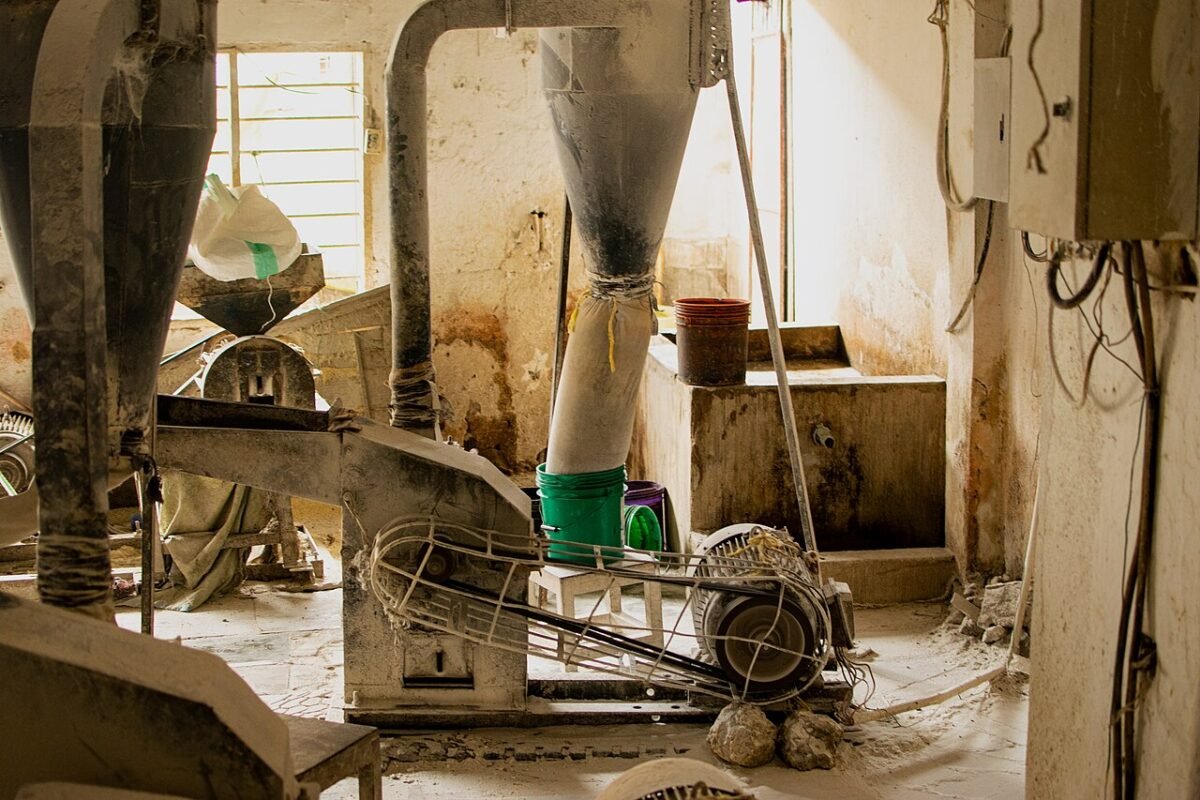
Photo: Rwebogora, Wikimedia Commons, CC BY-SA 4.0.
What does a small atta mill actually do
A wheat grain has three parts: the bran (outer skin), the germ, and the starchy endosperm. Whole-wheat atta keeps most of the grain together, while maida is mainly the fine endosperm with the bran and germ removed, and suji is coarser endosperm particles. The machines you need depend on which of these products you plan to sell. If you only want brown atta, a cleaning section and a good grinder with a sieve can be enough. If you want white maida and suji as well, you need roller mills and a multi-section sifter that can separate particle sizes.
Most new mills in Bangladesh buy imported wheat through traders, so the quality of what arrives varies from lot to lot. That is why the cleaning and conditioning section matters as much as the grinder.
Machines in a flour mill line, stage by stage
| Stage | Typical machines | Why it matters |
|---|---|---|
| Intake and cleaning | Vibrating screen, de-stoner, magnetic separator, scourer or peeler, aspirator | Removes stones, straw, dust and metal that would damage the grinder and end up in the flour |
| Conditioning (tempering) | Dampener and tempering bins | Adding a controlled amount of water and resting the wheat makes the bran tough and the endosperm easier to separate |
| Grinding | Stone chakki, pulveriser or hammer-type grinder, or roller mills | Decides fineness, temperature of the flour and how cleanly bran is separated |
| Sifting | Rotary or plan sifter, centrifugal bran finisher | Separates atta, maida, suji and bran into the right particle sizes |
| Dust and conveying | Bucket elevators, screw conveyors, pneumatic lines, cyclone and bag filter | Moves material between stages and keeps flour dust out of the room |
| Packing | Weighing and filling machine, bag sealer or bag sewing machine, date coder | Gives consistent pack weight and the label details required on packaged food |
Small Chinese “complete flour mill” packages often combine several of these into one compact frame. They are easy to install, but check which cleaning steps are actually included, because a compact unit without a de-stoner or magnet is a common source of grit complaints from customers.
Stone chakki, hammer grinder or roller mill
The grinder is the heart of the mill, and the three main types give different products:
- Stone chakki (emery or natural stone): grinds slowly with the stones rubbing the grain. Many Bangladeshi customers like the taste and texture of chakki atta. Output is limited per stone, and the stones need periodic dressing.
- Pulveriser or hammer-type grinder: high speed, simple and cheap to maintain, good for whole-grain atta and spices. It heats the flour more and cannot cleanly separate maida. Our guide on the hammer mill machine price in Bangladesh covers this type in detail.
- Roller mill: pairs of steel rolls crush and shear the grain in several passes, with sifting between passes. This is how industrial mills make white maida and suji. It needs conditioning, more floor space, a skilled operator to set roll gaps, and a larger budget.
A useful rule: if your market is local whole-wheat atta, start with a chakki or grinder line. If you want to supply bakeries and sweet shops with maida, plan for roller mills from the beginning, because adding them later usually means redesigning the whole building layout.
What decides the flour mill machine price
- Daily capacity: the tonnes of wheat you want to process per day drives the size of every machine and conveyor.
- Grinder type: roller mill lines cost far more than chakki or pulveriser setups.
- Cleaning completeness: a full cleaning section adds machines but protects both product and grinder.
- Automation: manual feeding and bagging is cheaper; automatic weighing, PLC control and pneumatic conveying add cost.
- Material of contact parts: stainless steel or food-grade coated parts cost more than painted mild steel.
- Steel structure and silos: multi-storey lines need platforms and storage bins, sometimes quoted separately.
- Shipping, duty and installation: sea freight, Bangladesh customs duty and VAT, inland transport and an installation engineer.
Because each line is different, we do not quote a fixed flour mill price. Tell us your wheat quantity per day, the products (atta only, or atta plus maida and suji), and your building size, and we will prepare a quote you can compare.
Licences and food-safety points in Bangladesh
A flour mill is a food business, so plan the paperwork alongside the machinery. You will normally need a trade licence, and packaged atta and maida are products for which BSTI certification is commonly required before you sell under your own brand. Labels must show details such as weight, batch, manufacturing and expiry date and MRP. Food-safety inspection falls under the Bangladesh Food Safety Authority. Rules and lists are updated, so confirm the current requirements with BSTI and your consultant before you finalise packaging. Our article on labelling requirements for packaged goods explains the label fields.
For importing the machines themselves, the clearance process is the same as other industrial machinery; see customs clearance for machinery imports.
Common mistakes when setting up a small flour mill
- Skipping conditioning. Grinding dry wheat straight from the sack shatters the bran into fine pieces that pass through the sieve, giving dark, gritty flour.
- No dust control. Flour dust is a health problem for workers and can be a fire and explosion hazard in a closed room. A cyclone and bag filter are not optional extras.
- Undersized power supply. Grinders and roller mills have large motors with high starting current. Check your three-phase connection and generator size before ordering.
- Buying capacity for the dream, not the market. A line that runs only a few hours a day costs more per kilogram than a smaller line running full shifts.
- Forgetting the packing end. Hand-filled bags with uneven weight cause complaints and losses. A simple weighing filler and a reliable sealer or date coding machine pay for themselves.
- No spare sieves, belts and bearings. These wear out regularly; order spares with the first shipment.
How DE International helps
We work from Shenzhen and Dhaka. For a flour mill we help you write the specification, shortlist Chinese manufacturers, check them, arrange a video test run with wheat, inspect the machines before shipment, and handle sea freight, customs and delivery to your site. If you are also comparing other grain businesses, see our guides on the rice mill machine and the dal mill machine.
FAQ
What machines does a small atta flour mill in Bangladesh need?
Wheat cleaning (screen, de-stoner, magnet), a conditioning step, a grinder (chakki, pulveriser or roller mill), a sifter, a cyclone dust collector and a bag filling and sealing machine.
What is the flour mill machine price in Bangladesh?
It depends on capacity, grinder type, how complete the cleaning and automation are, and freight, duty and installation. Ask DE International for a quote based on your daily wheat quantity.
Can a small mill make maida and suji as well as atta?
Yes, but that needs roller mills and a multi-section sifter. A chakki or pulveriser line is best suited to whole-wheat atta.
Who can import a flour mill machine from China to Bangladesh?
DE International sources flour mill machines from Chinese manufacturers and delivers door-to-door in Bangladesh. WhatsApp +880 1750-859967 or use our contact page.
Ready to plan your flour mill? Send us your product, target output and site details through our contact page or WhatsApp +880 1750-859967. You can also see our import services, the China sourcing and buying agent service, and machines already listed in our shop.
